Marsupian Frog

Marsupian Frog

Gastrotheca marsupiata

LCLeast ConcernNTVUENCR
Daily sighting probability ~20% · Possible
at La Paz

In 3 days ~50% in a week ~80%

22 Verified sightings at La Paz
December Best month

About the Marsupian Frog

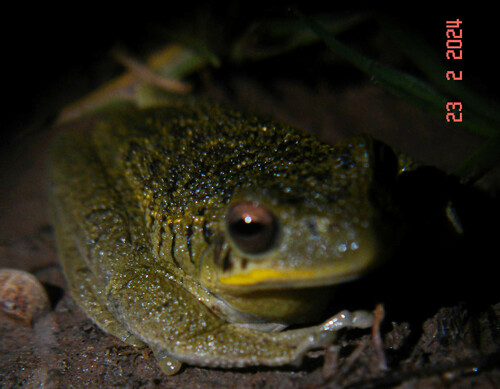
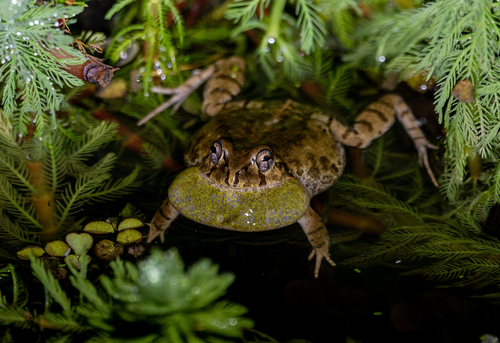
Gastrotheca marsupiata is a species of frog in the family Hemiphractidae. It is found in the Amazonian drainage systems of Andes from central Peru to southern Bolivia. Its common names are marsupian frog, common marsupial frog, and for now synonymized Leptodactylus/Eleutherodactylus andicola, Boettger's robber frog.

This frog lives in both unchanged and recovering grasslands. Scientists have seen the frog between 2,500 and 4,660 m (8,200 and 15,290 ft) above sea level. Scientists have reported the frog in Carrasco National Park, Tunari National Park, Cotapata National Park, and Pilon Lajas National Park. They believe it may also live in Huayllay National Sanctuary, Ampay National Sanctuary, Junin National Reserve, Chacamarca Historical Sanctuary, and Apurimac Reserved Zone.

This frog reproduces in still water. The IUCN classifies this frog as least concern of extinction. In some places, it is in danger from habitat loss from fires and agriculture. Scientists believe climate change could affect this species as well. Scientists have detected the fungus Batrachochytrium dendrobatidis on some of these frogs in 1987, 2000, and 2001, but they... Wikipedia →

Global Distribution

Parks Where Found

# Park Country Daily sighting probability

More parks will be added in future updates.

Cities Where Found

# City Country Daily sighting probability
1 La Paz 🇧🇴 Bolivia
~20%

Zoos & Centres Where Found

# Zoo / Centre Country
1 Bioparque Municipal Vesty Pakos 🇧🇴 Bolivia In captivity

Before you go

What are the chances of seeing a Marsupian Frog in La Paz?

Possible

About 20% of wildlife watchers report a Marsupian Frog sighting in La Paz on a given day, based on 22 verified sightings from GBIF citizen-science data. Over three days the chance rises to about 50%, and over a week to about 80%, if each day is a fresh chance.

When is the best time to see a Marsupian Frog in La Paz?

March and December

In those months about 40% of wildlife watchers report a Marsupian Frog in La Paz on a given day, against under 5% in January and June–November, the lowest months. Those are among La Paz's wettest months, with about 95 mm of rain a month against 10 mm in June.

Where else can you see a Marsupian Frog?

Only La Paz, in our data

La Paz is the only city on Wallace's Line with enough records to rate Marsupian Frog sightings: about 20% of wildlife watchers there report one on a given day.

Which relatives of the Marsupian Frog live in La Paz?

Same order: Anura

The closest relatives of the Marsupian Frog that you can see in La Paz (order Anura, Frogs and Toads) are Warty Toad (about 60%), Rioja Tree Frog (about 50%) and Juliaca four-eyed frog (about 50%), with each one's daily chance of a sighting.

Where does the Marsupian Frog sighting chance come from?

GBIF citizen-science records

It is estimated from how often the Marsupian Frog is recorded against all the amphibians logged in La Paz (22 verified sightings), calibrated against known sighting rates. Figures are rounded to the nearest 10% because citizen-science data supports honest approximations, not decimals, and months with records from fewer than five people show "—". How it works.

← Back to La Paz