Iris Sawfly

Iris Sawfly

Rhadinoceraea micans

Daily sighting probability <5% · Rare
at Leeds

In 3 days ~10% in a week ~30%

6 Verified sightings at Leeds
May Best month

About the Iris Sawfly

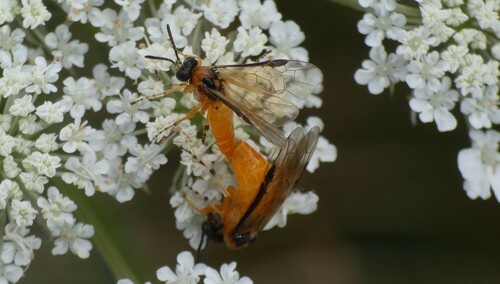
Rhadinoceraea micans, the iris sawfly, is a species of sawfly in the family Tenthredinidae. Native to Europe, the larvae—more often noticed than the adults—can occur in large numbers causing damage to garden plants such as the yellow iris or flag, Iris pseudacorus.

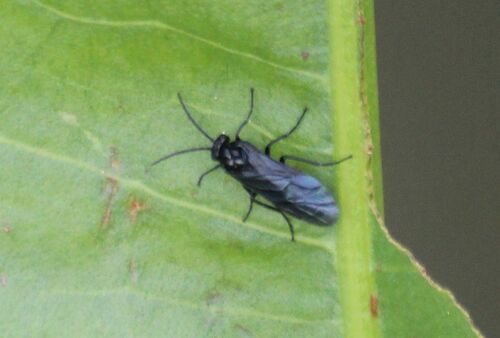
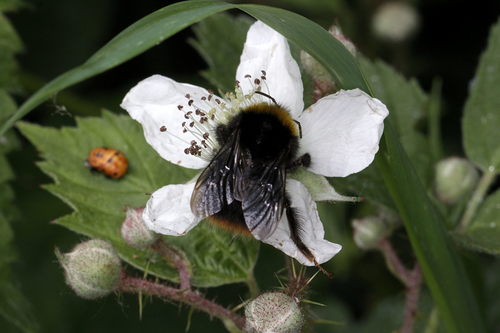
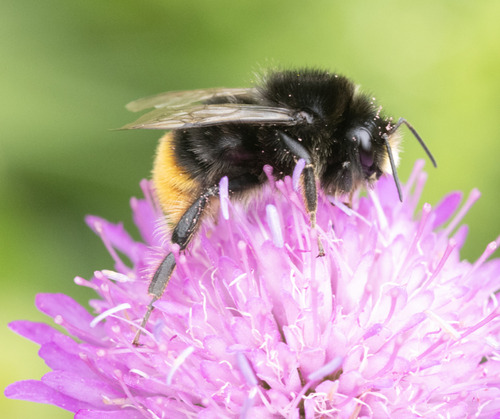
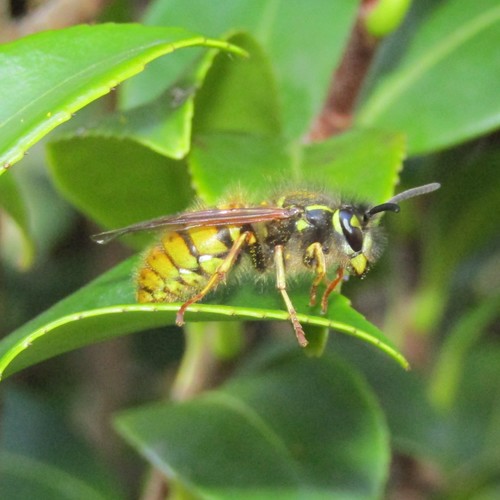
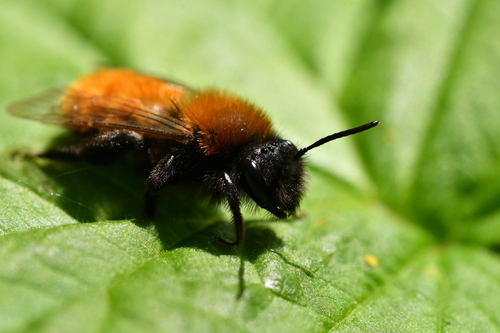
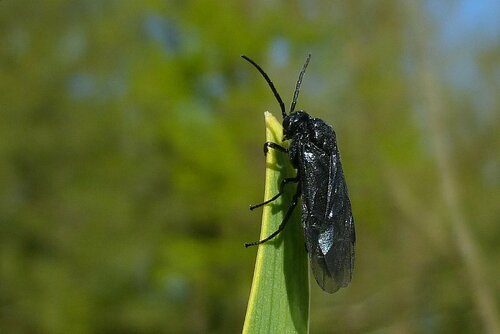
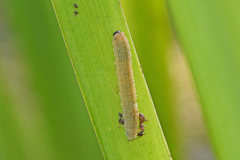
The adult sawfly is shiny, black, and hairy. The antennae are thick, and longer than head and thorax combined. The wings are slightly smoky. The head is as wide as the thorax. The larvae, up to 1 inch (25 mm) long, look like caterpillars but have six pairs of prolegs rather than five. The head is shiny black; the body greenish brown, becoming darker with age. There are double rows of white dots around the segments. Larval host plants are all waterside irises, including Iris pseudacorus, Iris ensata, Iris laevigata, Iris spuria and Iris versicolor.

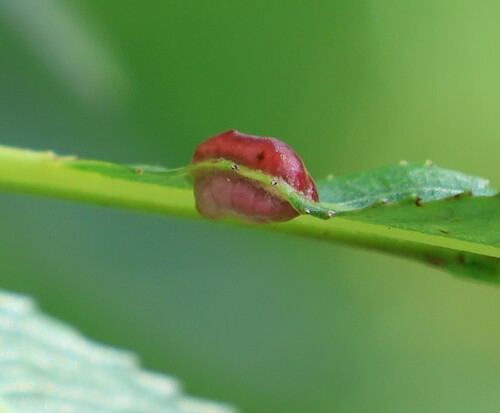
The adult iris sawflies lay their eggs in May on the leaves of irises (especially the yellow flag). The eggs are in large flat placards on iris leaves. The female lays the eggs by inserting her "saw" into the blade of the leaf near the thickened middle, not far from the leaf base. As many as 19 eggs may be... Wikipedia →
Global Distribution

Parks Where Found

# Park Country Daily sighting probability

More parks will be added in future updates.

Cities Where Found

# City Country Daily sighting probability
1 Leeds 🇬🇧 United Kingdom
<5%
2 London 🇬🇧 United Kingdom
<5%
3 Paris 🇫🇷 France
<5%

Before you go

What are the chances of seeing an Iris Sawfly in Leeds?

Rare

Under 5% of wildlife watchers report an Iris Sawfly sighting in Leeds on a given day, based on 6 verified sightings from GBIF citizen-science data. It is the 230th most-seen of the 284 insects we can rate there. Over three days the chance rises to about 10%, and over a week to about 30%, if each day is a fresh chance.

When is the best time to see an Iris Sawfly in Leeds?

May and July

In those months about 10% of wildlife watchers report an Iris Sawfly in Leeds on a given day, against under 5% in June and August–April, the lowest months.

Is Leeds the best place to see an Iris Sawfly?

Yes

Of the 3 cities where we can rate Iris Sawfly sightings, Leeds has the highest daily chance: under 5%. Next come London (United Kingdom, under 5%) and Paris (France, under 5%).

Where does the Iris Sawfly sighting chance come from?

GBIF citizen-science records

It is estimated from how often the Iris Sawfly is recorded against all the insects logged in Leeds (6 verified sightings), calibrated against known sighting rates. Figures are rounded to the nearest 10% because citizen-science data supports honest approximations, not decimals, and months with records from fewer than five people show "—". How it works.

← Back to Leeds