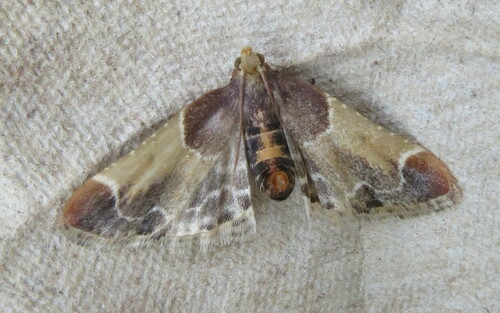
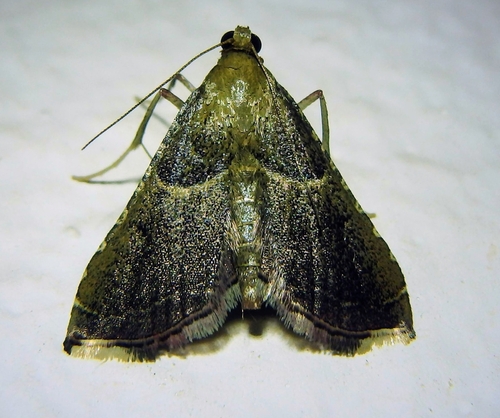
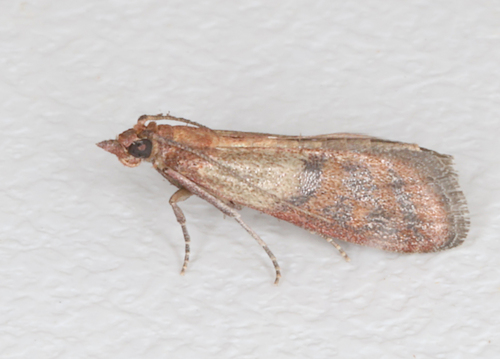
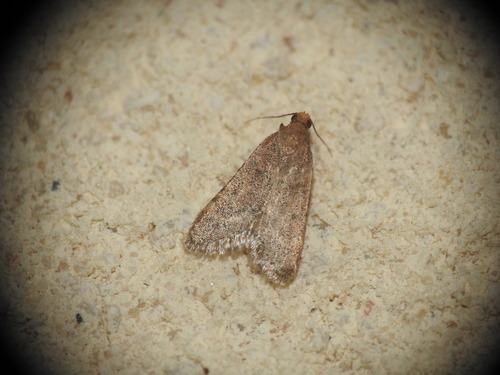
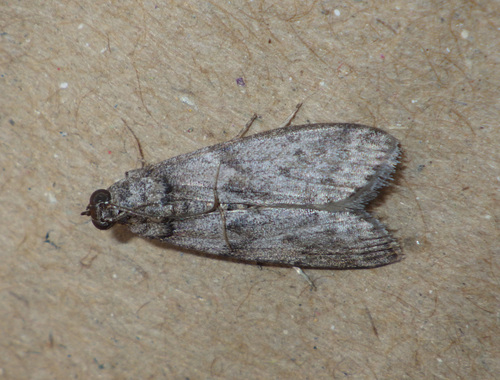
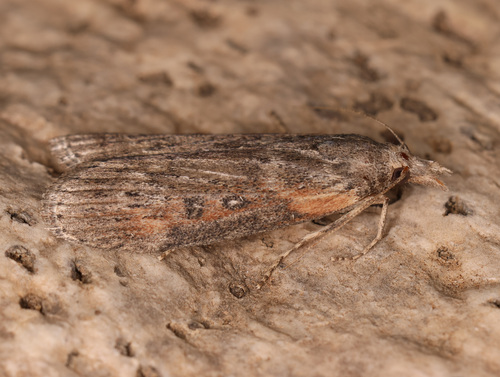
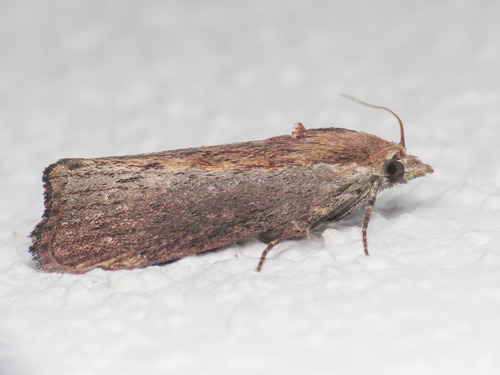
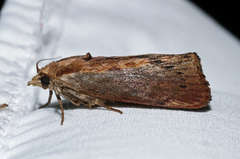
Greater Wax Moth

Greater Wax Moth

Galleria mellonella

Daily sighting probability <5% · Rare
at Lisbon

In 3 days ~10% in a week ~20%

5 Verified sightings at Lisbon
5 In 1 park From 2019 to 2026
September Best month
🌙 Nocturnal When it's spotted

About the Greater Wax Moth

Galleria mellonella, the greater wax moth or honeycomb moth, is a moth of the family Pyralidae. G. mellonella is found throughout the world. It is one of two species of wax moths, with the other being the lesser wax moth. G. mellonella eggs are laid in the spring, and they have four life stages. Males are able to generate ultrasonic sound pulses, which, along with pheromones, are used in mating. The larvae of G. mellonella are also often used as a model organism in research.

The greater wax moth is well known for its parasitization of honeybees and their hives. Because of the economic loss caused by this species, several control methods including heat treatment and chemical fumigants such as carbon dioxide have been used.

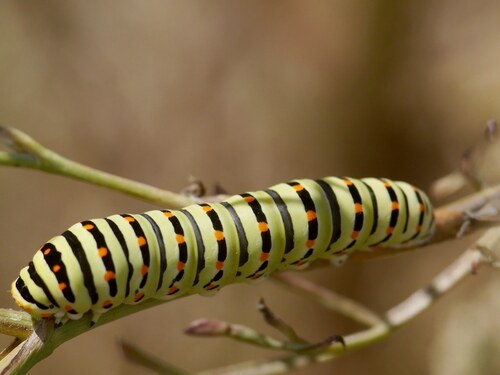
The caterpillar of G. mellonella has attracted interest for its ability to degrade polyethylene plastic. G. mellonella was first reported as a pest in Asia, but then spread to northern Africa, Great Britain, some parts of Europe, northern America, and New Zealand. The species is now distributed throughout the globe. It has been reported in twenty-seven African countries, nine Asian countries, four North American countries, three Latin American... Wikipedia →
Global Distribution

Parks Where Found

# Park Country Daily sighting probability
1 Bavarian Forest National Park 🇩🇪 Germany
<5%

More parks will be added in future updates.

Cities Where Found

# City Country Daily sighting probability
1 Essen 🇩🇪 Germany
~10%
2 Kyiv 🇺🇦 Ukraine
<5%
3 London 🇬🇧 United Kingdom
<5%
4 Austin 🇺🇸 United States
<5%
5 Birmingham 🇬🇧 United Kingdom
<5%
6 Prague 🇨🇿 Czechia
<5%
7 Dallas 🇺🇸 United States
<5%
8 Madrid 🇪🇸 Spain
<5%
9 Vienna 🇦🇹 Austria
<5%
10 Auckland 🇳🇿 New Zealand
<5%

Before you go

What are the chances of seeing a Greater Wax Moth in Lisbon?

Rare

Under 5% of wildlife watchers report a Greater Wax Moth sighting in Lisbon on a given day, based on 5 verified sightings from GBIF citizen-science data. It is the 405th most-seen of the 441 insects we can rate there. Over three days the chance rises to about 10%, and over a week to about 20%, if each day is a fresh chance.

When is the best time to see a Greater Wax Moth in Lisbon?

September

In that month about 10% of wildlife watchers report a Greater Wax Moth in Lisbon on a given day, against under 5% in October to August, the lowest months. That is one of Lisbon's driest months, with about 25 mm of rain against 95 mm in November.

What time of day is best to see a Greater Wax Moth?

Between 8 and 11 pm

Across all the parks we cover, that three-hour window holds the most Greater Wax Moth sightings with a recorded time, and about 8 in 10 of them come between 6 pm and 6 am: it is mostly seen at night.

Is Lisbon the best place to see a Greater Wax Moth?

14th of 17

Of the 17 cities where we can rate Greater Wax Moth sightings, Lisbon ranks 14th at under 5%. The best odds are in Essen (Germany, about 10%), Kyiv (Ukraine, under 5%) and London (United Kingdom, under 5%).

Which relatives of the Greater Wax Moth live in Lisbon?

Same family: Pyralidae

The closest relatives of the Greater Wax Moth that you can see in Lisbon (family Pyralidae, Pyralid Snout Moths) are Meal Moth (about 10%) and Rosy Tabby (about 10%), with each one's daily chance of a sighting.

Where does the Greater Wax Moth sighting chance come from?

GBIF citizen-science records

It is estimated from how often the Greater Wax Moth is recorded against all the insects logged in Lisbon (5 verified sightings), calibrated against known sighting rates. Figures are rounded to the nearest 10% because citizen-science data supports honest approximations, not decimals, and months with records from fewer than five people show "—". How it works.

← Back to Lisbon