Western Three-toed Skink

Western Three-toed Skink

Chalcides striatus

Silhouette: David Orr · PhyloPic

LCLeast ConcernNTVUENCR
Daily sighting probability ~10% · With luck
at Lisbon

In 3 days ~20% in a week ~40%

26 Verified sightings at Lisbon
March Best month
☀️🌙 Day & Night When it's spotted

About the Western Three-toed Skink

The western three-toed skink (Chalcides striatus) is a species of lizard with tiny legs in the family Scincidae. It is found in the Iberian Peninsula, southern France and parts of northwestern Italy. Its natural habitats are temperate forests, temperate shrubland, Mediterranean-type shrubby vegetation, temperate grassland, sandy shores, arable land, pastureland, and rural gardens. It was first described 1829 by the French naturalist Georges Cuvier. The generic name comes from the Greek "chalcides" meaning 'copper' and the specific name is derived from the Latin "striatus" meaning 'streak'.

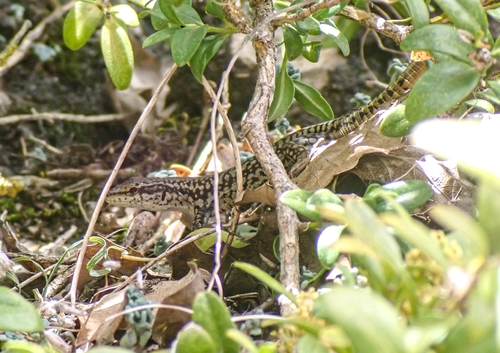
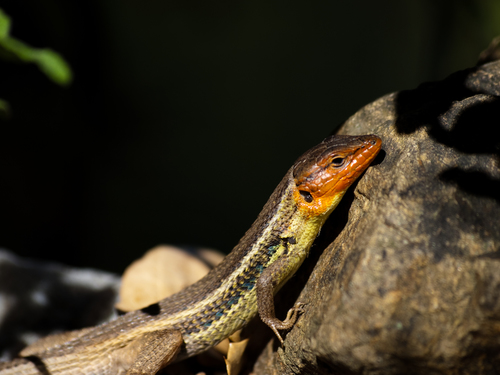
This skink superficially looks like a snake except for the presence of two pairs of tiny, three-toed limbs. It has a small head and thick neck and grows to a length of about 43 cm (17 in). It is smooth and glossy, with a silvery or bronze colour with about ten slender longitudinal dark lines running along the body. The head is usually darker than the body. It can be distinguished from the very similar Italian three-toed skink (Chalcides chalcides) by the fact that its limbs are slightly larger than that species and the three toes of the hind feet are all the same length. Wikipedia →


Global Distribution

Parks Where Found

# Park Country Daily sighting probability

More parks will be added in future updates.

Cities Where Found

# City Country Daily sighting probability
1 Lisbon 🇵🇹 Portugal
~10%

Before you go

What are the chances of seeing a Western Three-toed Skink in Lisbon?

With luck

About 10% of wildlife watchers report a Western Three-toed Skink sighting in Lisbon on a given day, based on 26 verified sightings from GBIF citizen-science data. It is the 15th most-seen of the 21 reptiles we can rate there. Over three days the chance rises to about 20%, and over a week to about 40%, if each day is a fresh chance.

When is the best time to see a Western Three-toed Skink in Lisbon?

March to August

In those months about 10% of wildlife watchers report a Western Three-toed Skink in Lisbon on a given day, against under 5% in September to February, the lowest months.

What time of day is best to see a Western Three-toed Skink?

Between 7 and 10 pm

Across all the parks we cover, that three-hour window holds the most Western Three-toed Skink sightings with a recorded time, and about 6 in 10 of them come between 6 am and 6 pm: it is seen both by day and at night.

Where else can you see a Western Three-toed Skink?

Only Lisbon, in our data

Lisbon is the only city on Wallace's Line with enough records to rate Western Three-toed Skink sightings: about 10% of wildlife watchers there report one on a given day.

Where does the Western Three-toed Skink sighting chance come from?

GBIF citizen-science records

It is estimated from how often the Western Three-toed Skink is recorded against all the reptiles logged in Lisbon (26 verified sightings), calibrated against known sighting rates. Figures are rounded to the nearest 10% because citizen-science data supports honest approximations, not decimals, and months with records from fewer than five people show "—". How it works.

← Back to Lisbon