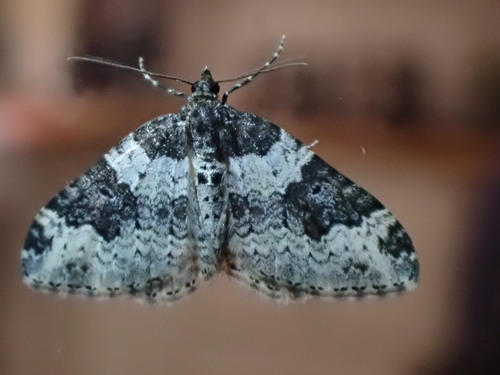
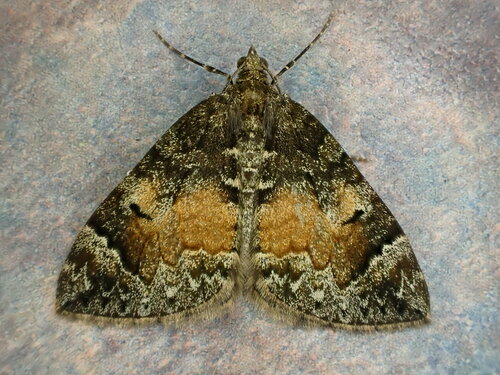
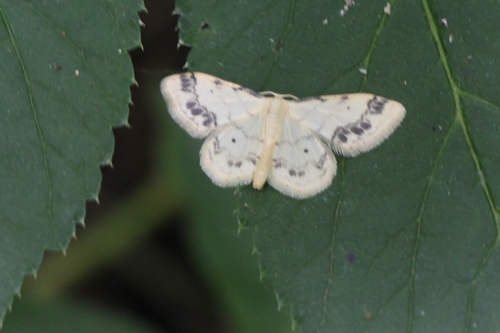
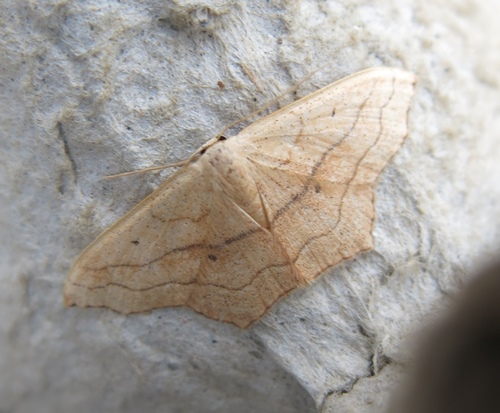
Blotched Emerald

Blotched Emerald

Comibaena bajularia

Daily sighting probability <5% · Rare
at London

In 3 days ~10% in a week ~20%

12 Verified sightings at London
7 In 1 park From 2019 to 2026
June Best month
☀️🌙 Day & Night When it's spotted

About the Blotched Emerald

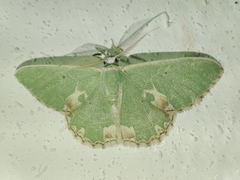
The blotched emerald (Comibaena bajularia) is a moth of the family Geometridae. The species was first described by Michael Denis and Ignaz Schiffermüller in 1775. It is found throughout Europe and the Near East. It has a scattered distribution in England and Wales, but is absent from Scotland and Ireland.

In the southern Alps it rises up to 1000 metres.It is mainly found in oak forests. The wings are green with brown and white chequered fringes and prominent buff and white blotches at the tornus. The forewings are marked with two narrow, white fascia. The wingspan is 30–35 mm. In the southern part of the British Isles it flies in June and July, where it may be common in some oakwoods. It flies at night and is attracted to light, the male more so than the female.

The larval food plant is oak. The insect overwinters as a larva. The body of the caterpillar larva is red brown, but it camouflages itself by attaching a screen of oak leaf fragments to its specially hooked bristles. After overwintering, the attached camouflage changes and consists of bud scales from the oak tree. Hugh Cott compared the larva's use of "concealment afforded by masks of adventitious material... Wikipedia →
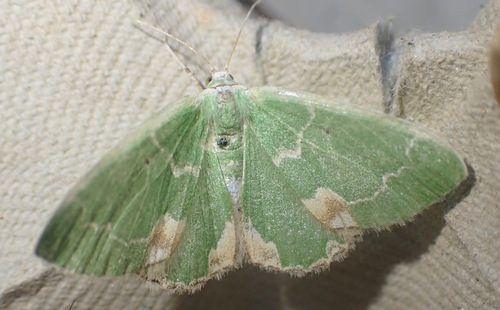
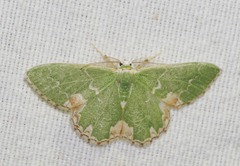
Global Distribution

Parks Where Found

# Park Country Daily sighting probability
1 Bavarian Forest National Park 🇩🇪 Germany
~10%

More parks will be added in future updates.

Cities Where Found

# City Country Daily sighting probability
1 London 🇬🇧 United Kingdom
<5%

Before you go

What are the chances of seeing a Blotched Emerald in London?

Rare

Under 5% of wildlife watchers report a Blotched Emerald sighting in London on a given day, based on 12 verified sightings from GBIF citizen-science data. It is the 971st most-seen of the 1504 insects we can rate there. Over three days the chance rises to about 10%, and over a week to about 20%, if each day is a fresh chance.

When is the best time to see a Blotched Emerald in London?

June

In that month about 10% of wildlife watchers report a Blotched Emerald in London on a given day, against under 5% in July to May, the lowest months.

What time of day is best to see a Blotched Emerald?

Between 9 pm and midnight

Across all the parks we cover, that three-hour window holds the most Blotched Emerald sightings with a recorded time, and about 6 in 10 of them come between 6 pm and 6 am: it is seen both by day and at night.

Where else can you see a Blotched Emerald?

Only London, in our data

London is the only city on Wallace's Line with enough records to rate Blotched Emerald sightings: under 5% of wildlife watchers there report one on a given day.

Which relatives of the Blotched Emerald live in London?

Same family: Geometridae

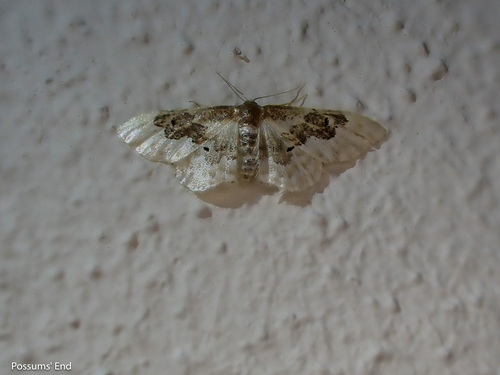
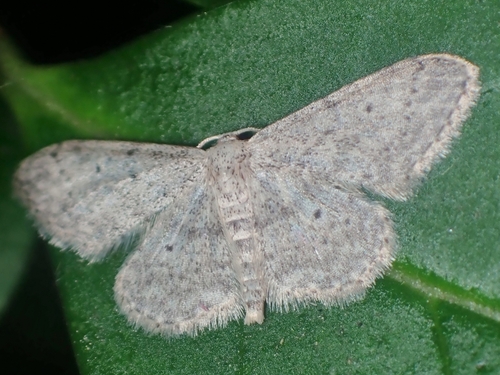
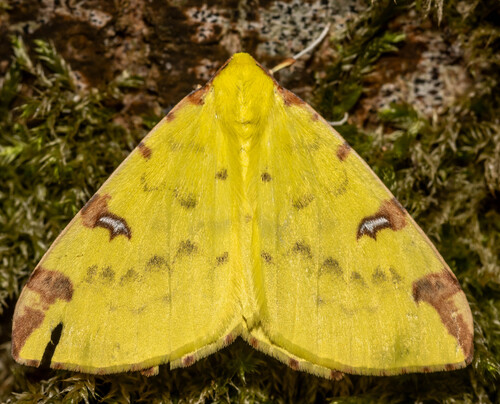
The closest relatives of the Blotched Emerald that you can see in London (family Geometridae, Geometer Moths) are Riband Wave (about 20%), Least Carpet (about 20%) and Double-Striped Pug (about 20%), with each one's daily chance of a sighting.

Where does the Blotched Emerald sighting chance come from?

GBIF citizen-science records

It is estimated from how often the Blotched Emerald is recorded against all the insects logged in London (12 verified sightings), calibrated against known sighting rates. Figures are rounded to the nearest 10% because citizen-science data supports honest approximations, not decimals, and months with records from fewer than five people show "—". How it works.

← Back to London