Elm Sack Gall Aphid

Elm Sack Gall Aphid

Tetraneura ulmi

Daily sighting probability ~10% · With luck
at London

In 3 days ~10% in a week ~30%

48 Verified sightings at London
6 In 1 park From 2019 to 2026
May Best month
🌅 Crepuscular When it's spotted

About the Elm Sack Gall Aphid

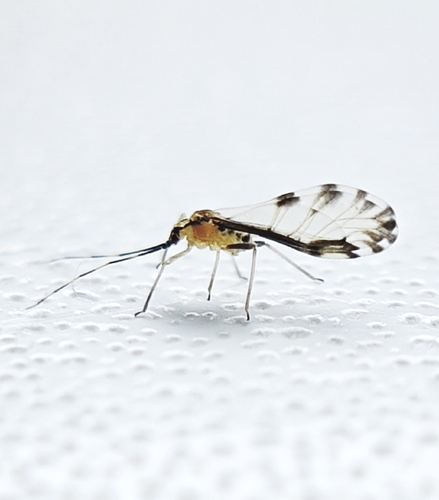
Tetraneura ulmi, the elm sack gall aphid and also known as a fig gall, is a species of aphid in the family Aphididae. It was described by Carl Linnaeus and named in his Systema Naturae, published in 1758. The aphid is found in Asia, Europe and North America, causing abnormal plant growths, known as galls on their primary host, elm trees (Ulmus species). They feed on a secondary host, the roots of various grasses.

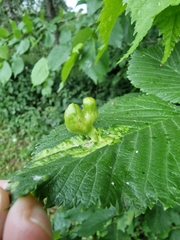
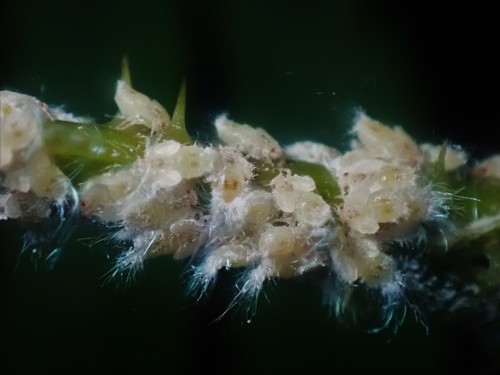
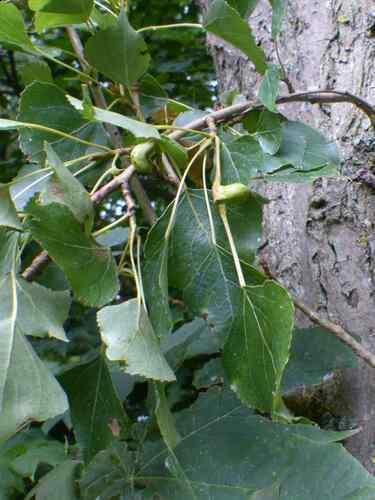
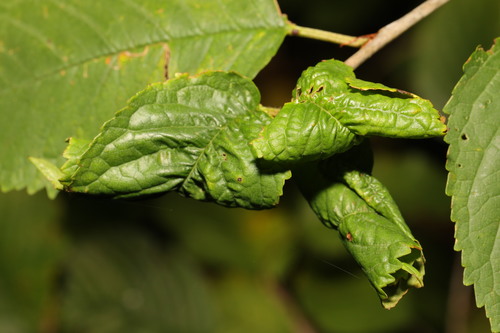
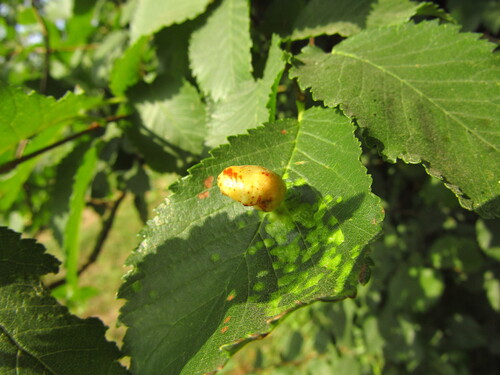
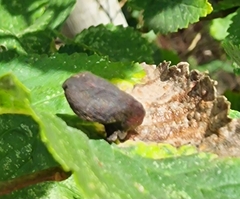
The gall is a stalked, club-like smooth pouch (7−15 mm high) on the leaves of elm trees. Feeding inside the gall is a nymph and some wax. Partly formed galls are pale yellow patches with irregular lumpy projections on the top surface of the leaf. On the underside of the leaf, young galls may have a hairy opening.

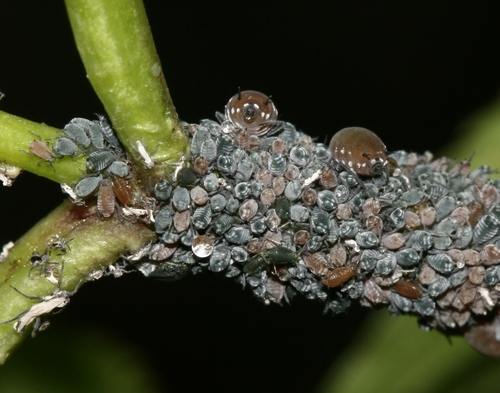
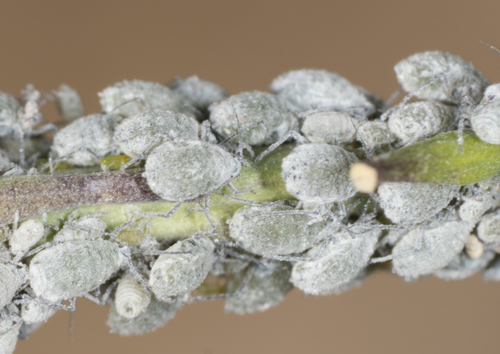
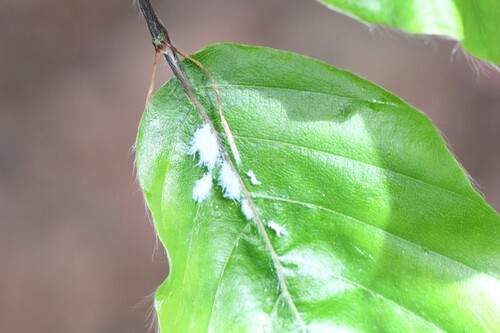
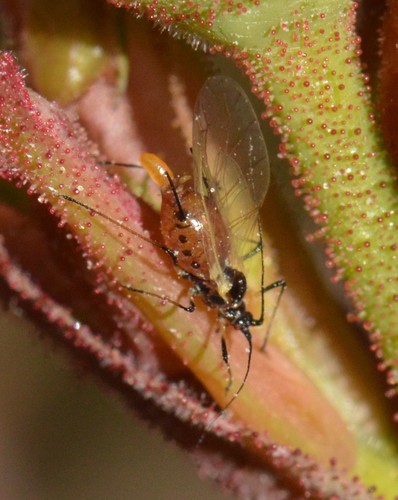
Mature asexual females leave the galls in the summer and lay eggs on grass roots. The aphids are pink, orange or purple, 2–3 mm long and covered in a thin layer of powdered wax. In the autumn, winged forms fly to elms and give birth to wingless mites of both sexes. After mating each female lays an egg and a female nymph hatches in the spring and starts feeding on the underside of a leaf. The leaf reacts by forming a tiny, yellowish... Wikipedia →
Global Distribution

Parks Where Found

# Park Country Daily sighting probability
1 Bavarian Forest National Park 🇩🇪 Germany
<5%

More parks will be added in future updates.

Cities Where Found

# City Country Daily sighting probability
1 Minsk 🇧🇾 Belarus
~10%
2 London 🇬🇧 United Kingdom
~10%
3 Helsinki 🇫🇮 Finland
<5%
4 Warsaw 🇵🇱 Poland
<5%
5 Birmingham 🇬🇧 United Kingdom
<5%
6 Paris 🇫🇷 France
<5%
7 Vienna 🇦🇹 Austria
<5%

Before you go

What are the chances of seeing an Elm Sack Gall Aphid in London?

With luck

About 10% of wildlife watchers report an Elm Sack Gall Aphid sighting in London on a given day, based on 48 verified sightings from GBIF citizen-science data. It is the 489th most-seen of the 1504 insects we can rate there. Over three days the chance rises to about 10%, and over a week to about 30%, if each day is a fresh chance.

When is the best time to see an Elm Sack Gall Aphid in London?

May–July and September

In those months about 10% of wildlife watchers report an Elm Sack Gall Aphid in London on a given day, against under 5% in August and October–April, the lowest months.

What time of day is best to see an Elm Sack Gall Aphid?

Between 10 am and 1 pm

Across all the parks we cover, that three-hour window holds the most Elm Sack Gall Aphid sightings with a recorded time, and about 7 in 10 of them come between 6 am and 6 pm: it is most active around dawn and dusk.

Is London the best place to see an Elm Sack Gall Aphid?

Among the best

Of the 7 cities where we can rate Elm Sack Gall Aphid sightings, London ranks 2nd at about 10%, level with the leaders once rounded. The best odds are in Minsk (Belarus, about 10%).

Which relatives of the Elm Sack Gall Aphid live in London?

Same family: Aphididae

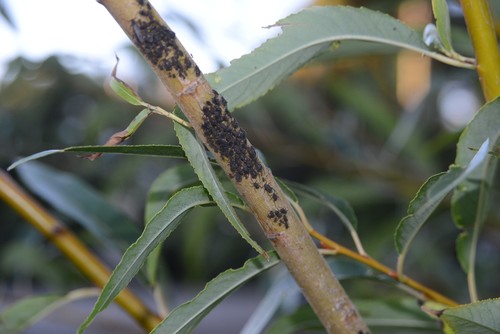
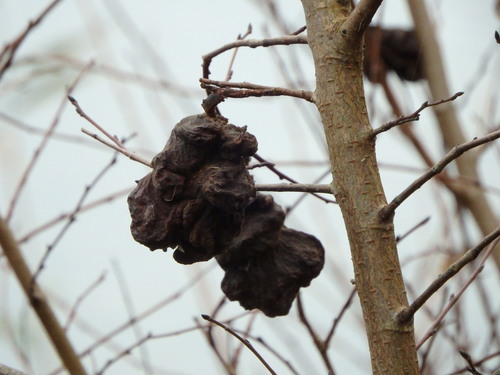
The closest relatives of the Elm Sack Gall Aphid that you can see in London (family Aphididae, Aphids) are Giant Willow Aphid (about 10%) and Elm Balloon-Gall Aphid (about 10%), with each one's daily chance of a sighting.

Where does the Elm Sack Gall Aphid sighting chance come from?

GBIF citizen-science records

It is estimated from how often the Elm Sack Gall Aphid is recorded against all the insects logged in London (48 verified sightings), calibrated against known sighting rates. Figures are rounded to the nearest 10% because citizen-science data supports honest approximations, not decimals, and months with records from fewer than five people show "—". How it works.

← Back to London