Hooded Dryomyza

Hooded Dryomyza

Dryomyza anilis

Daily sighting probability <5% · Rare
at London

In 3 days ~10% in a week ~20%

5 Verified sightings at London
October Best month

About the Hooded Dryomyza

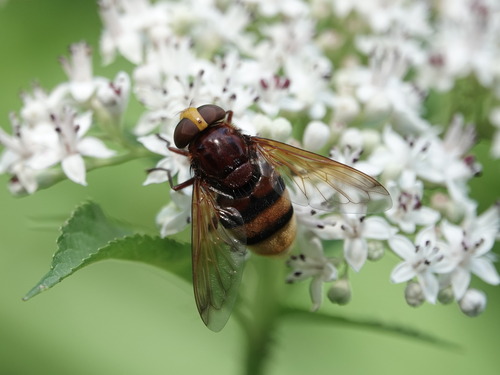
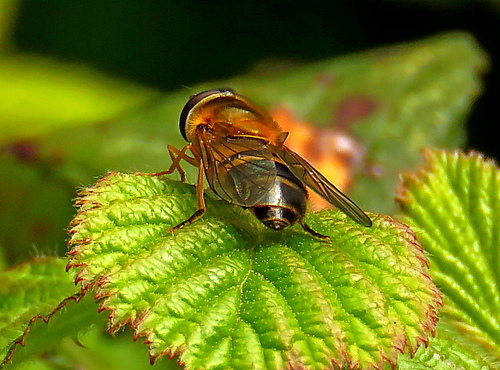
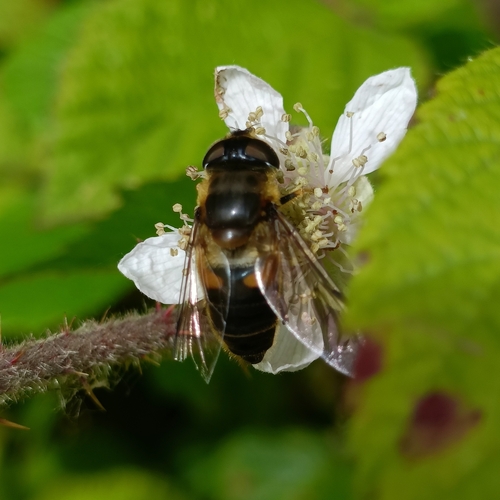
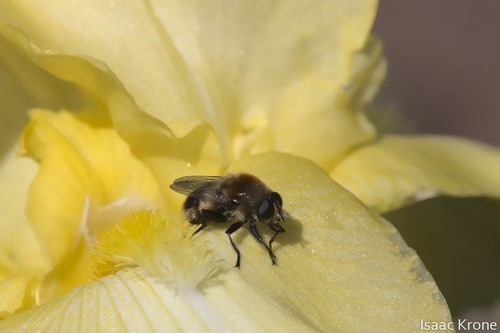
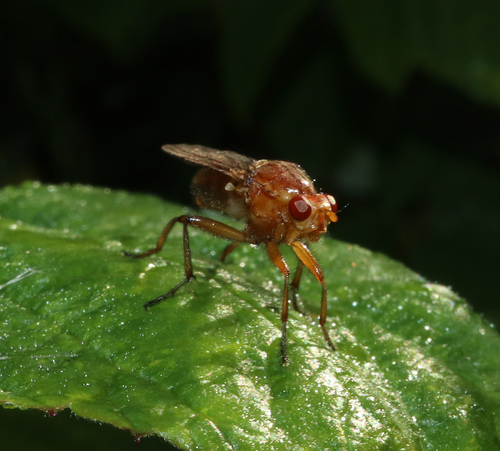
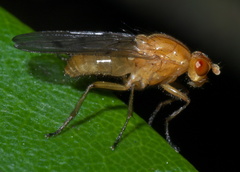
Dryomyza anilis is a common fly from the family Dryomyzidae. The fly is found through various areas in the Northern hemisphere and has brown and orange coloration with distinctive large red eyes. The life span of the fly is not known, but laboratory-reared males can live 28–178 days. D. anilis has recently been placed back in the genus Dryomyza, of which it is the type species. Dryomyzidae were previously part of Sciomyzidae but are now considered a separate family with two subfamilies.

Male D. anilis engage in territorial behavior, guarding carcasses to attract potential mates. Males also guard females, and conflicts over females are frequent. Females typically mate with multiple males. Mating occurs through several rounds of copulation and egg-laying. During mating, males engage in a series of "tapping" rituals where they use their claspers to tap the female's genitals, increasing the chance of them fertilizing the female's eggs. Females lay several batches of eggs on carcasses, fungi, and excrement as well as other substrates.

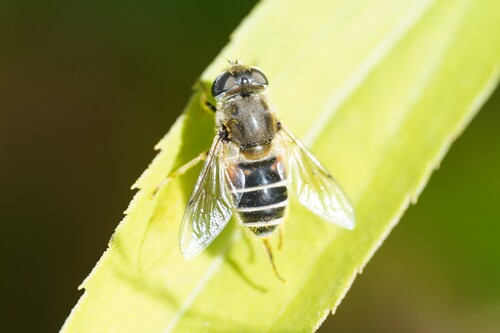
D. anilis adults are medium-sized, ranging in overall length from 7–14 mm, but are typically 12 mm long. Their coloration is light-brown... Wikipedia →
Global Distribution

Parks Where Found

# Park Country Daily sighting probability

More parks will be added in future updates.

Cities Where Found

# City Country Daily sighting probability
1 Helsinki 🇫🇮 Finland
<5%
2 Birmingham 🇬🇧 United Kingdom
<5%
3 London 🇬🇧 United Kingdom
<5%
4 Toronto 🇨🇦 Canada
<5%

Before you go

What are the chances of seeing a Hooded Dryomyza in London?

Rare

Under 5% of wildlife watchers report a Hooded Dryomyza sighting in London on a given day, based on 5 verified sightings from GBIF citizen-science data. It is the 1394th most-seen of the 1504 insects we can rate there. Over three days the chance rises to about 10%, and over a week to about 20%, if each day is a fresh chance.

When is the best time to see a Hooded Dryomyza in London?

October

In that month about 10% of wildlife watchers report a Hooded Dryomyza in London on a given day, against under 5% in November to September, the lowest months.

Is London the best place to see a Hooded Dryomyza?

Among the best

Of the 4 cities where we can rate Hooded Dryomyza sightings, London ranks 3rd at under 5%, level with the leaders once rounded. The best odds are in Helsinki (Finland, under 5%) and Birmingham (United Kingdom, under 5%).

Where does the Hooded Dryomyza sighting chance come from?

GBIF citizen-science records

It is estimated from how often the Hooded Dryomyza is recorded against all the insects logged in London (5 verified sightings), calibrated against known sighting rates. Figures are rounded to the nearest 10% because citizen-science data supports honest approximations, not decimals, and months with records from fewer than five people show "—". How it works.

← Back to London