Phaonia pallida

Phaonia pallida

Phaonia pallida

Daily sighting probability <5% · Rare
at London

In 3 days ~10% in a week ~20%

5 Verified sightings at London
September Best month

About the Phaonia pallida

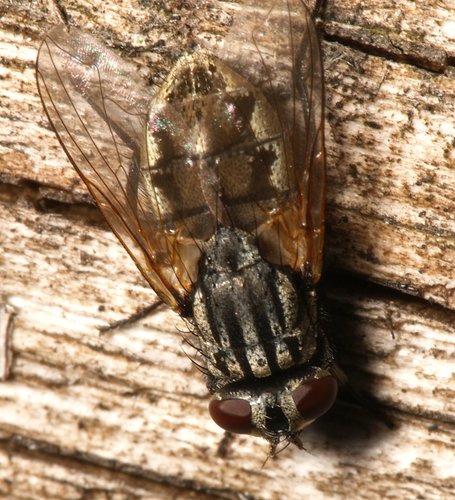
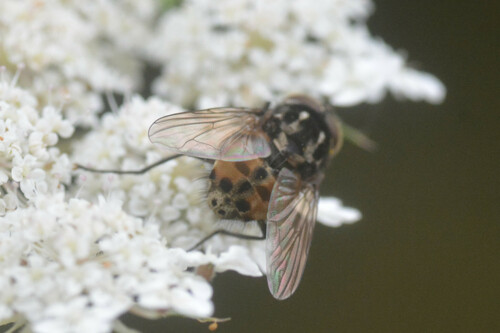
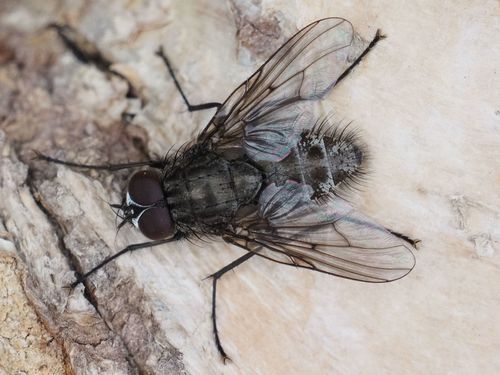
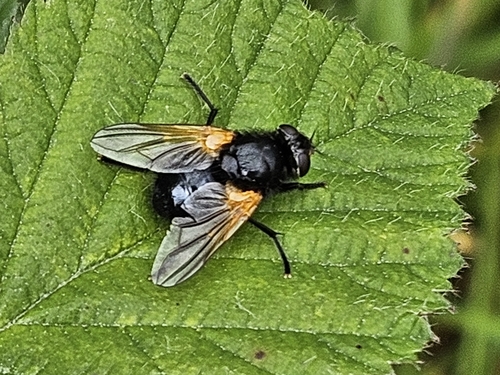
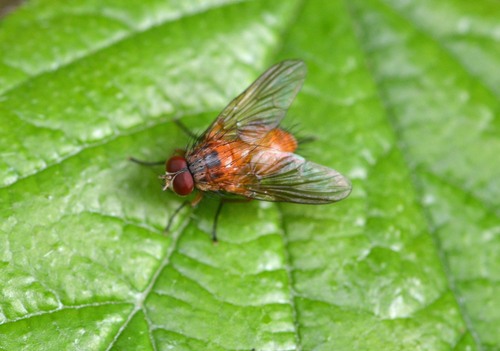
Phaonia pallida, the muscid fly or orange muscid fly, is a species of fly in the family Muscidae. This species is distributed across parts of the Palearctic – Europe (including Sicily and the Azores), Russia, and Asia (Israel, Turkey, and Iran). These flies mainly inhabit deciduous forests and woodland, especially spruce forest edge.

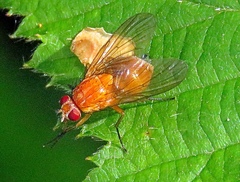
Phaonia pallida can reach a length of about 5.5–7.9 millimetres (0.22–0.31 in). These flies have an orange body with a very hairy thorax. The antennae are composed by three articles and bear a feathery arista. The legs and the balancers are yellow, while the tarsi are black. The eyes are dark red, separated by a yellow marking in the females, while in males they are very close to each other.

Adults fly from May to September, feeding on nectar of flowers (especially of Heracleum sphondylium). Its larvae have been found growing in various fungi (Amanita rubescens, Clitocybe nebularis, Paralepista flaccida, Hymenopellis radicata, Amanita muscaria) but also in rotten wood and under tree bark. The last larval instar of Phaonia pallida is carnivorous, feeding on small insects. Wikipedia →
Global Distribution

Parks Where Found

# Park Country Daily sighting probability

More parks will be added in future updates.

Cities Where Found

# City Country Daily sighting probability
1 London 🇬🇧 United Kingdom
<5%

Before you go

What are the chances of seeing a Phaonia pallida in London?

Rare

Under 5% of wildlife watchers report a Phaonia pallida sighting in London on a given day, based on 5 verified sightings from GBIF citizen-science data. It is the 1394th most-seen of the 1504 insects we can rate there. Over three days the chance rises to about 10%, and over a week to about 20%, if each day is a fresh chance.

When is the best time to see a Phaonia pallida in London?

Any time of year

In every month with enough records, under 5% of wildlife watchers report a Phaonia pallida in London on a given day, so our monthly data shows no clear season.

Where else can you see a Phaonia pallida?

Only London, in our data

London is the only city on Wallace's Line with enough records to rate Phaonia pallida sightings: under 5% of wildlife watchers there report one on a given day.

Where does the Phaonia pallida sighting chance come from?

GBIF citizen-science records

It is estimated from how often the Phaonia pallida is recorded against all the insects logged in London (5 verified sightings), calibrated against known sighting rates. Figures are rounded to the nearest 10% because citizen-science data supports honest approximations, not decimals, and months with records from fewer than five people show "—". How it works.

← Back to London