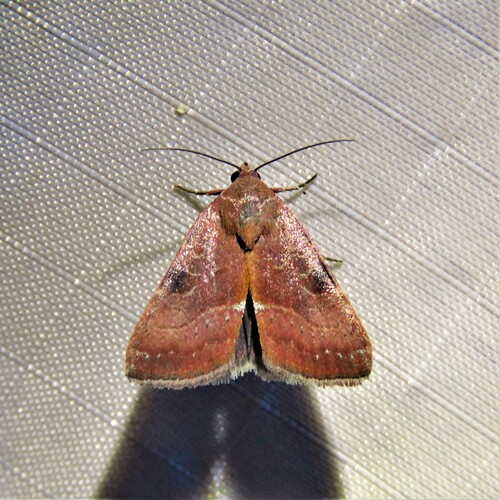
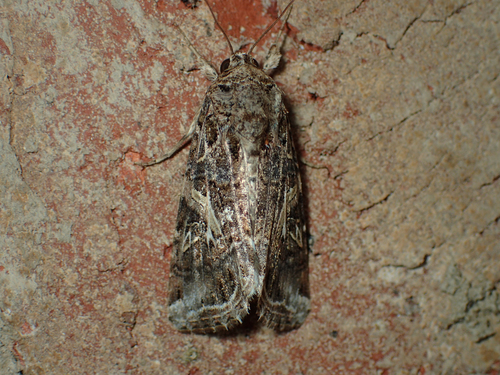
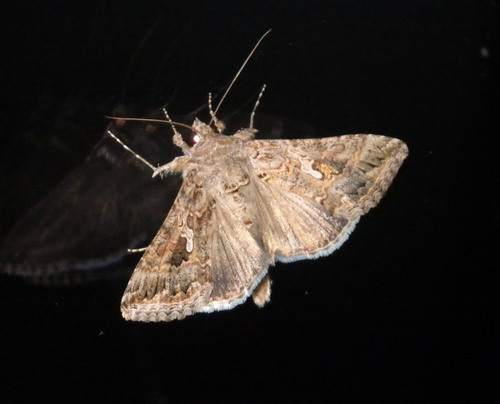
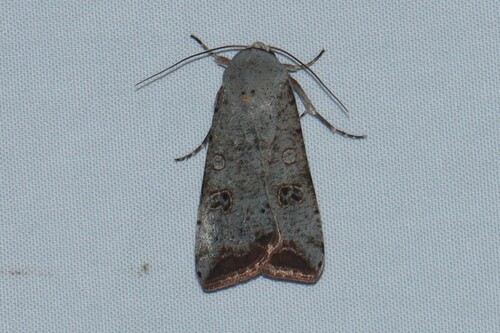
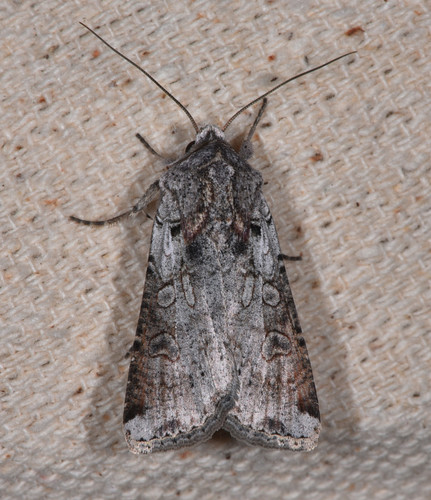
Army Cutworm Moth

Army Cutworm Moth

Euxoa auxiliaris

Daily sighting probability <5% · Rare
at Los Angeles

In 3 days ~10%

13 Verified sightings at Los Angeles
May Best month

About the Army Cutworm Moth

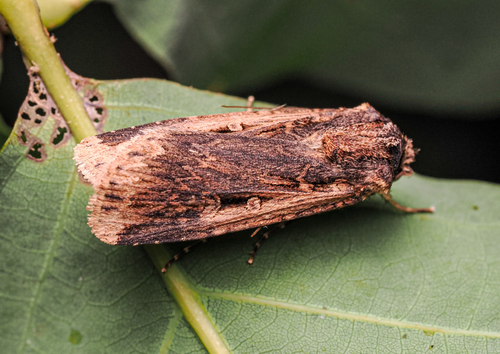
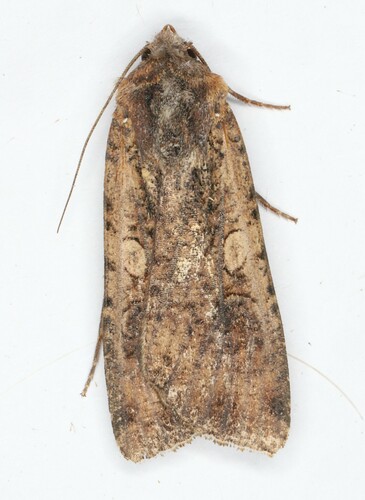
The army cutworm is the immature form of Euxoa auxiliaris. Together with other moths that are locally abundant and that have scales that dislodge from the wings, the adult moth is called a miller moth. These native North American larvae consume emerging small grains, alfalfa, and canola in the Great Plains and southern Canada.

On dry, low elevation rangelands of the U.S. Intermountain West, army cutworms consume exotic cheatgrass (Bromus tectorum) and mustards to produce cheatgrass "die-offs." Within these bare areas, the larvae also defoliate native shrubs including four-wing saltbush (Atriplex canescens) and sagebrush (Artemisia spp.).

Army cutworms have only one generation per year. Adult moths lay eggs in the fall at low elevations in the Great Plains and U.S. Intermountain West. Larvae hatch in late fall and feed, mostly at night, through the winter and into spring.

The larvae pupate in the soil in late spring and emerge as adult miller moths. The moths soon migrate to high elevations for the summer. Miller moths are a seasonal nuisance during their seasonal migrations through states including Montana, Idaho, Nevada, Texas, Oklahoma, Colorado, Wyoming, New Mexico, and Kansas.

Moths that emerge in the Great Plains migrate to high elevations in the northern Rocky Mountains, where they are an important food for grizzly bears. Moths that emerge in the Intermountain West migrate to nearby mountain ranges, such as the Jemez Mountains of New Mexico and the mountains of Great Basin National Park in eastern Nevada, where a 2014 Lepidoptera BioBlitz found "blizzard of adult army worm moths (Euxoa auxilliaris), which were present in millions."

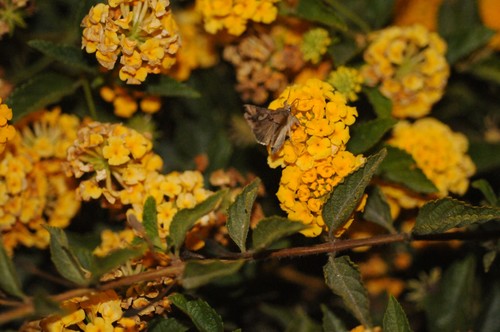
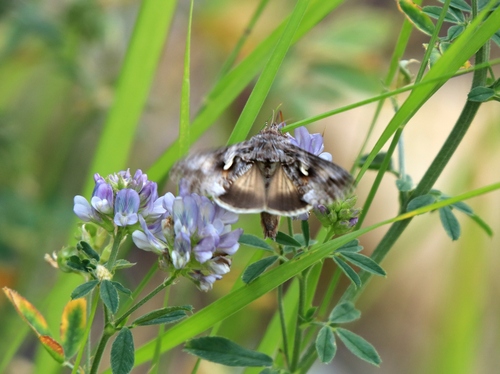
Miller moths return to low elevations as the weather cools in fall, but in smaller numbers. Although many consider the moths to be a nuisance, the insects pollinate plants and are food for bats. Wikipedia →

Global Distribution

Parks Where Found

# Park Country Daily sighting probability

More parks will be added in future updates.

Cities Where Found

# City Country Daily sighting probability
1 Denver 🇺🇸 United States
~10%
2 Salt Lake City 🇺🇸 United States
<5%
3 Mesa 🇺🇸 United States
<5%
4 Dallas 🇺🇸 United States
<5%
5 Austin 🇺🇸 United States
<5%
6 Los Angeles 🇺🇸 United States
<5%

Before you go

What are the chances of seeing an Army Cutworm Moth in Los Angeles?

Rare

Under 5% of wildlife watchers report an Army Cutworm Moth sighting in Los Angeles on a given day, based on 13 verified sightings from GBIF citizen-science data. It is the 512th most-seen of the 851 insects we can rate there. Over three days the chance rises to about 10%, if each day is a fresh chance.

When is the best time to see an Army Cutworm Moth in Los Angeles?

Any time of year

In every month with enough records, under 5% of wildlife watchers report an Army Cutworm Moth in Los Angeles on a given day, so our monthly data shows no clear season.

Is Los Angeles the best place to see an Army Cutworm Moth?

6th of 6

Of the 6 cities where we can rate Army Cutworm Moth sightings, Los Angeles ranks 6th at under 5%. The best odds are in Denver (United States, about 10%), Salt Lake City (United States, under 5%) and Mesa (United States, under 5%).

Where does the Army Cutworm Moth sighting chance come from?

GBIF citizen-science records

It is estimated from how often the Army Cutworm Moth is recorded against all the insects logged in Los Angeles (13 verified sightings), calibrated against known sighting rates. Figures are rounded to the nearest 10% because citizen-science data supports honest approximations, not decimals, and months with records from fewer than five people show "—". How it works.

← Back to Los Angeles