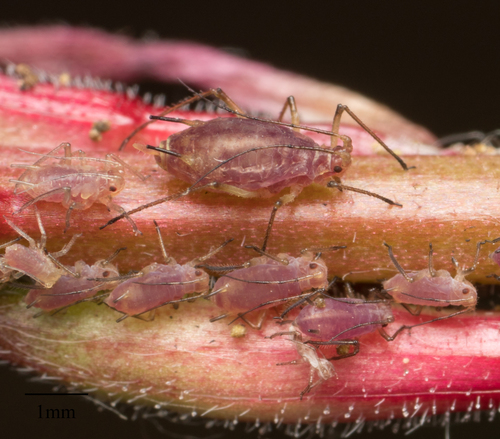
About the Corn Leaf Aphid
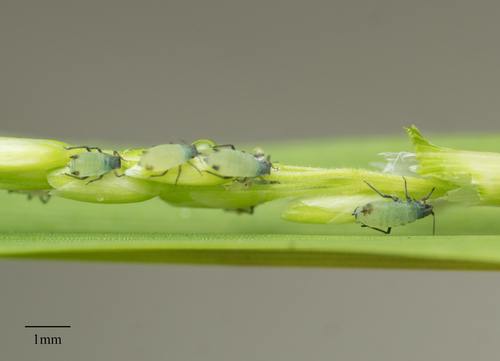
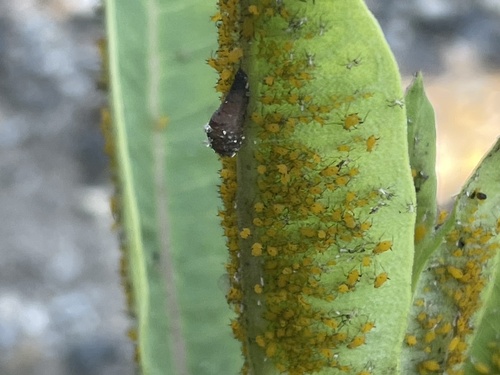
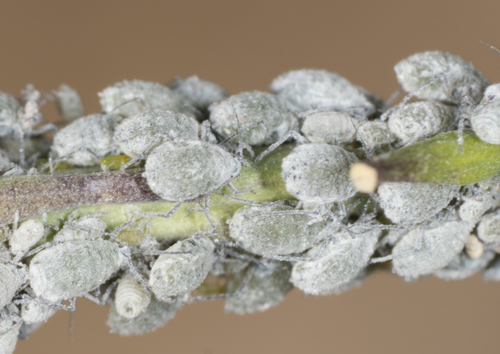
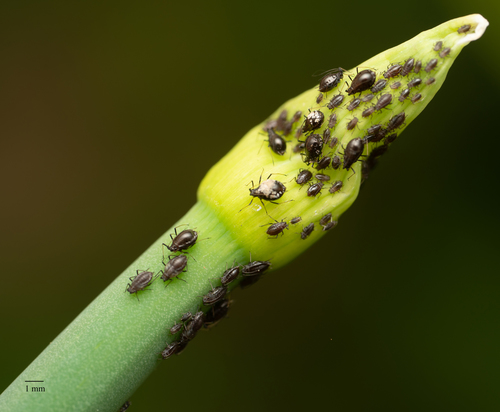
Rhopalosiphum maidis, common names corn leaf aphid and corn aphid, is an insect, and a pest of maize and other crops. It has a nearly worldwide distribution and is typically found in agricultural fields, grasslands, and forest-grassland zones. Among aphids that feed on maize, it is the most commonly encountered and most economically damaging, particularly in tropical and warmer temperate areas. In addition to maize, R. maidis damages rice, sorghum, and other cultivated and wild monocots.
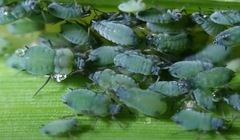
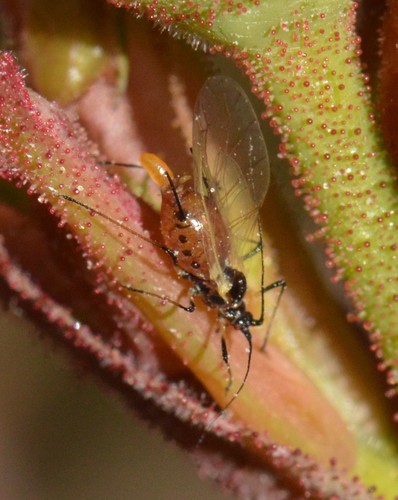
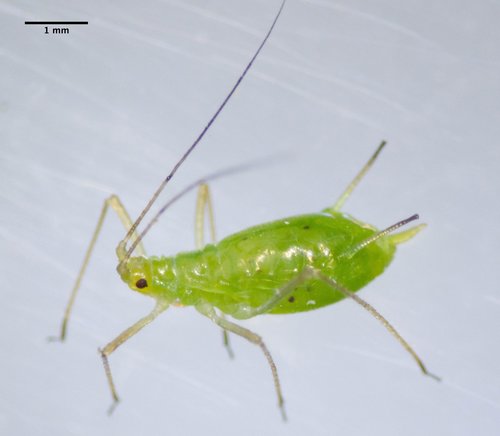
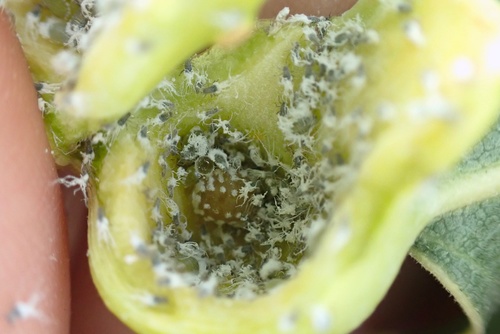
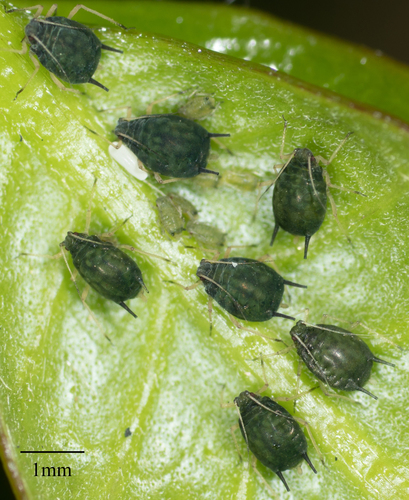
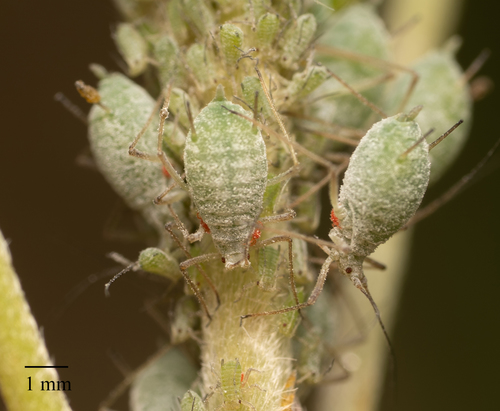
The bodies of wingless parthenogenetic females are green or whitish-green. The head, antennae, legs, cornicles, tail, and transverse bands on the abdomen are black-brown. The body has sparse short hairs. The length of the antennae is less than half the length of the body. Cornicles are not longer than the finger-like tail. In winged females, the head and thoracic section are black-brown and the cornicles are shorter than in the wingless females.
Most R. maidis populations are anholocyclic, i.e. reproduction occurs entirely by parthenogenesis. However, sexual reproduction has been reported in Pakistan and Korea, with Prunus ssp. as the primary host. In populations in Japan and Kenya... Wikipedia →