About the Douglas Fir Glow-Worm
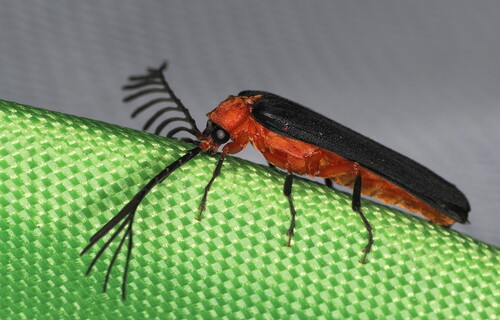
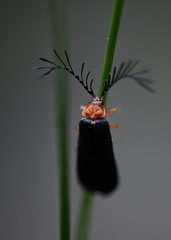
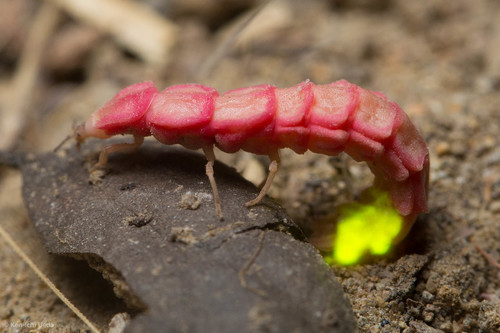
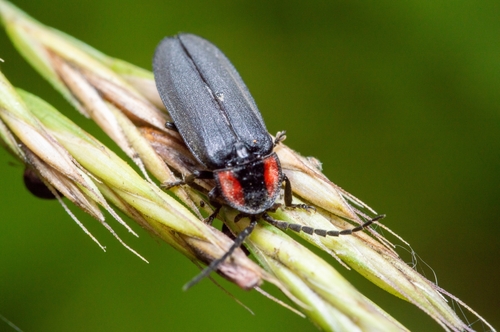
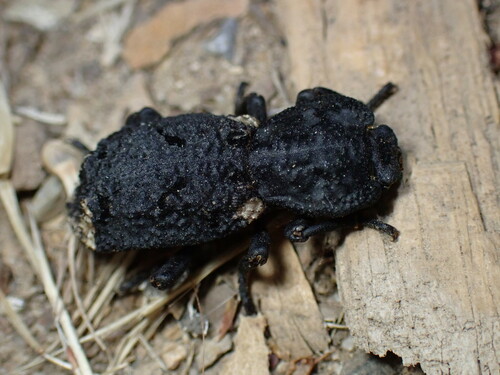
Pterotus obscuripennis, commonly known as the Douglas fir glowworm, is a species of firefly in the beetle family Lampyridae. It is found along the western coast of North America, from Washington to California. Adult males are smaller (9.5-12 mm), alate, capable of flight, have an elaborate antenna morphology, and are totally non-luminous. Adult females are larger (~25-35 mm), fully larviform and flightless. They are cream to light golden brown in color and luminous with photo organs on the seventh and eighth abdominal segment. Larvae are largely black in color, with cream to white coloration in the spaces between the body segments, and are luminous and predatory on slugs.
The principle foods of the larvae is slugs and/or snails. A large part of the digestive process for larva is pre-oral: mandibles containing hollow centers are used to inject a brown fluid that is slightly alkaline, contains proteases, and observationally, likely contains a neurotoxin. When bitten, a slug writhes, secretes mucous, and tries to flee. The larva will bite the slug multiple times, causing the same response. Around 10 minutes after the first bite, the prey will become immobilized... Wikipedia →