Forest Cuckoo Bumble Bee

Forest Cuckoo Bumble Bee

Bombus sylvestris

Daily sighting probability <5% · Rare
at Manchester

In 3 days ~10% in a week ~20%

5 Verified sightings at Manchester
11 In 1 park From 2019 to 2026
May Best month
☀️ Diurnal When it's spotted

About the Forest Cuckoo Bumble Bee

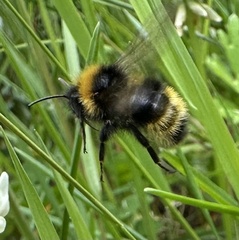
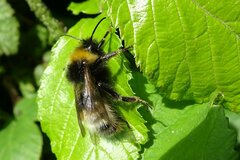
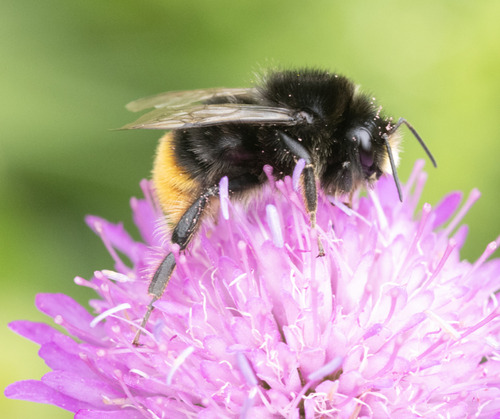
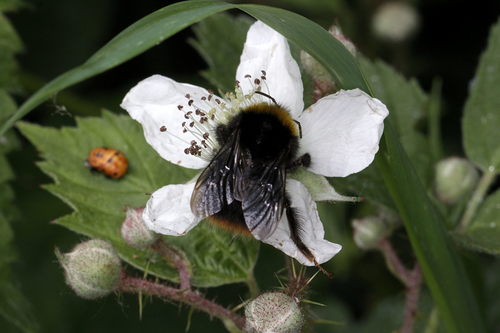
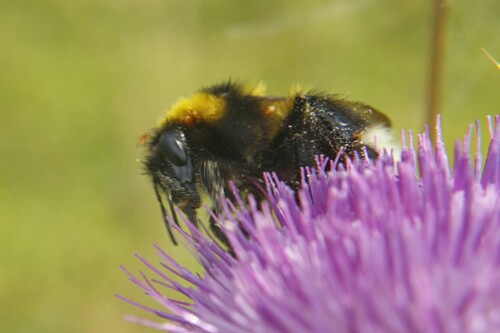
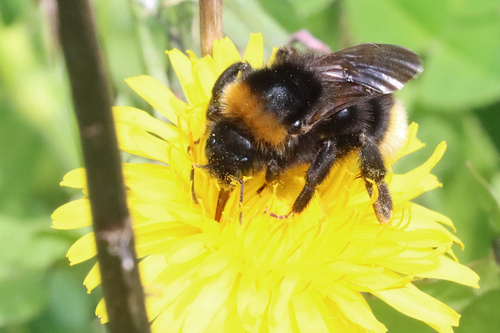
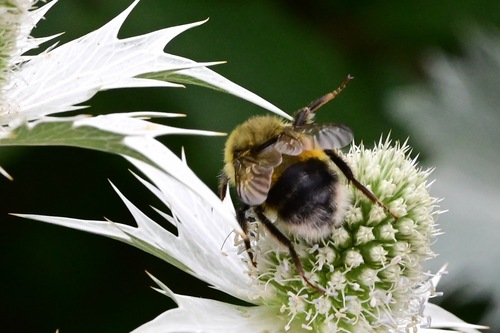
Bombus sylvestris, known as the forest cuckoo bumblebee or four-coloured cuckoo bee, is a species of cuckoo bumblebee, found in most of Europe and Russia. Its main hosts are Bombus pratorum, Bombus jonellus, and Bombus monticola. As a cuckoo bumblebee, Bombus sylvestris lays its eggs in another bumblebee's nest. This type of bee leaves their young to the workers of another nest for rearing, allowing cuckoo bumblebees to invest minimal energy and resources in their young while still keeping the survival of their young intact.

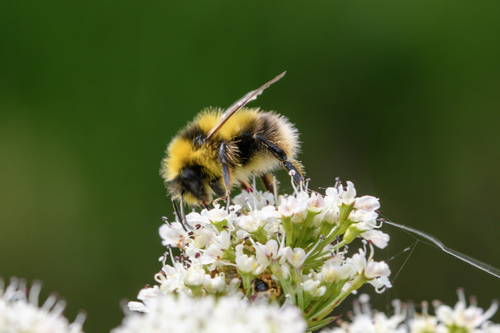
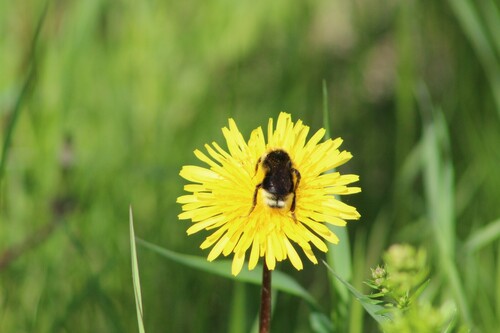
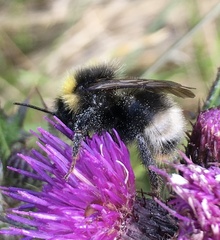
Bombus sylvestris belongs to the order Hymenoptera. Specifically, the species falls under the family Apidae, which further subdivides into the subfamily Apinae, and then the tribe Bombini. This is a small bumblebee; the queen has a body length of 15 mm (0.59 in) and the male one of 14 mm (0.55 in). The head is round, and the proboscis is short. Its fur is black with a yellow collar and a white tail. Sometimes the bumblebee can have a few pale hairs on top of its head, its scutellum, and/or on its tergite (abdominal segment). The male is variably melanistic. Those rarely found in northern Scotland... Wikipedia →
Global Distribution

Parks Where Found

# Park Country Daily sighting probability
1 Cairngorms National Park 🇬🇧 United Kingdom
~10%

More parks will be added in future updates.

Cities Where Found

# City Country Daily sighting probability
1 Manchester 🇬🇧 United Kingdom
<5%

Before you go

What are the chances of seeing a Forest Cuckoo Bumble Bee in Manchester?

Rare

Under 5% of wildlife watchers report a Forest Cuckoo Bumble Bee sighting in Manchester on a given day, based on 5 verified sightings from GBIF citizen-science data. It is the 421st most-seen of the 458 insects we can rate there. Over three days the chance rises to about 10%, and over a week to about 20%, if each day is a fresh chance.

When is the best time to see a Forest Cuckoo Bumble Bee in Manchester?

April and May

In those months about 10% of wildlife watchers report a Forest Cuckoo Bumble Bee in Manchester on a given day, against under 5% in June to March, the lowest months.

What time of day is best to see a Forest Cuckoo Bumble Bee?

Between 2 and 5 pm

Across all the parks we cover, that three-hour window holds the most Forest Cuckoo Bumble Bee sightings with a recorded time, and nearly all of them come between 6 am and 6 pm: it is a daytime animal.

Where else can you see a Forest Cuckoo Bumble Bee?

Only Manchester, in our data

Manchester is the only city on Wallace's Line with enough records to rate Forest Cuckoo Bumble Bee sightings: under 5% of wildlife watchers there report one on a given day.

Where does the Forest Cuckoo Bumble Bee sighting chance come from?

GBIF citizen-science records

It is estimated from how often the Forest Cuckoo Bumble Bee is recorded against all the insects logged in Manchester (5 verified sightings), calibrated against known sighting rates. Figures are rounded to the nearest 10% because citizen-science data supports honest approximations, not decimals, and months with records from fewer than five people show "—". How it works.

← Back to Manchester