
Cuculus pectoralis silhouette

Silhouette: Nicolas Huet le Jeune and Jean-Gabriel Prêtre (vectorized by T. Michael Keesey) · PhyloPic

Cuculus pectoralis

Cuculus pectoralis

Daily sighting probability <5% · Rare
at Manila

In 3 days <5% in a week ~10%

45 Verified sightings at Manila
August Best month

About the Cuculus pectoralis

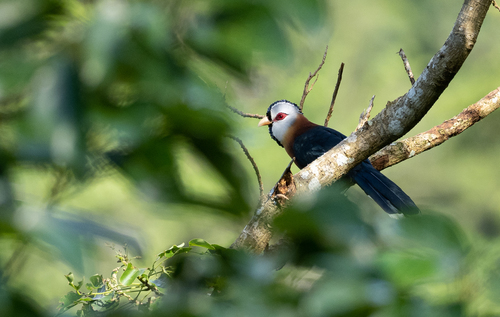
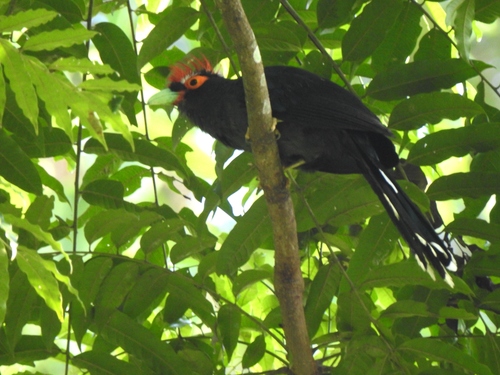
The Philippine hawk-cuckoo (Hierococcyx pectoralis) is a bird belonging to the cuckoo family. It is found only in the Philippines. It was formerly classified as a subspecies of Hodgson's hawk-cuckoo but is now its own species.

It is a medium-sized cuckoo, about 29 centimetres in length. The adult is dark-grey above and white below with a pale rufous breast and upper belly. The tail has three or four black and buff bars, a broad black band near the tip and a pale rufous tip. There is a bare yellow ring around the eye. The legs and feet are also yellow and the bill is black and olive. Immature birds have rufous barring above and brown streaks below.

The bird has a high-pitched call of five to seven notes. The call lasts for about 1.5 seconds and is repeated up to 10 times, becoming louder and faster. It was formerly classified as a subspecies of Hodgson's hawk-cuckoo (H. fugax) but is now commonly treated as a separate species based on differences in vocalizations.

This species is monotypic. It is an insectivore, primarily feeding on caterpillars but also feeds on fruits and berries. There is not much information about its breeding... Wikipedia →

Global Distribution

Parks Where Found

# Park Country Daily sighting probability

More parks will be added in future updates.

Cities Where Found

# City Country Daily sighting probability
1 Manila 🇵🇭 Philippines
<5%

Before you go

What are the chances of seeing a Cuculus pectoralis in Manila?

Rare

Under 5% of wildlife watchers report a Cuculus pectoralis sighting in Manila on a given day, based on 45 verified sightings from GBIF citizen-science data. It is the 129th most-seen of the 191 birds we can rate there. Over three days the chance rises to under 5%, and over a week to about 10%, if each day is a fresh chance.

When is the best time to see a Cuculus pectoralis in Manila?

Any time of year

In every month with enough records, under 5% of wildlife watchers report a Cuculus pectoralis in Manila on a given day, so our monthly data shows no clear season.

Where else can you see a Cuculus pectoralis?

Only Manila, in our data

Manila is the only city on Wallace's Line with enough records to rate Cuculus pectoralis sightings: under 5% of wildlife watchers there report one on a given day.

Which relatives of the Cuculus pectoralis live in Manila?

Same family: Cuculidae

The closest relatives of the Cuculus pectoralis that you can see in Manila (family Cuculidae, Cuckoos) are Philippine Coucal (about 10%) and Asian Koel (about 10%), with each one's daily chance of a sighting.

Where does the Cuculus pectoralis sighting chance come from?

GBIF citizen-science records

It is estimated from how often the Cuculus pectoralis is recorded against all the birds logged in Manila (45 verified sightings), calibrated against known sighting rates. Figures are rounded to the nearest 10% because citizen-science data supports honest approximations, not decimals, and months with records from fewer than five people show "—". How it works.

← Back to Manila