Russet Nightingale-Thrush

Russet Nightingale-Thrush

Catharus occidentalis

Silhouette: Sharon Wegner-Larsen · PhyloPic

LCLeast ConcernNTVUENCR Endemic
Daily sighting probability <5% · Rare
at Mexico City

In 3 days <5%

41 Verified sightings at Mexico City
24 In 1 park From 2019 to 2026
October Best month
☀️ Diurnal When it's spotted

About the Russet Nightingale-Thrush

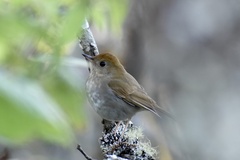
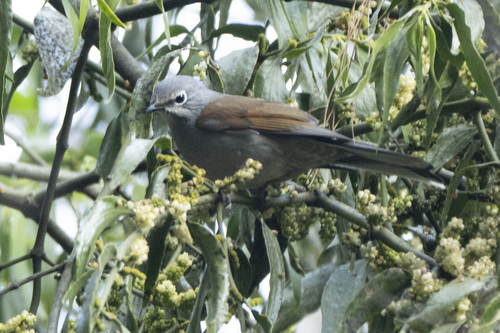
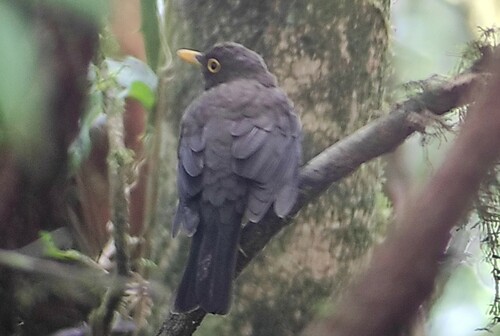
The russet nightingale-thrush (Catharus occidentalis) is a species of bird in the family Turdidae, the thrushes and allies. It is endemic to Mexico. The russet nightingale-thrush was originally described in 1859 with its current binomial Catharus occidentalis. It and the hermit thrush (Catharus guttatus) of temperate North America are sister species.

The russet nightingale-thrush has these four subspecies: What is now the ruddy-capped nightingale-thrush (C. frantzii) was originally described as a species but for much of the twentieth century was treated as a subspecies of the russet nightingale-thrush.

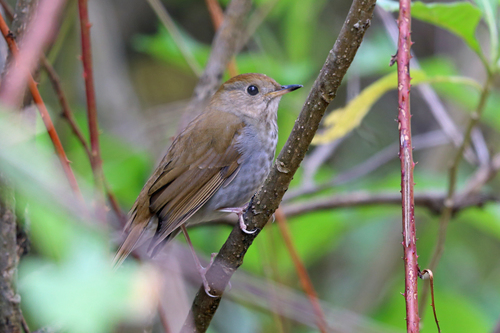
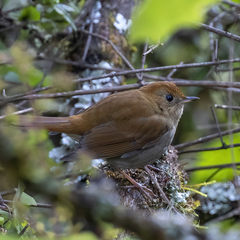
The russet nightingale-thrush is 15.5 to 18 cm (6.1 to 7.1 in) long and weighs 22 to 37 g (0.78 to 1.3 oz). The sexes have the same plumage. Adults of the nominate subspecies C. o. occidentalis have a deep russet brown crown and nape and a light olive brown or buffy olive face. Their upperparts are mostly a more olivaceous russet brown than the crown but the uppertail coverts and tail are more rufescent than the... Wikipedia →

Sounds

Song0:53

Mexico · 2024

© Richard E. Webster · XC925975 · CC BY-NC-SA 4.0

Call0:23

Mexico · 2021

© Manuel Grosselet · XC681649 · CC BY-NC-SA 4.0

Song1:16

Mexico · 2021

© Oveth Fuentes · XC672761 · CC BY-NC-SA 4.0

Global Distribution

Parks Where Found

# Park Country Daily sighting probability
1 Reserva de la Biosfera Mariposa Monarca 🇲🇽 Mexico
~10%

More parks will be added in future updates.

Cities Where Found

# City Country Daily sighting probability
1 Mexico City 🇲🇽 México
<5%

Before you go

What are the chances of seeing a Russet Nightingale-Thrush in Mexico City?

Rare

Under 5% of wildlife watchers report a Russet Nightingale-Thrush sighting in Mexico City on a given day, based on 41 verified sightings from GBIF citizen-science data. It is the 266th most-seen of the 332 birds we can rate there. Over three days the chance rises to under 5%, if each day is a fresh chance.

When is the best time to see a Russet Nightingale-Thrush in Mexico City?

Any time of year

In every month with enough records, under 5% of wildlife watchers report a Russet Nightingale-Thrush in Mexico City on a given day, so our monthly data shows no clear season.

What time of day is best to see a Russet Nightingale-Thrush?

Between 8 and 11 am

Across all the parks we cover, that three-hour window holds the most Russet Nightingale-Thrush sightings with a recorded time, and about 9 in 10 of them come between 6 am and 6 pm: it is a daytime animal.

Where else can you see a Russet Nightingale-Thrush?

Only Mexico City, in our data

Mexico City is the only city on Wallace's Line with enough records to rate Russet Nightingale-Thrush sightings: under 5% of wildlife watchers there report one on a given day.

Where does the Russet Nightingale-Thrush sighting chance come from?

GBIF citizen-science records

It is estimated from how often the Russet Nightingale-Thrush is recorded against all the birds logged in Mexico City (41 verified sightings), calibrated against known sighting rates. Figures are rounded to the nearest 10% because citizen-science data supports honest approximations, not decimals, and months with records from fewer than five people show "—". How it works.
← Back to Mexico City