Florida Bee-Killer

Florida Bee-Killer

Mallophora bomboides

Daily sighting probability <5% · Rare
at Miami

In 3 days ~10% in a week ~20%

28 Verified sightings at Miami
November Best month
☀️ Diurnal When it's spotted

About the Florida Bee-Killer

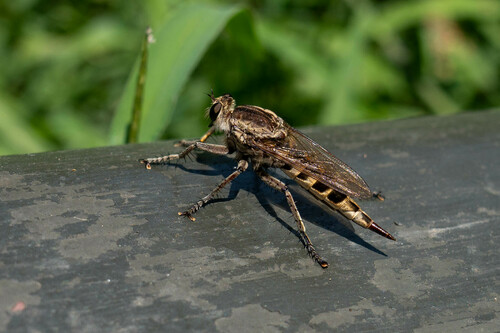
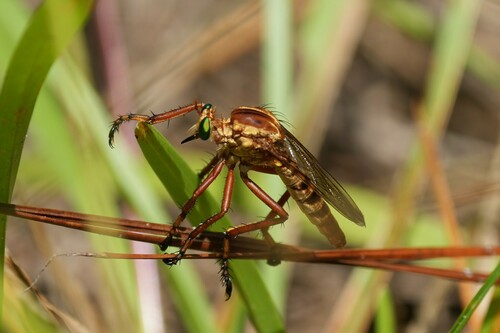
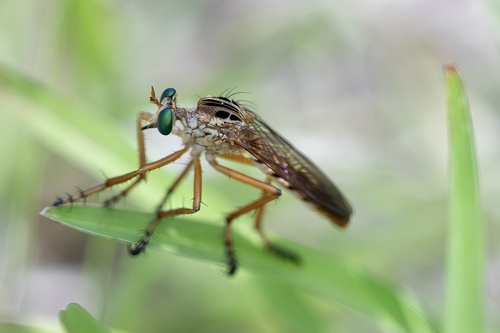
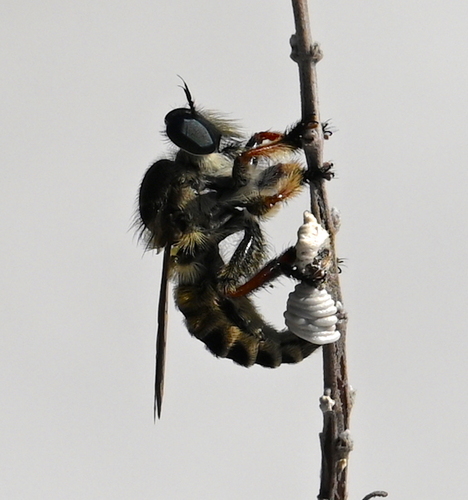
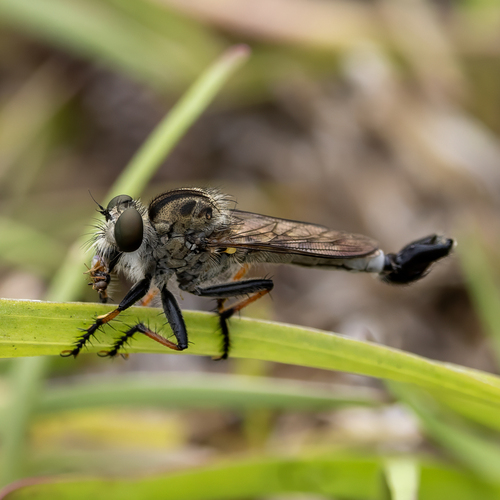
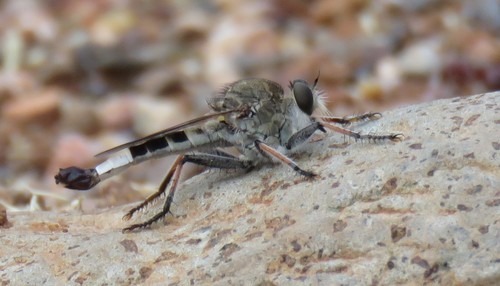
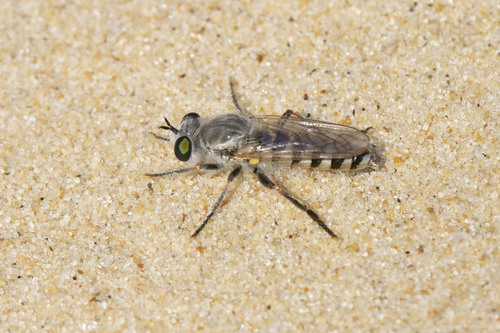
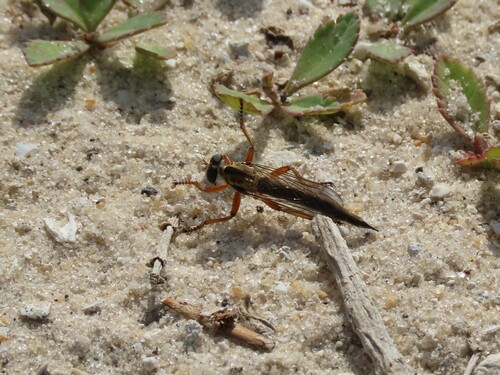
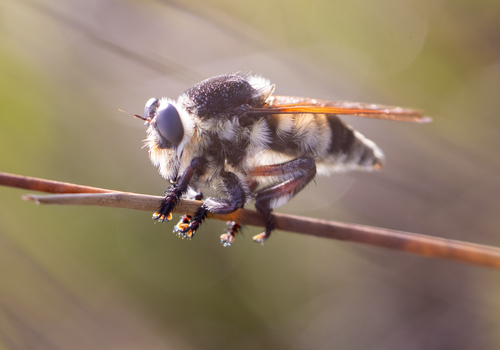
Mallophora bomboides, also known as the Florida bee killer, is a predaceous species of robber fly of the family Asilidae that feeds primarily on bumblebees. M. bomboides is a noteworthy instance of Batesian mimicry given its close resemblance to its prey, the bumblebee. These bees are typically found in the Eastern and Southern regions of the United States like South Carolina and Florida.

M. bomboides typically have three basal abdominal tergites densely covered with yellow hairs. The fourth and fifth tergites have black hairs, and the final two segments have pale hairs. The ventrum of the abdomen is adorned with yellow hairs. The average body length of M. bomboides is about 25 mm.

M. bomboides occurs in the southeastern United States in states including North Carolina, South Carolina, Georgia, Florida, Alabama, and Mississippi. Flight time in Florida is from April through December, though they are most commonly seen in late summer.

Adults typically live in open habitats often in the vicinity of apiaries, perching on stalks of weeds or tips of shrubs from which they launch their... Wikipedia →
Global Distribution

Parks Where Found

# Park Country Daily sighting probability

More parks will be added in future updates.

Cities Where Found

# City Country Daily sighting probability
1 Miami 🇺🇸 United States
<5%

Before you go

What are the chances of seeing a Florida Bee-Killer in Miami?

Rare

Under 5% of wildlife watchers report a Florida Bee-Killer sighting in Miami on a given day, based on 28 verified sightings from GBIF citizen-science data. It is the 293rd most-seen of the 826 insects we can rate there. Over three days the chance rises to about 10%, and over a week to about 20%, if each day is a fresh chance.

When is the best time to see a Florida Bee-Killer in Miami?

October and November

In those months about 10% of wildlife watchers report a Florida Bee-Killer in Miami on a given day, against under 5% in December to September, the lowest months.

What time of day is best to see a Florida Bee-Killer?

Between 11 am and 2 pm

Across all the parks we cover, that three-hour window holds the most Florida Bee-Killer sightings with a recorded time, and about 8 in 10 of them come between 6 am and 6 pm: it is a daytime animal.

Where else can you see a Florida Bee-Killer?

Only Miami, in our data

Miami is the only city on Wallace's Line with enough records to rate Florida Bee-Killer sightings: under 5% of wildlife watchers there report one on a given day.

Which relatives of the Florida Bee-Killer live in Miami?

Same family: Asilidae

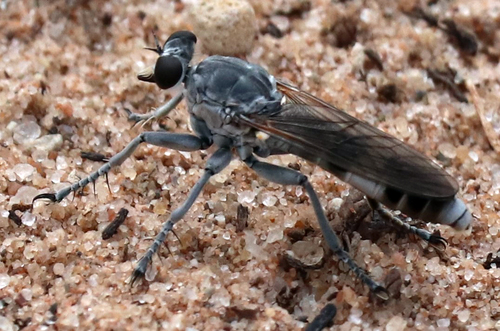
The closest relatives of the Florida Bee-Killer that you can see in Miami (family Asilidae, Robber Flies) are Northern Triorla (about 10%) and White-Sand Marauder (about 10%), with each one's daily chance of a sighting.

Where does the Florida Bee-Killer sighting chance come from?

GBIF citizen-science records

It is estimated from how often the Florida Bee-Killer is recorded against all the insects logged in Miami (28 verified sightings), calibrated against known sighting rates. Figures are rounded to the nearest 10% because citizen-science data supports honest approximations, not decimals, and months with records from fewer than five people show "—". How it works.

← Back to Miami