

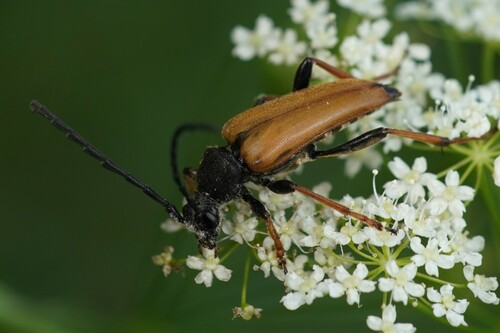
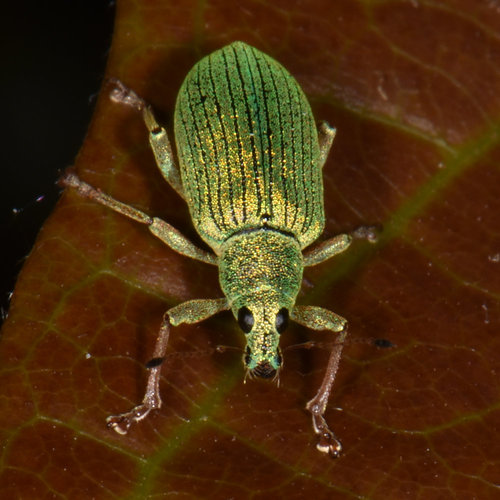
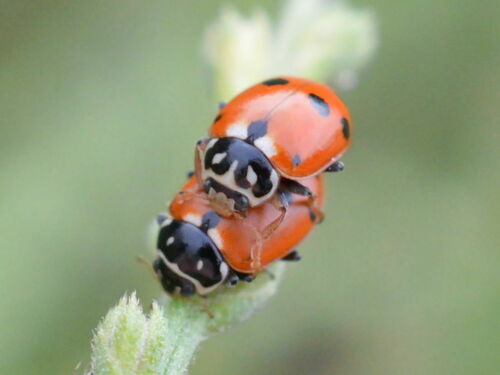
Agriotes ustulatus

Agriotes ustulatus

Agriotes ustulatus

Daily sighting probability <5% · Rare
at Munich

In 3 days ~10% in a week ~20%

5 Verified sightings at Munich
July Best month

About the Agriotes ustulatus

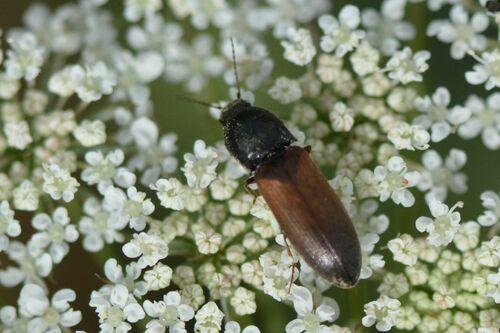
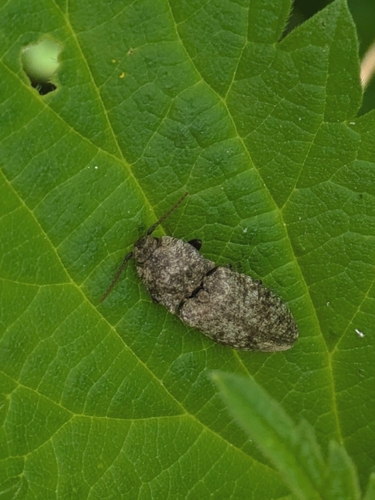
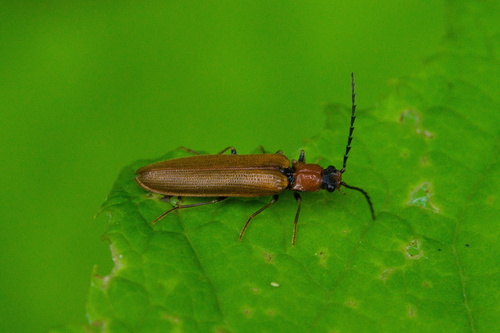
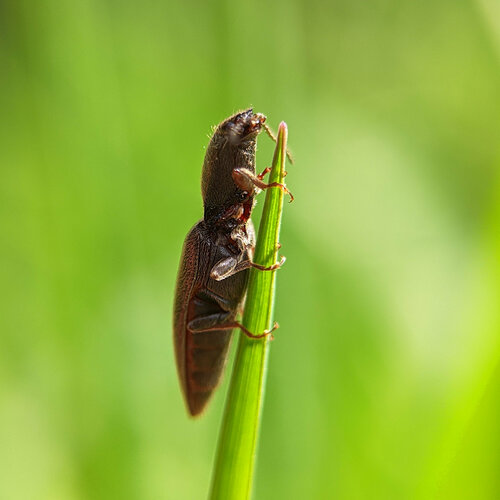
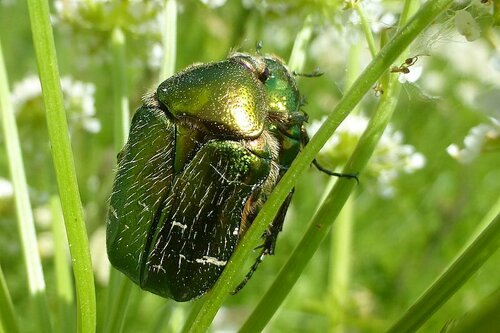
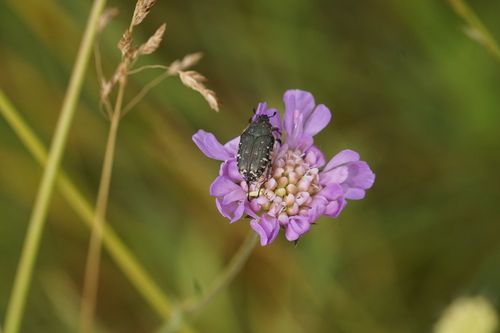
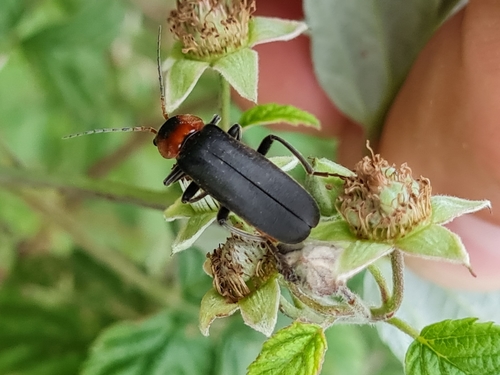
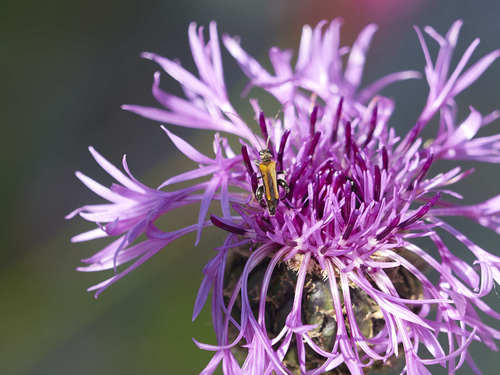
Agriotes ustulatus, commonly known as western click beetle, is a species from the family Elateridae that is widely distributed in central and southern Europe. The larvae (wireworms) are regarded as agricultural pests of maize and other crops like sugar beet, sunflower, wheat or potatoes. In maize, mainly the germinating seeds are attacked, but in other crops the roots of seedlings are damaged. The adult beetles do not damage crops and feed mainly on the flowers of weeds. They can be monitored with pheromone traps and the larvae are mainly controlled by seed dressing with insecticides. A female lays around 80 eggs in the top layer of the soil and the larvae emerge after about 2 weeks. In northern Italy, the larvae develop over almost 2 years and go through 12–13 instars, they pupate in spring and the adults emerge in the summer. In total, one generation is completed within 24 months. The development of the larvae lasts longer further north, where one life cycle extends over 3 or 4 years. Adult beetles of A. ustulatus are around 10 mm long. They live for 1 or 2 weeks in northern Italy and can be identified by the arrangement of hairs on the pronotum, by the morphology of the bases of the elytra and the antennae, as well as by their variable coloration with the elytra being either yellow-brown or completely dark brown to black. The larvae also have characteristic features which allow reliable identification. These are found on the tip of the abdomen and in the morphology of the mandible and the frontoclypeus. Wikipedia →

Global Distribution

Parks Where Found

# Park Country Daily sighting probability

More parks will be added in future updates.

Cities Where Found

# City Country Daily sighting probability
1 Munich 🇩🇪 Germany
<5%

Before you go

What are the chances of seeing an Agriotes ustulatus in Munich?

Rare

Under 5% of wildlife watchers report an Agriotes ustulatus sighting in Munich on a given day, based on 5 verified sightings from GBIF citizen-science data. It is the 445th most-seen of the 521 insects we can rate there. Over three days the chance rises to about 10%, and over a week to about 20%, if each day is a fresh chance.

When is the best time to see an Agriotes ustulatus in Munich?

July

In that month about 10% of wildlife watchers report an Agriotes ustulatus in Munich on a given day, against under 5% in August to June, the lowest months. That is one of Munich's wettest months, with about 140 mm of rain against 60 mm in February.

Where else can you see an Agriotes ustulatus?

Only Munich, in our data

Munich is the only city on Wallace's Line with enough records to rate Agriotes ustulatus sightings: under 5% of wildlife watchers there report one on a given day.

Where does the Agriotes ustulatus sighting chance come from?

GBIF citizen-science records

It is estimated from how often the Agriotes ustulatus is recorded against all the insects logged in Munich (5 verified sightings), calibrated against known sighting rates. Figures are rounded to the nearest 10% because citizen-science data supports honest approximations, not decimals, and months with records from fewer than five people show "—". How it works.

← Back to Munich