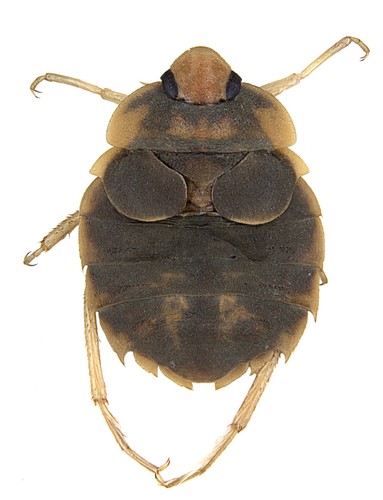
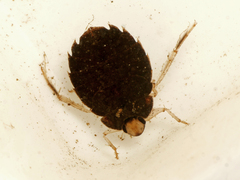
Aphelocheirus aestivalis

Aphelocheirus aestivalis

Aphelocheirus aestivalis

Daily sighting probability <5% · Rare
at Munich

In 3 days ~10% in a week ~20%

7 Verified sightings at Munich
November Best month

About the Aphelocheirus aestivalis

Aphelocheirus aestivalis is a Palearctic species of true bug. It is aquatic and wingless, covered in microscopic hairs allowing it to form a physical gill when underwater. This species was first described in 1794 by Danish zoologist Johan Christian Fabricius, who studied specimens of it and believed it belongs in a genus known as Naucoris, giving it the scientific name Naucoris aestivalis. Fabricius did not list a specific locality where the specimens were found, only stating that they originate from the region formerly known as Gallia. However, it is most likely that the specimens originate from France. British entomologist John O. Westwood would later study more specimens of this insect collected across England and determine that the species belongs in a separate genus. He therefore established the genus Aphelocheirus in 1833, and renamed this species as Aphelocheirus aestivalis, making it the type species of this genus. The generic name combines the Ancient Greek words apheles (ἀφελής, meaning "simple") and cheir (χείρ, meaning "hand"), in reference to the simple structure of the insect's forelimbs. In 1965, it was reported that the holotype specimen of A. aestivalis... Wikipedia →

Global Distribution

Parks Where Found

# Park Country Daily sighting probability

More parks will be added in future updates.

Cities Where Found

# City Country Daily sighting probability
1 Munich 🇩🇪 Germany
<5%

Before you go

What are the chances of seeing an Aphelocheirus aestivalis in Munich?

Rare

Under 5% of wildlife watchers report an Aphelocheirus aestivalis sighting in Munich on a given day, based on 7 verified sightings from GBIF citizen-science data. It is the 334th most-seen of the 521 insects we can rate there. Over three days the chance rises to about 10%, and over a week to about 20%, if each day is a fresh chance.

When is the best time to see an Aphelocheirus aestivalis in Munich?

September and November

In those months about 10% of wildlife watchers report an Aphelocheirus aestivalis in Munich on a given day, against under 5% in October and December–August, the lowest months.

Where else can you see an Aphelocheirus aestivalis?

Only Munich, in our data

Munich is the only city on Wallace's Line with enough records to rate Aphelocheirus aestivalis sightings: under 5% of wildlife watchers there report one on a given day.

Which relatives of the Aphelocheirus aestivalis live in Munich?

Same order: Hemiptera

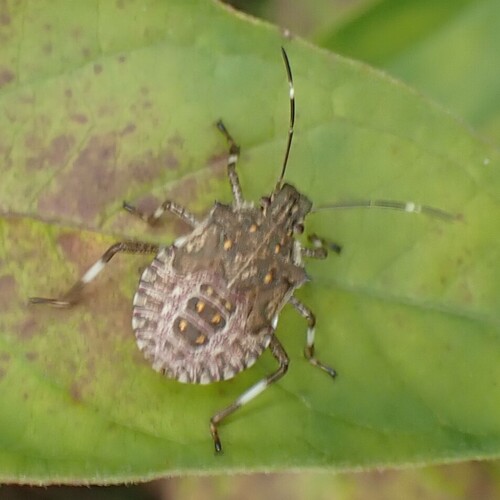
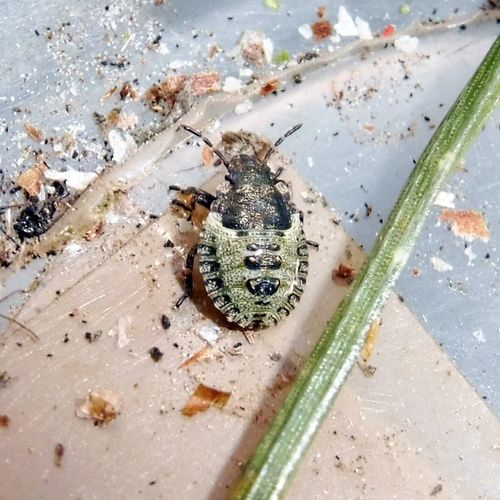
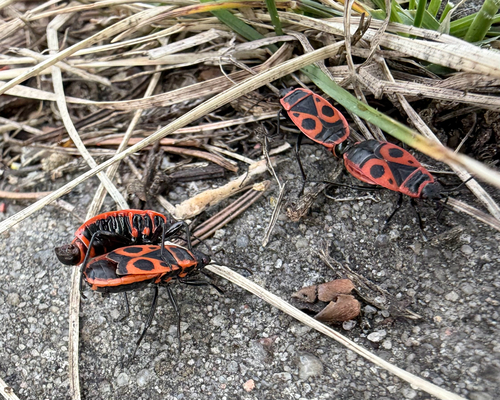
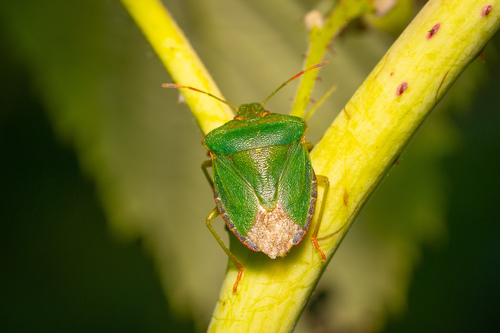
The closest relatives of the Aphelocheirus aestivalis that you can see in Munich (order Hemiptera, True Bugs, Hoppers, Aphids, and allies) are Brown Marmorated Stink Bug (about 20%), Forest Bug (about 20%) and European Firebug (about 20%), with each one's daily chance of a sighting.

Where does the Aphelocheirus aestivalis sighting chance come from?

GBIF citizen-science records

It is estimated from how often the Aphelocheirus aestivalis is recorded against all the insects logged in Munich (7 verified sightings), calibrated against known sighting rates. Figures are rounded to the nearest 10% because citizen-science data supports honest approximations, not decimals, and months with records from fewer than five people show "—". How it works.

← Back to Munich