About the Bombay Locust
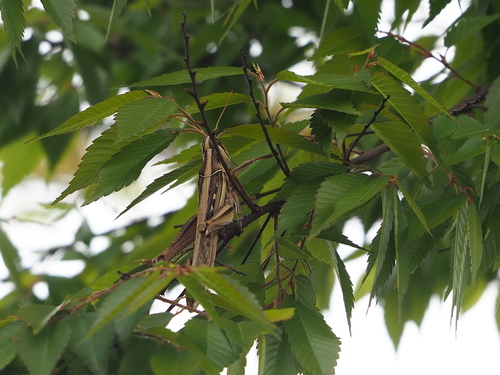
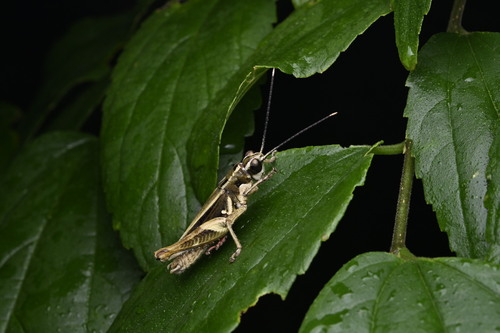
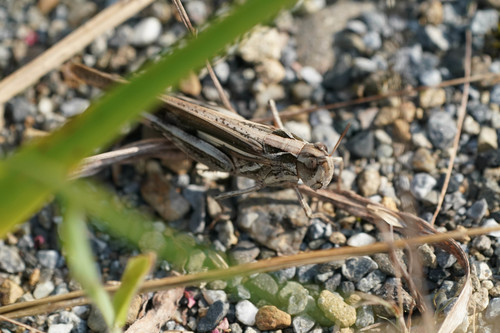
Patanga succincta, the Bombay locust, is a species of locust found in India and southeast Asia. Usually a solitary insect, only in India has it has exhibited swarming behaviour. The last plague of this locust was in that country between 1901 and 1908 and there have not been any swarms since 1927. It is thought that the behaviour of the insects has altered because of changing practices in agricultural land use.
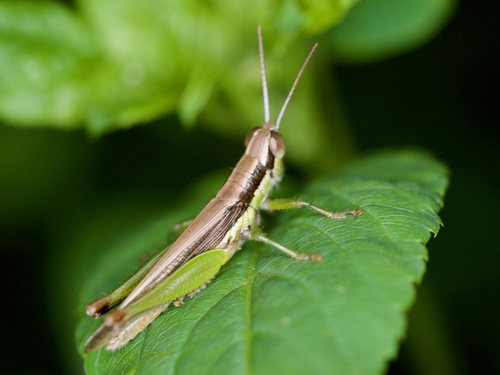
Newly hatched Bombay locust nymphs are green with black spots. After they have grown and shed their skin several times they become more variable in colour. Some are plain green, and others are either orange-brown or green with a black spot at the base of each wingpad. The immature adults are at first pale brown with a yellowish dorsal stripe and a dark-coloured prothorax with two lateral pale bands. After six to eight weeks the general colour becomes darker and changes to a rosy red colour, particularly noticeable on the hind wings. When the locusts become mature the following year, they turn dark brown.
The Bombay locust is found in India, Southwest Asia and Southeast Asia. Its range extends from India and Pakistan to Thailand... Wikipedia →