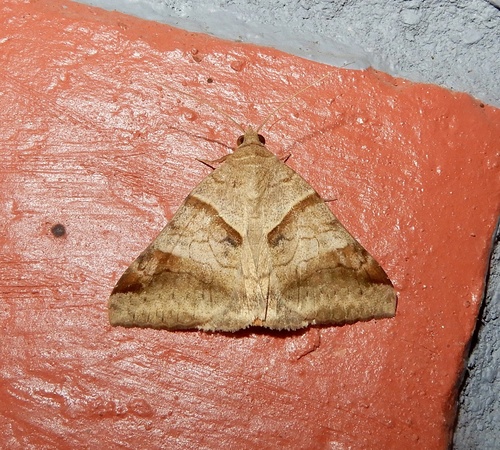
Daily sighting probability ~10% · With luck
at New Delhi

In 3 days ~20% in a week ~30%

9 Verified sightings at New Delhi
36 In 1 park From 2019 to 2026
July Best month
🌙 Nocturnal When it's spotted

About the Asota ficus

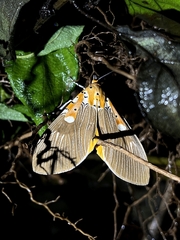
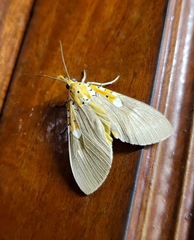
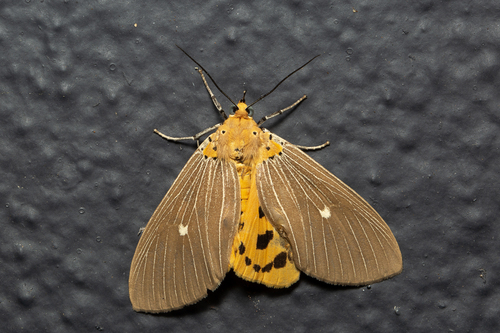
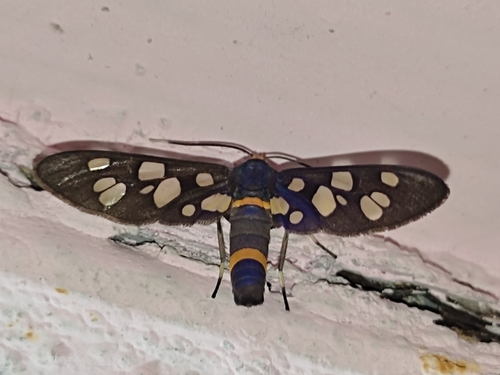
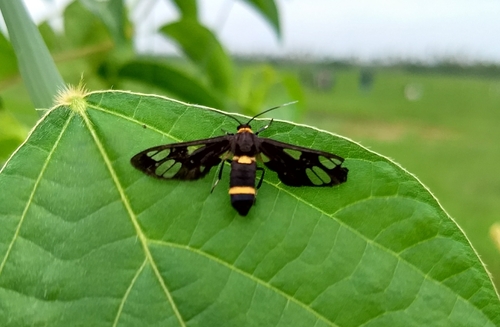
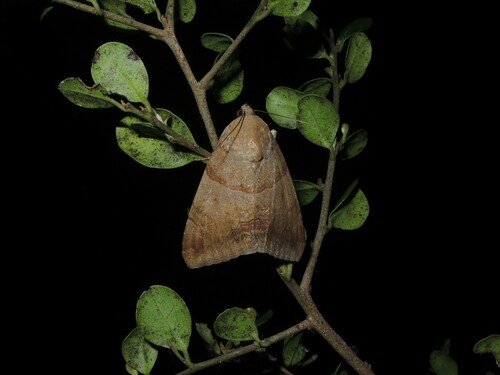
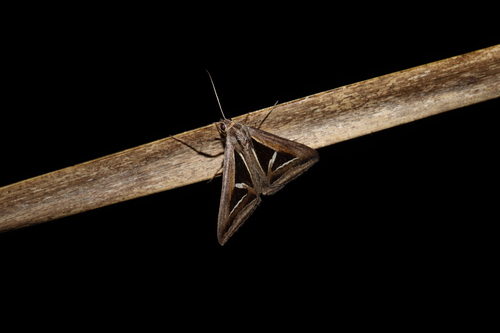
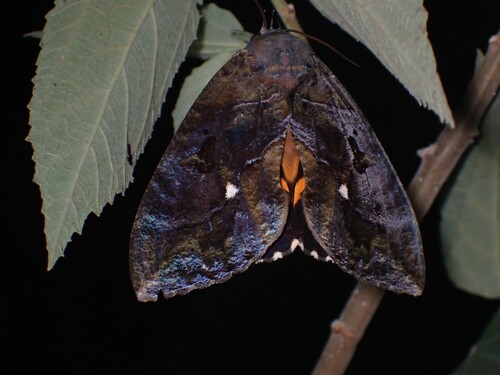
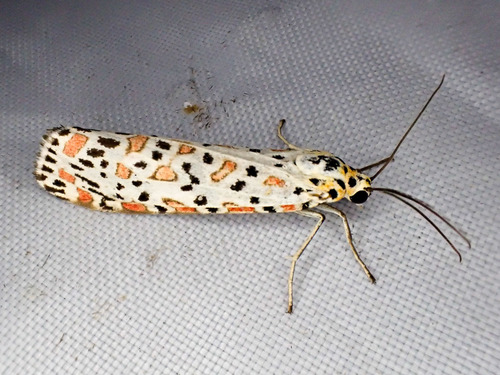
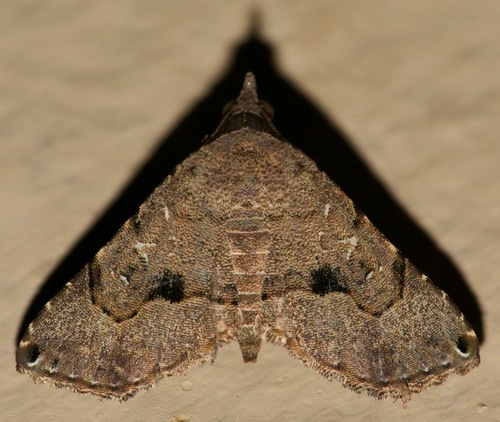
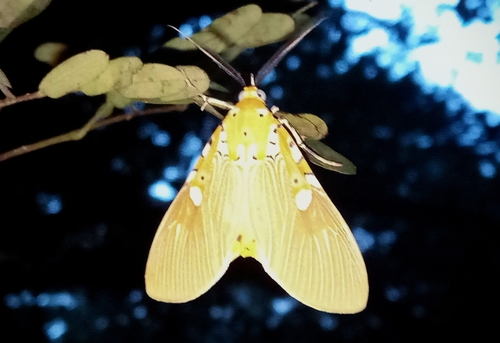
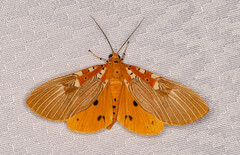
Asota ficus is a moth in the family Erebidae first described by Johan Christian Fabricius in 1775. It is found in Afghanistan, Bangladesh, China, Taiwan, India, Indonesia (Sumatra), Laos, Myanmar, Nepal, Pakistan, Sri Lanka, Thailand and northern Vietnam.

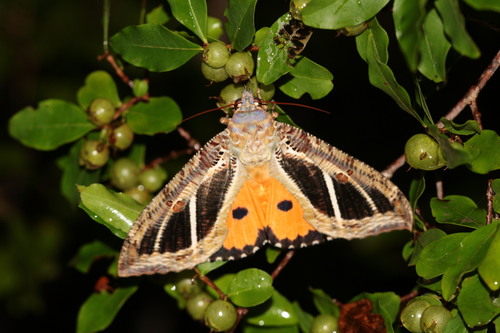
The wingspan is about 67 mm. Antennae of male fasciculated and long. Third joint of palpi long which is grey tipped with black. Base of tegula yellow with a black spot. Dorsal spot of abdomen is often almost obsolete. Forewings with a yellow basal patch which extends along costa and in cell to two thirds length of cell, with an orange spot outlined with black on the costa, streaks in the cell and on inner margin. Two black spots found on costa with two in cell, one on inner margin and two lines across interno-median interspace. The rest of the wing is pale reddish brown with yellow streaked veins. Hindwings are bright orange yellowish. There is a black spot at end of cell and a submarginal irregular series.

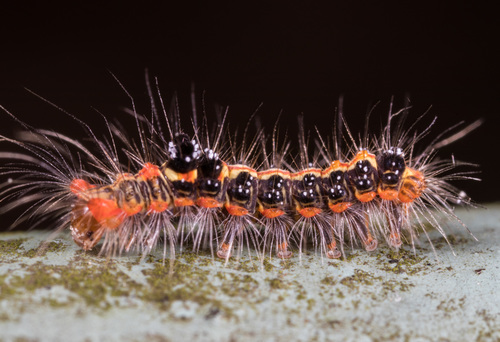
Larva has a black head. Somites are dark velvety brown with slight white hairs arising from red papilla. Yellow patches can be found on fourth to eleventh somites. Zwier, Jaap... Wikipedia →
Global Distribution

Parks Where Found

# Park Country Daily sighting probability
1 Kanha National Park 🇮🇳 India
~40%

More parks will be added in future updates.

Cities Where Found

# City Country Daily sighting probability
1 New Delhi 🇮🇳 India
~10%
2 Chennai 🇮🇳 India
<5%

Before you go

What are the chances of seeing an Asota ficus in New Delhi?

With luck

About 10% of wildlife watchers report an Asota ficus sighting in New Delhi on a given day, based on 9 verified sightings from GBIF citizen-science data. It is the 115th most-seen of the 174 insects we can rate there. Over three days the chance rises to about 20%, and over a week to about 30%, if each day is a fresh chance.

When is the best time to see an Asota ficus in New Delhi?

July

In that month about 20% of wildlife watchers report an Asota ficus in New Delhi on a given day, against under 5% in June and September–April, the lowest months. That is one of New Delhi's wettest months, with about 220 mm of rain against almost none in November.

What time of day is best to see an Asota ficus?

Between 11 pm and 2 am

Across all the parks we cover, that three-hour window holds the most Asota ficus sightings with a recorded time, and about 9 in 10 of them come between 6 pm and 6 am: it is mostly seen at night.

Is New Delhi the best place to see an Asota ficus?

Yes

Of the 2 cities where we can rate Asota ficus sightings, New Delhi has the highest daily chance: about 10%. Next come Chennai (India, under 5%).

Where does the Asota ficus sighting chance come from?

GBIF citizen-science records

It is estimated from how often the Asota ficus is recorded against all the insects logged in New Delhi (9 verified sightings), calibrated against known sighting rates. Figures are rounded to the nearest 10% because citizen-science data supports honest approximations, not decimals, and months with records from fewer than five people show "—". How it works.

← Back to New Delhi