About the Iris Sawfly
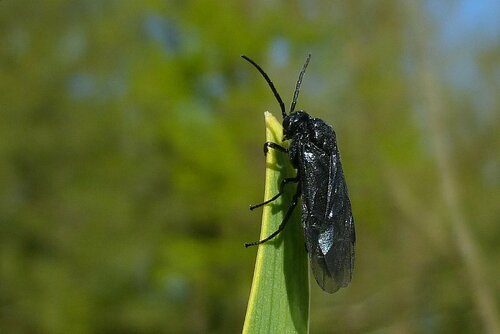
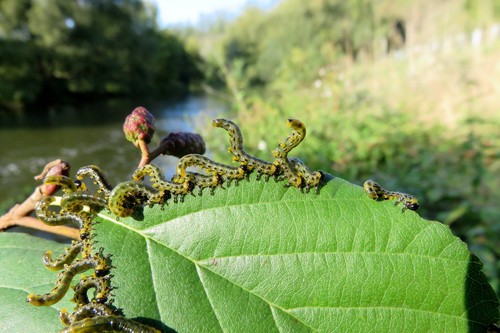
Rhadinoceraea micans, the iris sawfly, is a species of sawfly in the family Tenthredinidae. Native to Europe, the larvae—more often noticed than the adults—can occur in large numbers causing damage to garden plants such as the yellow iris or flag, Iris pseudacorus.
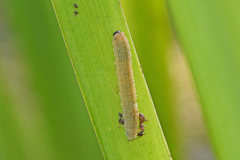
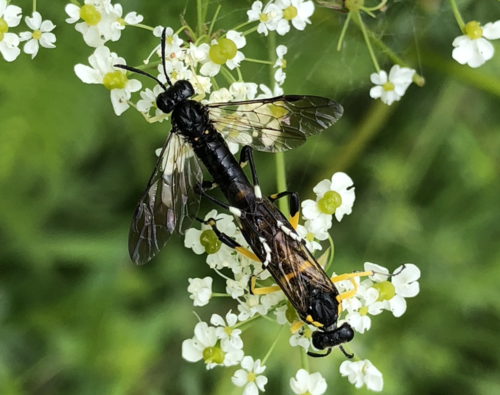
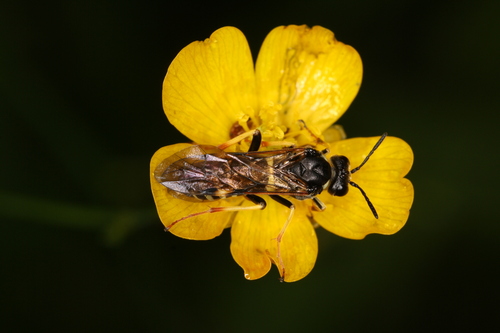
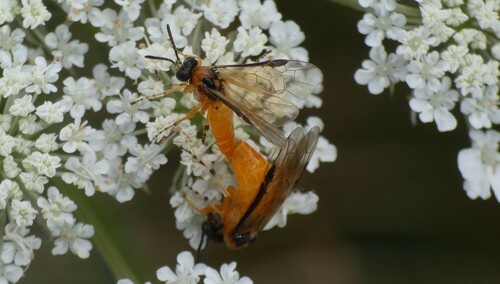
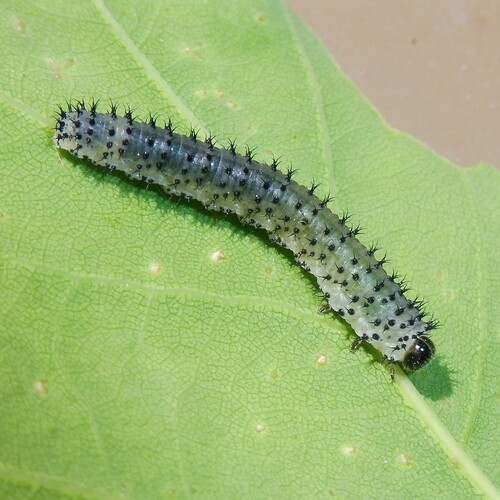
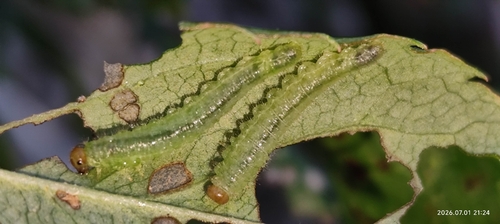
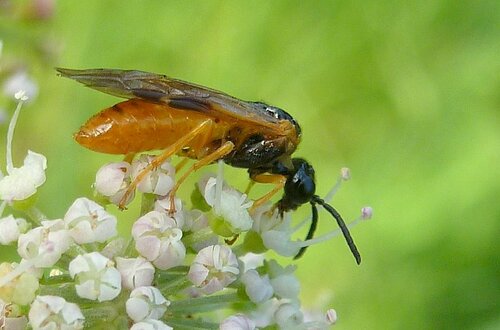
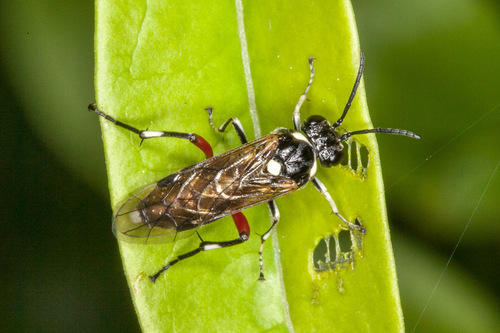
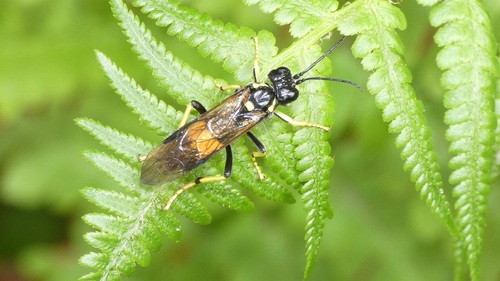
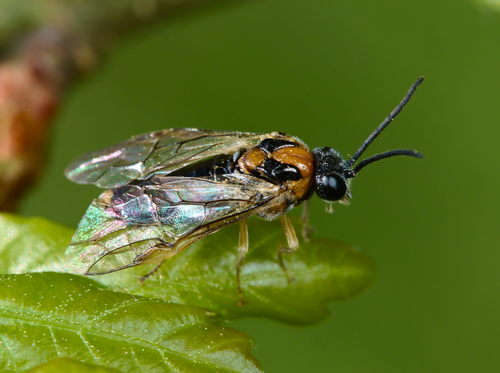
The adult sawfly is shiny, black, and hairy. The antennae are thick, and longer than head and thorax combined. The wings are slightly smoky. The head is as wide as the thorax. The larvae, up to 1 inch (25 mm) long, look like caterpillars but have six pairs of prolegs rather than five. The head is shiny black; the body greenish brown, becoming darker with age. There are double rows of white dots around the segments. Larval host plants are all waterside irises, including Iris pseudacorus, Iris ensata, Iris laevigata, Iris spuria and Iris versicolor.
The adult iris sawflies lay their eggs in May on the leaves of irises (especially the yellow flag). The eggs are in large flat placards on iris leaves. The female lays the eggs by inserting her "saw" into the blade of the leaf near the thickened middle, not far from the leaf base. As many as 19 eggs may be... Wikipedia →