Waroona Cuckoo Bee

Waroona Cuckoo Bee

Thyreus waroonensis

Daily sighting probability <5% · Rare
at Perth

In 3 days ~10% in a week ~30%

13 Verified sightings at Perth
November Best month

About the Waroona Cuckoo Bee

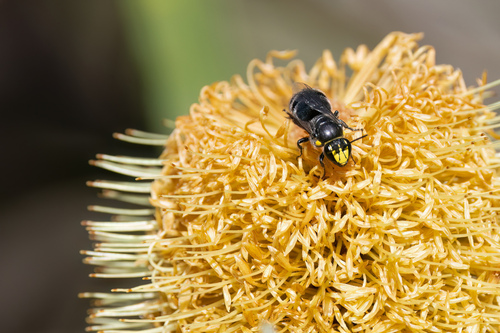
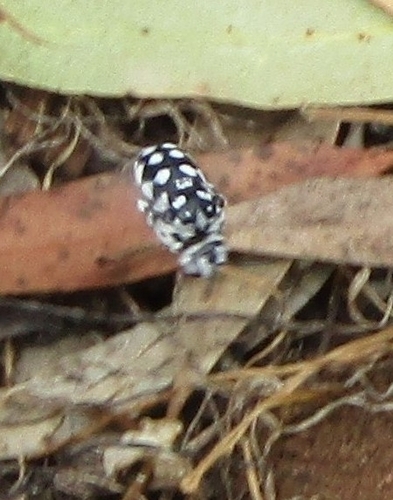
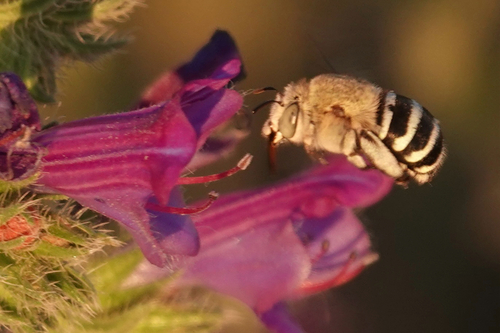
Thyreus waroonensis, the Waroona cuckoo bee, is a species of bee in the family Apidae. It was described by Theodore D. A. Cockerell in 1913. The body is 8–12 mm long, and the dorsal side is black with white hair spots. The species occurs across a large part of mainland Australia. It is a kleptoparasite, using bees from the Amegilla genus as hosts.

The Waroona cuckoo bee was first described by American entomologist Theodore D. A. Cockerell, who named it Crocisa waroonensis in 1913. He named it after the town of Waroona in Western Australia, which is where the holotype was found. The species was re-described as Thyreus waroonensis by Dutch entomologist Maurits Lieftinck in 1962.

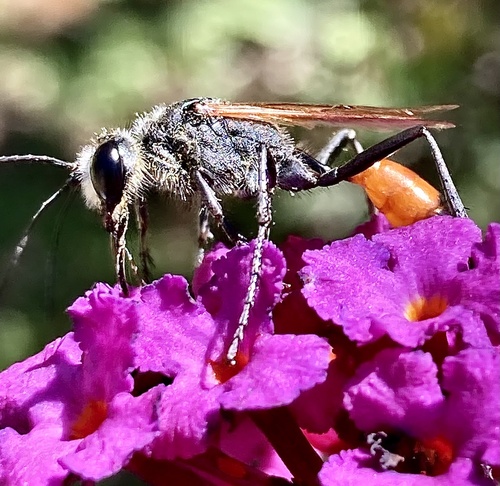
The body is 8–12 mm long and the forewings are 7.5–10 mm long. The dorsal side is black with white hair spots. The forewings are translucent near the body and smoky black over the distal half. The hindwings are mostly translucent, but gradually darkening over the tips.

The overall appearance is similar to T. caeruleopunctatus, but T. waroonensis has longer and more slender antennae. This species occurs across a large part of mainland Australia, and... Wikipedia →
Global Distribution

Parks Where Found

# Park Country Daily sighting probability

More parks will be added in future updates.

Cities Where Found

# City Country Daily sighting probability
1 Perth 🇦🇺 Australia
<5%

Before you go

What are the chances of seeing a Waroona Cuckoo Bee in Perth?

Rare

Under 5% of wildlife watchers report a Waroona Cuckoo Bee sighting in Perth on a given day, based on 13 verified sightings from GBIF citizen-science data. It is the 137th most-seen of the 275 insects we can rate there. Over three days the chance rises to about 10%, and over a week to about 30%, if each day is a fresh chance.

When is the best time to see a Waroona Cuckoo Bee in Perth?

November to January

In those months about 10% of wildlife watchers report a Waroona Cuckoo Bee in Perth on a given day, against under 5% in February to October, the lowest months. Those are among Perth's driest months, with about 20 mm of rain a month against 130 mm in July.

Where else can you see a Waroona Cuckoo Bee?

Only Perth, in our data

Perth is the only city on Wallace's Line with enough records to rate Waroona Cuckoo Bee sightings: under 5% of wildlife watchers there report one on a given day.

Where does the Waroona Cuckoo Bee sighting chance come from?

GBIF citizen-science records

It is estimated from how often the Waroona Cuckoo Bee is recorded against all the insects logged in Perth (13 verified sightings), calibrated against known sighting rates. Figures are rounded to the nearest 10% because citizen-science data supports honest approximations, not decimals, and months with records from fewer than five people show "—". How it works.

← Back to Perth