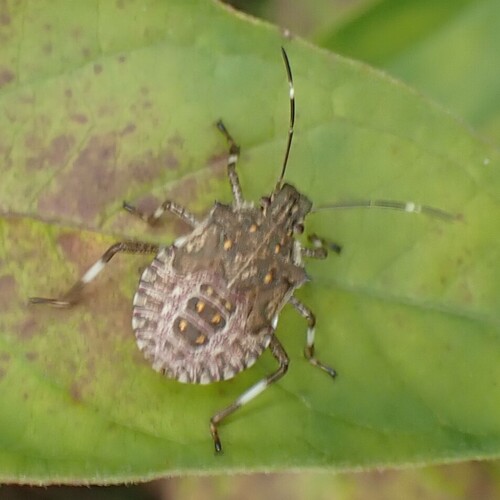
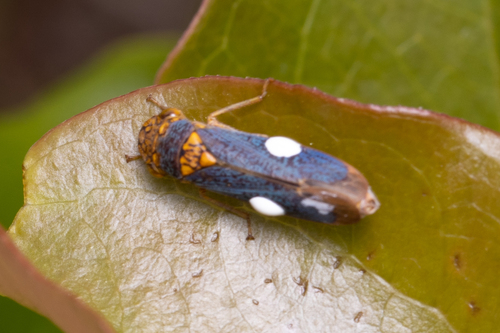
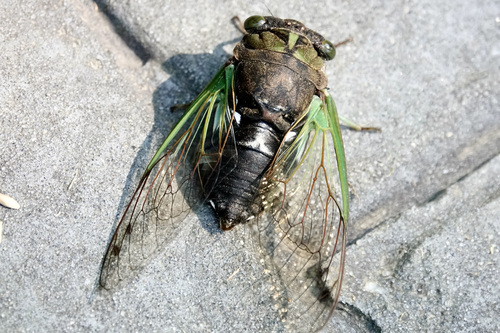
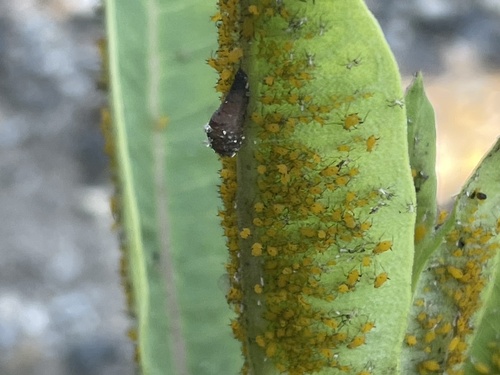
Indian Wax Scale

Indian Wax Scale

Ceroplastes ceriferus

Daily sighting probability <5% · Rare
at Philadelphia

In 3 days ~10% in a week ~20%

8 Verified sightings at Philadelphia
February Best month

About the Indian Wax Scale

Ceroplastes ceriferus, the Indian wax scale, is a species of scale insect in the family Coccidae commonly found in India and China. It is native to southern Asia and has spread to many other parts of the world. This species was first described in 1798 by the Danish botanist and entomologist Johan Christian Fabricius who gave it the name Coccus ceriferus. The type specimen came from India, probably occurring on Maytenus emarginata, however for nearly two hundred years the authorship was wrongly attributed to (James) Anderson. The insect was later transferred to the genus Ceroplastes, becoming Ceroplastes ceriferus.

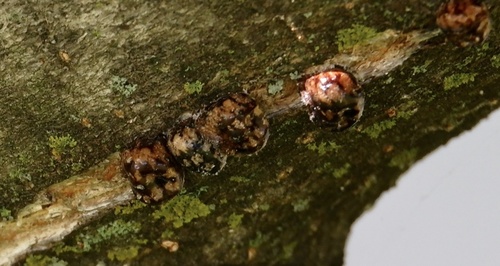
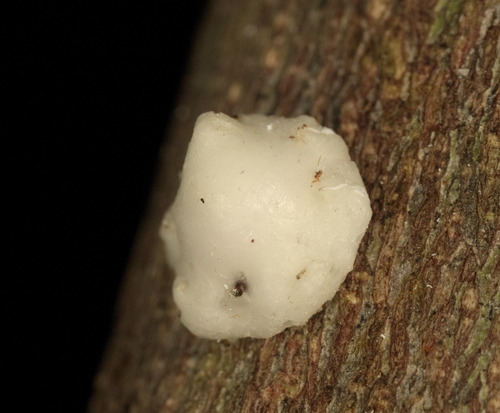
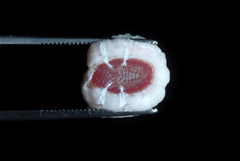
The adult female Ceroplastes ceriferus is immobile, being permanently attached by its mouthparts to the plant on which it is feeding. The body is hidden under a roughly convex, circular or oval covering of wax which it has secreted; this is white in nymphs and young adults, and becomes pinkish in older individuals. Adults have a forward-pointing waxy horn and there are waxy filaments projecting from the margin of the scale, giving the insect a daisy-like appearance. In many populations, only females exist, giving birth by parthenogenesis.... Wikipedia →
Global Distribution

Parks Where Found

# Park Country Daily sighting probability

More parks will be added in future updates.

Cities Where Found

# City Country Daily sighting probability
1 Philadelphia 🇺🇸 United States
<5%
2 Sydney 🇦🇺 Australia
<5%
3 Washington 🇺🇸 United States
<5%
4 New York City 🇺🇸 United States
<5%

Before you go

What are the chances of seeing an Indian Wax Scale in Philadelphia?

Rare

Under 5% of wildlife watchers report an Indian Wax Scale sighting in Philadelphia on a given day, based on 8 verified sightings from GBIF citizen-science data. It is the 432nd most-seen of the 632 insects we can rate there. Over three days the chance rises to about 10%, and over a week to about 20%, if each day is a fresh chance.

When is the best time to see an Indian Wax Scale in Philadelphia?

January–February and November

In those months about 10% of wildlife watchers report an Indian Wax Scale in Philadelphia on a given day, against under 5% in March–October and December, the lowest months.

Is Philadelphia the best place to see an Indian Wax Scale?

Yes

Of the 4 cities where we can rate Indian Wax Scale sightings, Philadelphia has the highest daily chance: under 5%. Next come Sydney (Australia, under 5%) and Washington (United States, under 5%).

Where does the Indian Wax Scale sighting chance come from?

GBIF citizen-science records

It is estimated from how often the Indian Wax Scale is recorded against all the insects logged in Philadelphia (8 verified sightings), calibrated against known sighting rates. Figures are rounded to the nearest 10% because citizen-science data supports honest approximations, not decimals, and months with records from fewer than five people show "—". How it works.

← Back to Philadelphia