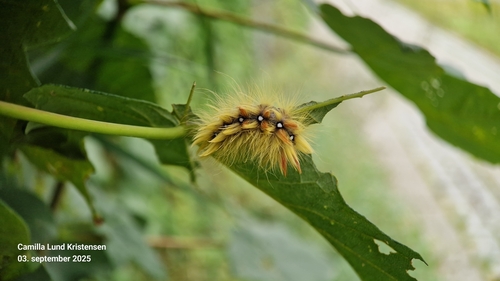
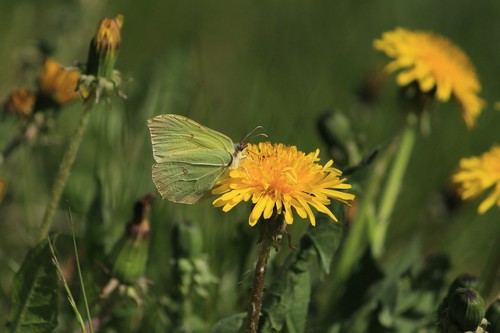
Purplish Birch-Miner Moth

Purplish Birch-Miner Moth

Eriocrania semipurpurella

Daily sighting probability <5% · Rare
at Saint Petersburg

In 3 days ~10% in a week ~20%

6 Verified sightings at Saint Petersburg
5 In 1 park From 2019 to 2026
April Best month
☀️ Diurnal When it's spotted

About the Purplish Birch-Miner Moth

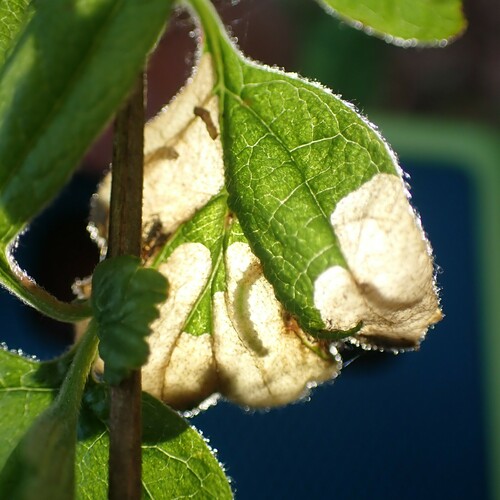
Eriocrania semipurpurella (Purplish birch-miner) is a moth of the family Eriocraniidae, found from Europe to Japan and in North America. It was first described by James Francis Stephens in 1835. The species closely resembles Eriocrania sangii and the larvae of both species mine the leaves of birch.

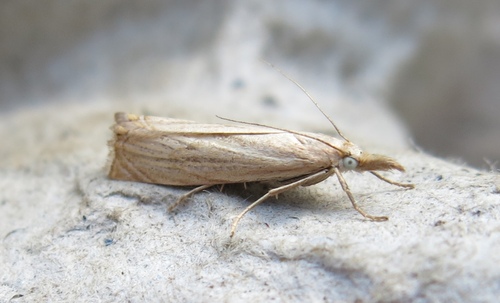
The wingspan is 10–16 mm. Edward Meyrick gives this description: Forewings elongate, bronzy-purple, more or less sprinkled with pale shining golden; an indistinct usually small transverse pale golden dorsal spot before tornus, sometimes almost obsolete; cilia bronzy-grey, on dorsal spot ochreous-whitish; 9 absent. Hindwings with hairscales except towards margins posteriorly, bronzy-grey, posteriorly purplish-tinged. Larva whitish; head pale ochreous-brown, mouth darker in blotch in leaves of birch. The moth flies from March to April depending on the location.

The moth flies in sunshine around birch trees (Betula species), sometimes in swarms in March and April. In dull weather, they rest on twigs. Similar species E. semipurpurella looks similar to E. sangii and can only be told apart by microscopy of the genitalia.

Other stages Eggs are laid on the leaf bud and the larvae... Wikipedia →
Global Distribution

Parks Where Found

# Park Country Daily sighting probability
1 Great Bear Rainforest 🇨🇦 Canada
<5%

More parks will be added in future updates.

Cities Where Found

# City Country Daily sighting probability
1 Saint Petersburg 🇷🇺 Russia
<5%

Before you go

What are the chances of seeing a Purplish Birch-Miner Moth in Saint Petersburg?

Rare

Under 5% of wildlife watchers report a Purplish Birch-Miner Moth sighting in Saint Petersburg on a given day, based on 6 verified sightings from GBIF citizen-science data. It is the 377th most-seen of the 448 insects we can rate there. Over three days the chance rises to about 10%, and over a week to about 20%, if each day is a fresh chance.

When is the best time to see a Purplish Birch-Miner Moth in Saint Petersburg?

April

In that month about 10% of wildlife watchers report a Purplish Birch-Miner Moth in Saint Petersburg on a given day, against under 5% in May to March, the lowest months.

What time of day is best to see a Purplish Birch-Miner Moth?

Between 8 and 11 am

Across all the parks we cover, that three-hour window holds the most Purplish Birch-Miner Moth sightings with a recorded time, and nearly all of them come between 6 am and 6 pm: it is a daytime animal.

Where else can you see a Purplish Birch-Miner Moth?

Only Saint Petersburg, in our data

Saint Petersburg is the only city on Wallace's Line with enough records to rate Purplish Birch-Miner Moth sightings: under 5% of wildlife watchers there report one on a given day.

Which relatives of the Purplish Birch-Miner Moth live in Saint Petersburg?

Same order: Lepidoptera

The closest relatives of the Purplish Birch-Miner Moth that you can see in Saint Petersburg (order Lepidoptera, Butterflies and Moths) are Small Tortoiseshell (about 10%), European Peacock Butterfly (about 10%) and Red Admiral (about 10%), with each one's daily chance of a sighting.

Where does the Purplish Birch-Miner Moth sighting chance come from?

GBIF citizen-science records

It is estimated from how often the Purplish Birch-Miner Moth is recorded against all the insects logged in Saint Petersburg (6 verified sightings), calibrated against known sighting rates. Figures are rounded to the nearest 10% because citizen-science data supports honest approximations, not decimals, and months with records from fewer than five people show "—". How it works.

← Back to Saint Petersburg