Yuma Myotis

Yuma Myotis

Myotis yumanensis

Silhouette: Archibald Thorburn · PhyloPic

LCLeast ConcernNTVUENCR
Daily sighting probability <5% · Rare
at San Diego

In 3 days ~10%

6 Verified sightings at San Diego
April Best month
☀️🌙 Day & Night When it's spotted

About the Yuma Myotis

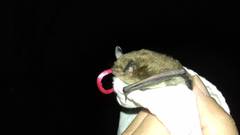
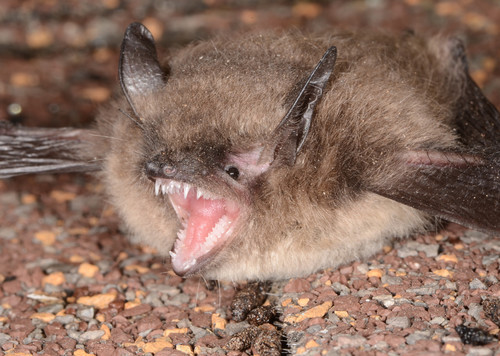
The Yuma myotis (Myotis yumanensis) is a species of vesper bat native to western North America. The Yuma myotis is a relatively small myotis, measuring 3.9 to 4.8 cm (1.5 to 1.9 in) in head-body length, with an average wingspan of 24 cm (9.4 in) and a weight of about 6 g (0.21 oz). The simple dental formula of a bat species in the genus Myotis is 2.1.3.33.1.3.3, for a total of 38 teeth. This dental formula applies to Myotis yumanensis as well. Individuals vary in color across their range, and can be anything from dark brown to pale tan, or even greyish. The fur is short and dull, and significantly paler, sometimes even whitish, on the underside of the animal. The tail is 2.7 to 4.0 cm (1.1 to 1.6 in) in length, with only the tip extending beyond the edge of the uropatagium. The calcar is long, extending about 60% of the distance from the ankle to the tail, and, unlike that of many other North American species of Myotis, lacks a keel. The feet are large and broad, and the ears moderately long, with a slim, straight tragus. The head has a short, broad snout, and a rounded cranium.

It is similar to Myotis occultus, but most closely resembles the little brown bat, from... Wikipedia →
Global Distribution

Parks Where Found

# Park Country Daily sighting probability

More parks will be added in future updates.

Cities Where Found

# City Country Daily sighting probability
1 San Diego 🇺🇸 United States
<5%

Before you go

What are the chances of seeing a Yuma Myotis in San Diego?

Rare

Under 5% of wildlife watchers report a Yuma Myotis sighting in San Diego on a given day, based on 6 verified sightings from GBIF citizen-science data. It is the 25th most-seen of the 26 mammals we can rate there. Over three days the chance rises to about 10%, if each day is a fresh chance.

When is the best time to see a Yuma Myotis in San Diego?

Any time of year

In every month with enough records, under 5% of wildlife watchers report a Yuma Myotis in San Diego on a given day, so our monthly data shows no clear season.

What time of day is best to see a Yuma Myotis?

Between 7 and 10 pm

Across all the parks we cover, that three-hour window holds the most Yuma Myotis sightings with a recorded time, and about 7 in 10 of them come between 6 pm and 6 am: it is seen both by day and at night.

Where else can you see a Yuma Myotis?

Only San Diego, in our data

San Diego is the only city on Wallace's Line with enough records to rate Yuma Myotis sightings: under 5% of wildlife watchers there report one on a given day.

Where does the Yuma Myotis sighting chance come from?

GBIF citizen-science records

It is estimated from how often the Yuma Myotis is recorded against all the mammals logged in San Diego (6 verified sightings), calibrated against known sighting rates. Figures are rounded to the nearest 10% because citizen-science data supports honest approximations, not decimals, and months with records from fewer than five people show "—". How it works.

← Back to San Diego