California Oak Moth

California Oak Moth

Phryganidia californica

Daily sighting probability ~10% · With luck
at San Francisco

In 3 days ~30% in a week ~50%

904 Verified sightings at San Francisco
19 In all 2 parks From 2019 to 2026
October Best month
☀️ Diurnal When it's spotted

About the California Oak Moth

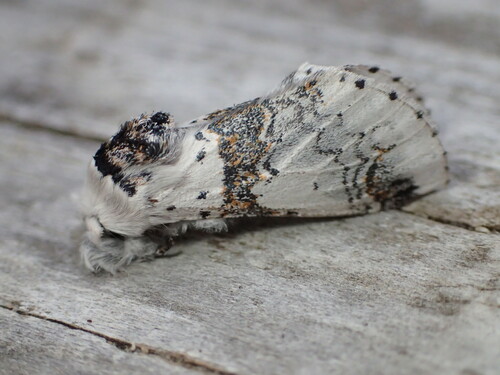
Phryganidia californica, the California oakworm or California oak moth, is a moth of the family Notodontidae and subfamily Dioptinae. The species was first described by Alpheus Spring Packard in 1864. It is found along the coasts of the US states of California and Oregon, and Washington. The California oak moth is the only member of its subfamily to be found north of Mexico.

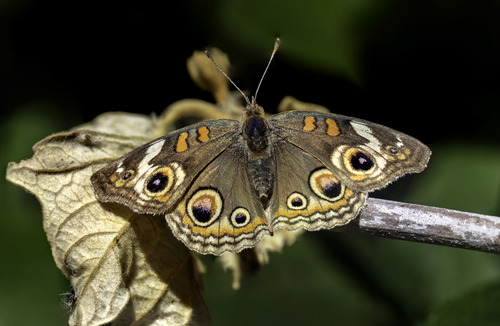
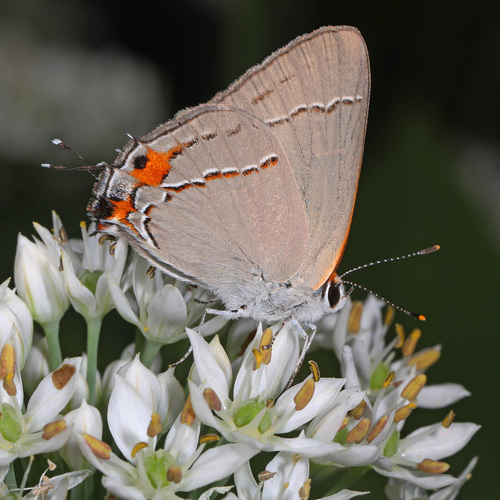
The wingspan is about 30 mm (1.2 in). They are tan to gray moths with prominent wing veins. Adults are on wing from March to November. There are two generations per year in northern California. Sometimes there is a third generation in southern California.

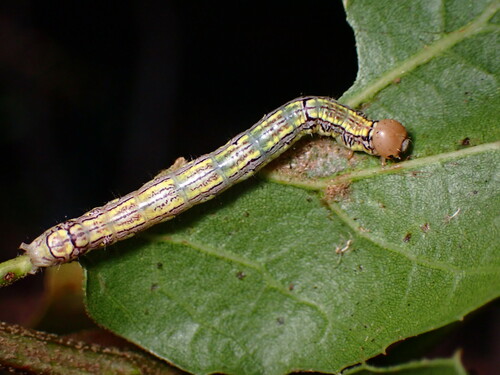
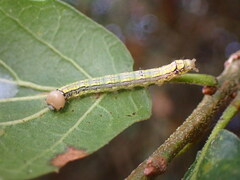
The larvae are black with lengthwise yellow stripes. Full-grown larvae are about 30 mm (1.2 in) long. Pupation takes place in a white or yellow pupa with black markings. The larvae feed on the leaves of deciduous oaks, especially Quercus agrifolia (coast live oak). Young larvae feed between veins on the lower leaf surface. Although the upper leaf surface is left intact, it dries out and turns brown. Larvae in later instars chew completely through the leaf blade, often leaving only major leaf veins. Small frass pellets drop from the canopy as larvae feed. In outbreak years, individual trees or groups of trees may be almost entirely defoliated, typically by late summer or early fall. Trees are consumed based on where a female moth lays her eggs, however the defensive chemistry of oaks themselves may be a factor. This chemistry may also protect larvae from diurnal predators: while many non-toxic moths and caterpillars feed at night, California oak moths and their larvae can be seen safely feeding during the day.

California oak moth larvae utilize silk threads in order to reach the ground or, alternatively, another oak tree. If the larvae lands on another oak tree, it will continue feeding until ready to pupate. Upon landing on the ground, the larvae will find a suitable location to pupate. This location can range from the sides of trees, rocks, buildings, or other manmade objects. Wikipedia →
Global Distribution

Parks Where Found

# Park Country Daily sighting probability
1 Redwood National Park 🇺🇸 United States
~10%
2 Channel Islands National Park 🇺🇸 United States
~10%

Cities Where Found

# City Country Daily sighting probability
1 San Francisco 🇺🇸 United States
~10%

Before you go

What are the chances of seeing a California Oak Moth in San Francisco?

With luck

About 10% of wildlife watchers report a California Oak Moth sighting in San Francisco on a given day, based on 904 verified sightings from GBIF citizen-science data. It is the 34th most-seen of the 737 insects we can rate there. Over three days the chance rises to about 30%, and over a week to about 50%, if each day is a fresh chance.

When is the best time to see a California Oak Moth in San Francisco?

October

In that month about 20% of wildlife watchers report a California Oak Moth in San Francisco on a given day, against under 5% in December to March, the lowest months. That is one of San Francisco's driest months, with about 25 mm of rain against 110 mm in December.

What time of day is best to see a California Oak Moth?

Between 3 and 6 pm

Across all the parks we cover, that three-hour window holds the most California Oak Moth sightings with a recorded time, and about 8 in 10 of them come between 6 am and 6 pm: it is a daytime animal.

Where else can you see a California Oak Moth?

Only San Francisco, in our data

San Francisco is the only city on Wallace's Line with enough records to rate California Oak Moth sightings: about 10% of wildlife watchers there report one on a given day.

Where does the California Oak Moth sighting chance come from?

GBIF citizen-science records

It is estimated from how often the California Oak Moth is recorded against all the insects logged in San Francisco (904 verified sightings), calibrated against known sighting rates. Figures are rounded to the nearest 10% because citizen-science data supports honest approximations, not decimals, and months with records from fewer than five people show "—". How it works.

← Back to San Francisco