About the Compsomyiops callipes
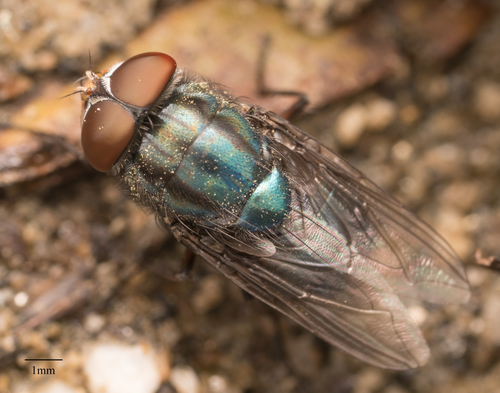
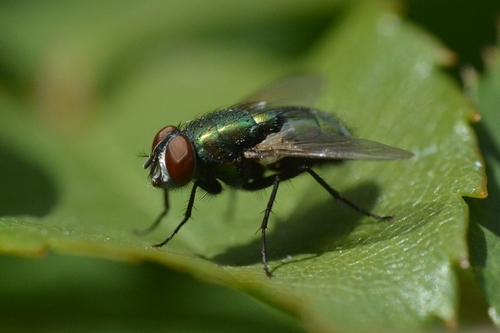
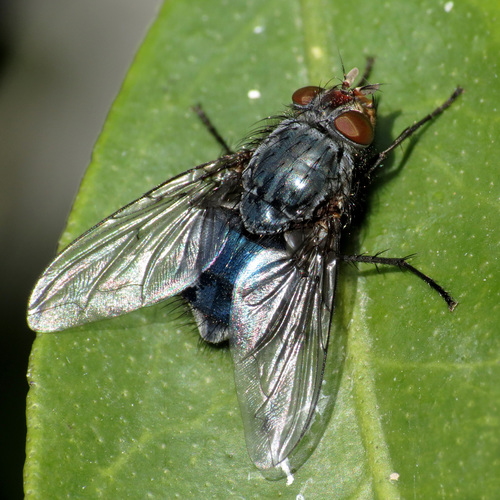
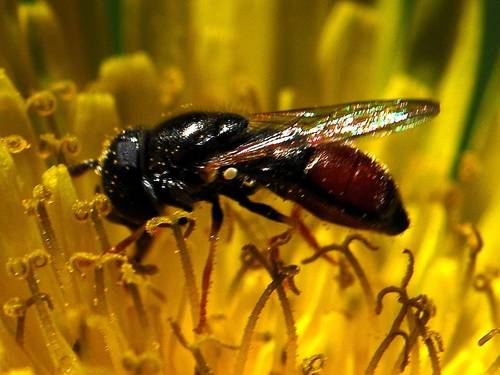
Compsomyiops callipes, previously known as Paraluclia wheeleri, is a member of the blowfly family Calliphoridae. It is a warm weather fly that can be found in southwestern parts of the United States and parts of South America. This species can be identified by its chaetotaxy, metallic blue color, club-shaped palp, and brown calypters.
Compsomyiops callipes serves an important role in the field of medicocriminal entomology, a subfield of forensic entomology, by determining post mortem intervals (PMI). This species is attracted to carrion and has been involved in case studies in California where it has been the primary fly found on human remains.
Compsomyiops callipes was first described in 1877. It was later described as Paralucilia wheeleri but it was not recognized that this was only a new name for a species that had already been named. In 1985, J. P. Dear revised the New World tribe Chrysomyini, which resulted in Paralucilia wheeleri being synonymized under Compsomyiops callipes Bigot. It is a member of the family Calliphoridae, commonly called blowflies, and the subfamily Chrysomyinae.
Compsomyiops callipes is a member of the order Diptera meaning... Wikipedia →