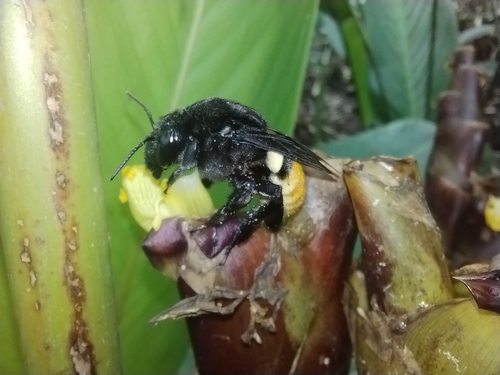
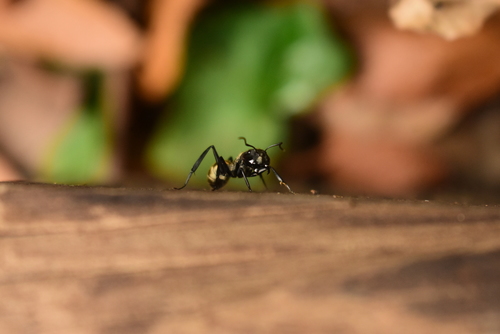
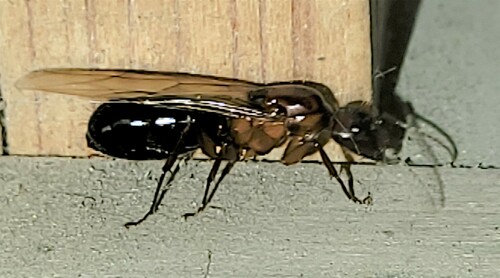
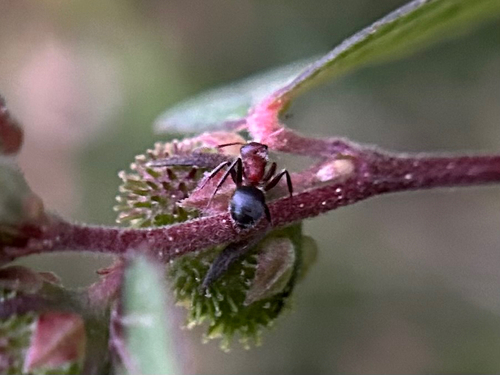
Parachartergus apicalis

Parachartergus apicalis

Parachartergus apicalis

Daily sighting probability <5% · Rare
at San José

In 3 days ~10% in a week ~30%

7 Verified sightings at San José
April Best month

About the Parachartergus apicalis

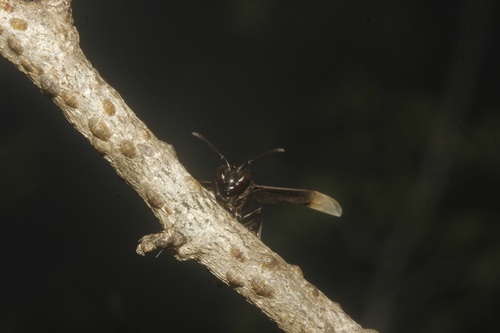
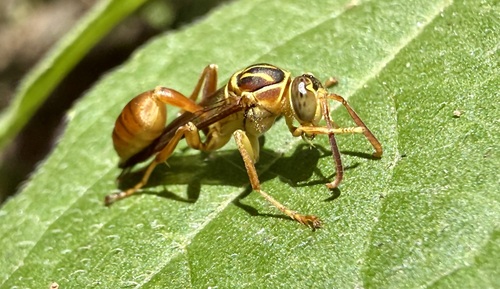
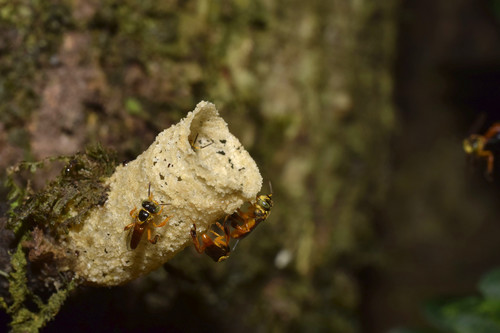
Parachartergus apicalis is a species of wasp in the Polistinae subfamily, found in the Neotropics. It was first described by Johan Christian Fabricius in 1804. In Honduras, they are known as alas blancas, which translates into English as "white wings".

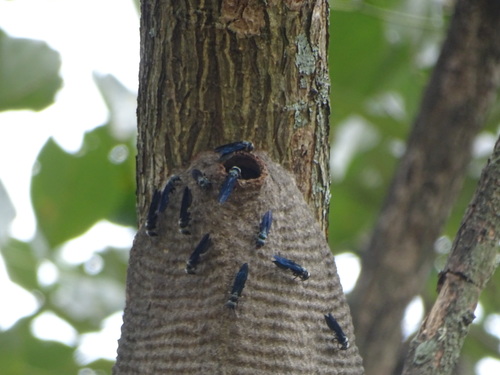
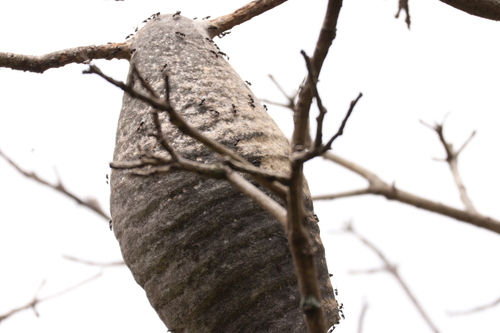
They have been observed to swarm when they move between nests, with the behaviour occurring between April and May in Paraguay. At times they form temporary compact clusters along the route of the swarm; each cluster is evenly spaced and individuals move from one clump to the next, with the clumps at the back shrinking, whilst those at the front grow. It is uncertain how they navigate between the clumps, but it is thought they use either visual or olfactory cues. False swarming can also occur when strong winds prevent foragers from entering the nest.

They have been recorded to tend species of treehopper, plant sap-feeding insects, during the daytime, an example of a mutualistic relationship. The wasp protects the treehopper nymphs from predators and parasites and in return feeds on honeydew which is produced by the nymphs. At night the carpenter ant species, Camponotus atriceps will tend the nymphs. During the day, P. apicalis... Wikipedia →

Global Distribution

Parks Where Found

# Park Country Daily sighting probability

More parks will be added in future updates.

Cities Where Found

# City Country Daily sighting probability
1 San José 🇨🇷 Costa Rica
<5%

Before you go

What are the chances of seeing a Parachartergus apicalis in San José?

Rare

Under 5% of wildlife watchers report a Parachartergus apicalis sighting in San José on a given day, based on 7 verified sightings from GBIF citizen-science data. It is the 172nd most-seen of the 239 insects we can rate there. Over three days the chance rises to about 10%, and over a week to about 30%, if each day is a fresh chance.

When is the best time to see a Parachartergus apicalis in San José?

March–April, June and September

In those months about 10% of wildlife watchers report a Parachartergus apicalis in San José on a given day, against under 5% in May, July–August and October–February, the lowest months.

Where else can you see a Parachartergus apicalis?

Only San José, in our data

San José is the only city on Wallace's Line with enough records to rate Parachartergus apicalis sightings: under 5% of wildlife watchers there report one on a given day.

Which relatives of the Parachartergus apicalis live in San José?

Same family: Vespidae

The closest relatives of the Parachartergus apicalis that you can see in San José (family Vespidae, Hornets, Paper Wasps, Potter Wasps, and Allies) are Northern Warrior Wasp (about 10%) and Epipona guerini (about 10%), with each one's daily chance of a sighting.

Where does the Parachartergus apicalis sighting chance come from?

GBIF citizen-science records

It is estimated from how often the Parachartergus apicalis is recorded against all the insects logged in San José (7 verified sightings), calibrated against known sighting rates. Figures are rounded to the nearest 10% because citizen-science data supports honest approximations, not decimals, and months with records from fewer than five people show "—". How it works.

← Back to San José