About the Chilean Tinamou
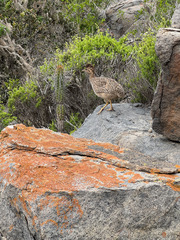
The Chilean tinamou (Nothoprocta perdicaria) is a type of tinamou commonly found in high elevation shrubland in subtropical regions of central Chile. All tinamous are from the family Tinamidae; in the larger scheme, they are also ratites (i.e., birds without a keel on their sternum bone), together with the South American rhea (Rhea), the cassowary (Casuarius), emu (Dromaius), ostrich (Struthio) and the kiwis (order Apterygiformes) as close, if not distant, relatives. However, unlike these terrestrial ratites, tinamou can still fly, albeit not for any sustained period or very effectively. Still, all currently extant ratite species evolved from ancient flying birds, with tinamou representing the closest living connections to these species. Additionally, the tinamou are closely aligned with the extinct giant moa (Dinornis) of New Zealand.
Nothoprocta comes from two Ancient Greek words, nothos meaning 'spurious, counterfeit', and prōktos 'anus'. This combination of words probably has to do with the tail being small and covered with body feathers, therefore looking fake.
The Chilean tinamou has two subspecies, as follows: N. p. perdicaria... Wikipedia →