Cytheris Fritillary

Cytheris Fritillary

Yramea cytheris

Daily sighting probability ~10% · With luck
at Santiago

In 3 days ~20% in a week ~40%

20 Verified sightings at Santiago
75 In all 3 parks From 2019 to 2026
November Best month
☀️ Diurnal When it's spotted

About the Cytheris Fritillary

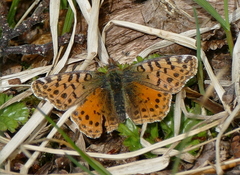
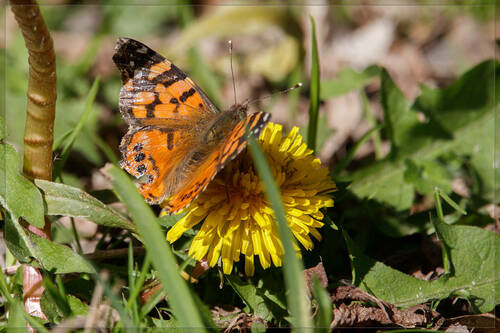
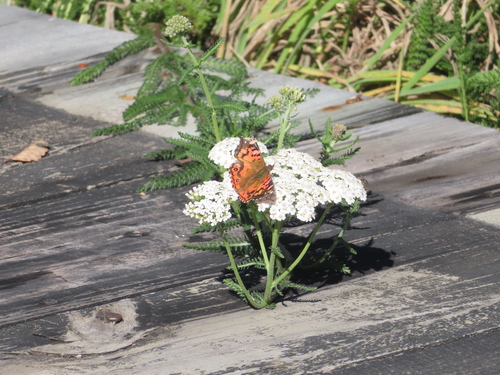
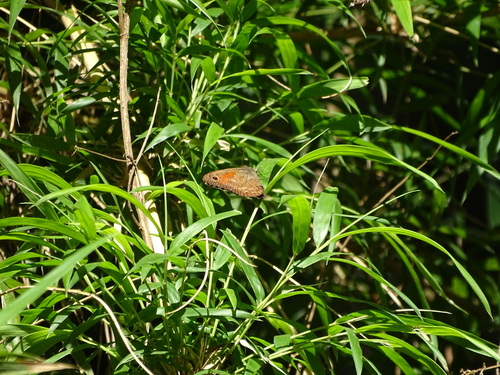
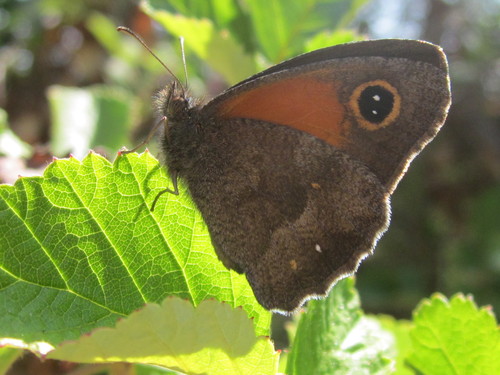
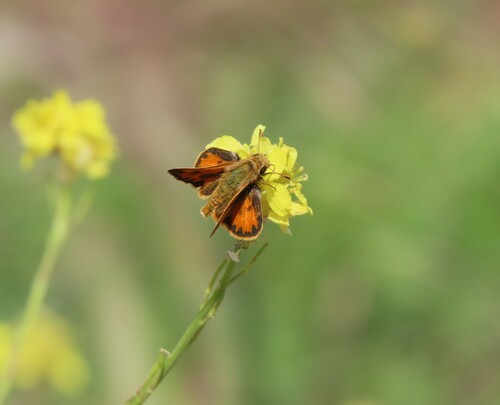
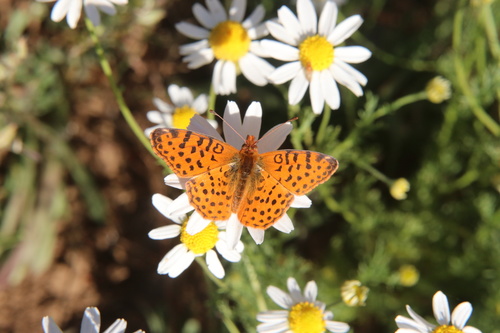
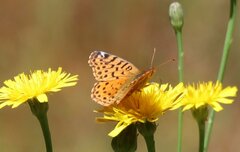
Yramea cytheris is a species of butterfly in the family Nymphalidae. It was first described by Dru Drury in 1773 from the Falkland Islands. In some systems it is included in genus Issoria. Upperside: head, eyes, thorax, and abdomen dark brown. Anterior wings brown orange, with a number of small black spots thereon (not less than twenty) of various shapes and sizes. Next to the body these wings are darker and pilose (covered with fine hair). Posterior wings are the same colour as the superior, and spotted with many small black spots of different shapes dispersed all over the wings; they are also darker next to the body and hairy.

Underside: palpi reddish. Anterior wings sandy orange coloured, rather paler than the upperside. Near the tips is a white streak placed next the anterior margin, and close thereto is a cloud of a dark red. Most of the small black spots are seen on this side, but less distinctly. Posterior wings dark red, with several faint clouds. A narrow white streak, about a quarter of an inch (6 mm) in length, is placed near the middle of each of these wings; and another much shorter is placed on the anterior edge, near the upper corner. All the wings are... Wikipedia →
Global Distribution

Parks Where Found

# Park Country Daily sighting probability
1 Torres del Paine National Park 🇨🇱 Chile
~40%
2 Tierra del Fuego National Park 🇦🇷 Argentina
~10%
3 Nahuel Huapi National Park 🇦🇷 Argentina
~10%

Cities Where Found

# City Country Daily sighting probability
1 Santiago 🇨🇱 Chile
~10%

Before you go

What are the chances of seeing a Cytheris Fritillary in Santiago?

With luck

About 10% of wildlife watchers report a Cytheris Fritillary sighting in Santiago on a given day, based on 20 verified sightings from GBIF citizen-science data. It is the 66th most-seen of the 173 insects we can rate there. Over three days the chance rises to about 20%, and over a week to about 40%, if each day is a fresh chance.

When is the best time to see a Cytheris Fritillary in Santiago?

July to December

In those months about 10% of wildlife watchers report a Cytheris Fritillary in Santiago on a given day, against under 5% in January to June, the lowest months.

What time of day is best to see a Cytheris Fritillary?

Between 11 am and 2 pm

Across all the parks we cover, that three-hour window holds the most Cytheris Fritillary sightings with a recorded time, and about 9 in 10 of them come between 6 am and 6 pm: it is a daytime animal.

Where else can you see a Cytheris Fritillary?

Only Santiago, in our data

Santiago is the only city on Wallace's Line with enough records to rate Cytheris Fritillary sightings: about 10% of wildlife watchers there report one on a given day.

Where does the Cytheris Fritillary sighting chance come from?

GBIF citizen-science records

It is estimated from how often the Cytheris Fritillary is recorded against all the insects logged in Santiago (20 verified sightings), calibrated against known sighting rates. Figures are rounded to the nearest 10% because citizen-science data supports honest approximations, not decimals, and months with records from fewer than five people show "—". How it works.

← Back to Santiago