South American Locust

South American Locust

Schistocerca cancellata

Daily sighting probability ~10% · With luck
at Santiago

In 3 days ~20% in a week ~50%

19 Verified sightings at Santiago
March Best month

About the South American Locust

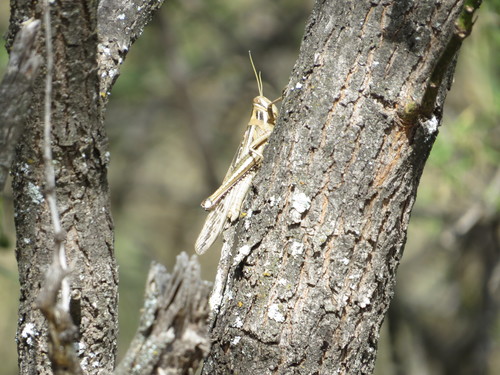
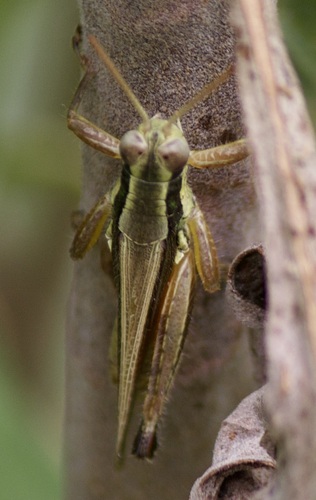
Schistocerca cancellata is a species of locust in the subfamily Cyrtacanthacridinae. It is the major swarming species in subtropical South America. This species shows typical locust phase polymorphism. Solitarious nymphs are green, but gregarious ones are yellow with a black pattern. There are morphological differences between solitarious and gregarious adults. For many years the two phases were believed to be different species and the gregarious form was mistakenly identified as S. paranensis.

The solitary phase is found in South America between 18°S and 35°S. Plagues originate in a desert and semi-desert zona permanente in northwest Argentina, southeast Bolivia and western Paraguay, when good rains allow successful breeding, followed by gregarisation. Swarms of gregarious adults may then migrate into crop growing regions. Wikipedia →

Global Distribution

Parks Where Found

# Park Country Daily sighting probability

More parks will be added in future updates.

Cities Where Found

# City Country Daily sighting probability
1 Cochabamba 🇧🇴 Bolivia
~30%
2 Santiago 🇨🇱 Chile
~10%

Before you go

What are the chances of seeing a South American Locust in Santiago?

With luck

About 10% of wildlife watchers report a South American Locust sighting in Santiago on a given day, based on 19 verified sightings from GBIF citizen-science data. It is the 58th most-seen of the 173 insects we can rate there. Over three days the chance rises to about 20%, and over a week to about 50%, if each day is a fresh chance.

When is the best time to see a South American Locust in Santiago?

September to June

In those months about 10% of wildlife watchers report a South American Locust in Santiago on a given day, against under 5% in July and August, the lowest months.

Is Santiago the best place to see a South American Locust?

2nd of 2

Of the 2 cities where we can rate South American Locust sightings, Santiago ranks 2nd at about 10%. The best odds are in Cochabamba (Bolivia, about 30%).

Where does the South American Locust sighting chance come from?

GBIF citizen-science records

It is estimated from how often the South American Locust is recorded against all the insects logged in Santiago (19 verified sightings), calibrated against known sighting rates. Figures are rounded to the nearest 10% because citizen-science data supports honest approximations, not decimals, and months with records from fewer than five people show "—". How it works.
← Back to Santiago