Parides agavus
Daily sighting probability <5% · Rare
at São Paulo

In 3 days ~10% in a week ~20%

10 Verified sightings at São Paulo
January Best month

About the Parides agavus

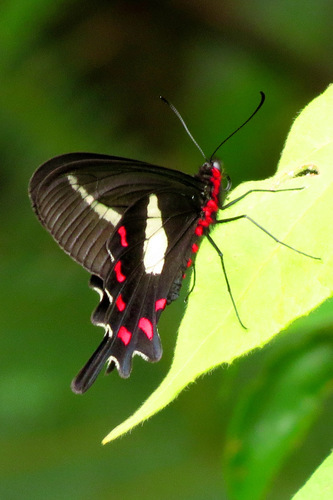
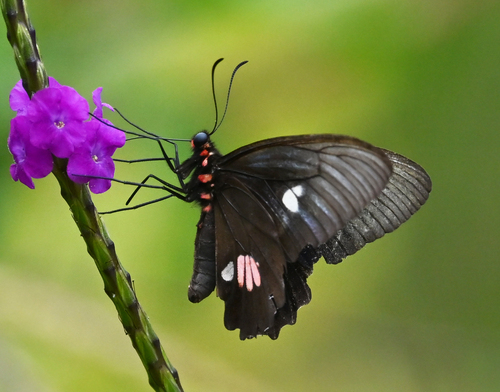
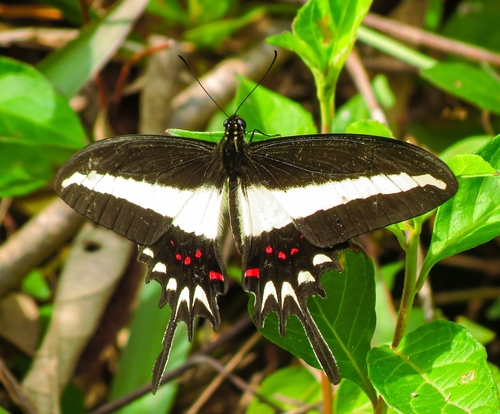
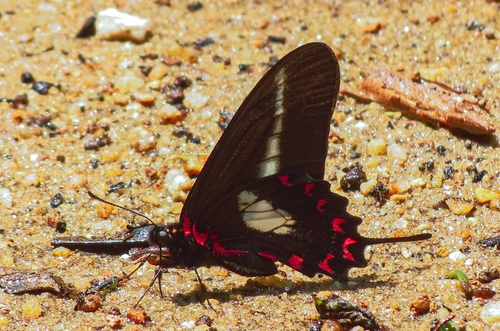
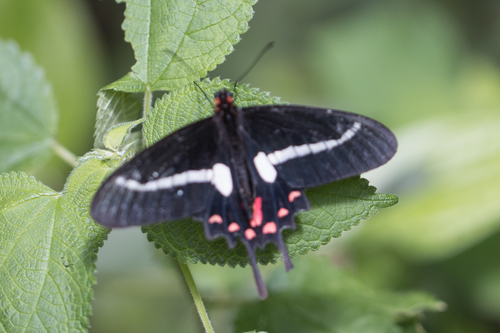
Parides agavus, the Agavus Cattleheart, is a species of butterfly in the family Papilionidae. It is found in Brazil, Paraguay, and north Argentina. The red anal spot of the hindwing very large and z-shaped. The abbreviated white band of the hindwing is somewhat variable.

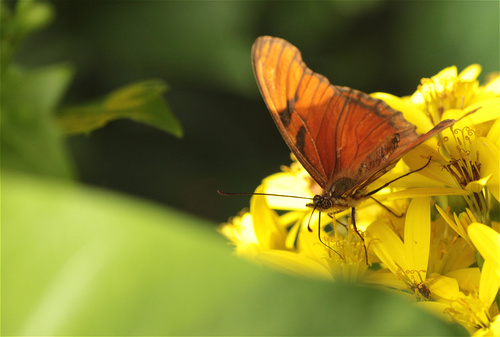
A full description is provided by Rothschild, W. and Jordan, K. (1906) The sexes are similar. It is not uncommon, even in gardens. Adults frequent flowers. It is not thought to be threatened. Parides agavus is ranched in Brazil.

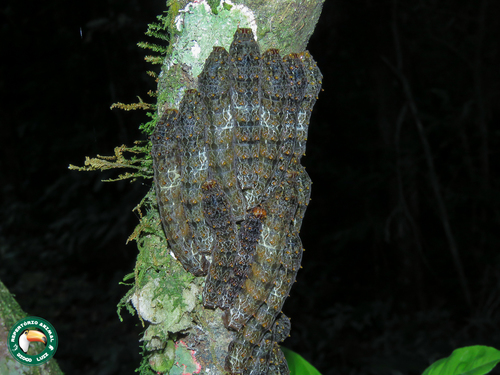
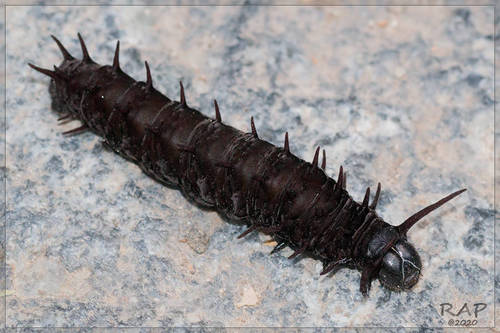
The larvae feed on Aristolochia triangularis and Aristolochia fimbriata. P. agavus Drury (lb). The red anal spot of the hindwing very large, Z-shaped. The abbreviated white band of the hindwing is somewhat variable. Although the species is quite common even in gardens in the neighbourhood of Rio, especially in damp, shady places, we are still ignorant of its early stages. The insect frequents flowers, and is easy to catch. — Minas Geraes southwards to Rio Grande do Sul, westwards to Paraguay and the adjoining parts of Argentina; not extending to the foot of the Andes.

Parides agavus is a member of the ascanius species group ("Fringe-spots white. Hindwing... Wikipedia →
Global Distribution

Parks Where Found

# Park Country Daily sighting probability

More parks will be added in future updates.

Cities Where Found

# City Country Daily sighting probability
1 Porto Alegre 🇧🇷 Brazil
~10%
2 Curitiba 🇧🇷 Brazil
~10%
3 São Paulo 🇧🇷 Brazil
<5%

Before you go

What are the chances of seeing a Parides agavus in São Paulo?

Rare

Under 5% of wildlife watchers report a Parides agavus sighting in São Paulo on a given day, based on 10 verified sightings from GBIF citizen-science data. It is the 502nd most-seen of the 832 insects we can rate there. Over three days the chance rises to about 10%, and over a week to about 20%, if each day is a fresh chance.

When is the best time to see a Parides agavus in São Paulo?

January

In that month about 10% of wildlife watchers report a Parides agavus in São Paulo on a given day, against under 5% in February to December, the lowest months. That is one of São Paulo's wettest months, with about 230 mm of rain against 35 mm in August.

Is São Paulo the best place to see a Parides agavus?

3rd of 3

Of the 3 cities where we can rate Parides agavus sightings, São Paulo ranks 3rd at under 5%. The best odds are in Porto Alegre (Brazil, about 10%) and Curitiba (Brazil, about 10%).

Where does the Parides agavus sighting chance come from?

GBIF citizen-science records

It is estimated from how often the Parides agavus is recorded against all the insects logged in São Paulo (10 verified sightings), calibrated against known sighting rates. Figures are rounded to the nearest 10% because citizen-science data supports honest approximations, not decimals, and months with records from fewer than five people show "—". How it works.

← Back to São Paulo