Beehive Honey Moth

Beehive Honey Moth

Vitula serratilineella

Daily sighting probability <5% · Rare
at Seattle

In 3 days ~10% in a week ~20%

20 Verified sightings at Seattle
July Best month

About the Beehive Honey Moth

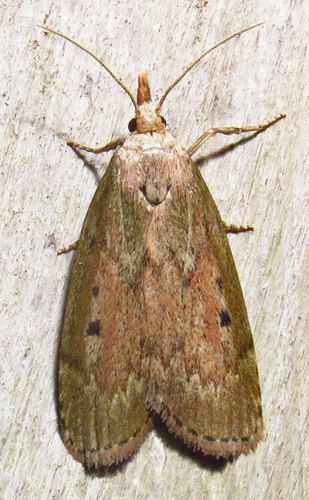
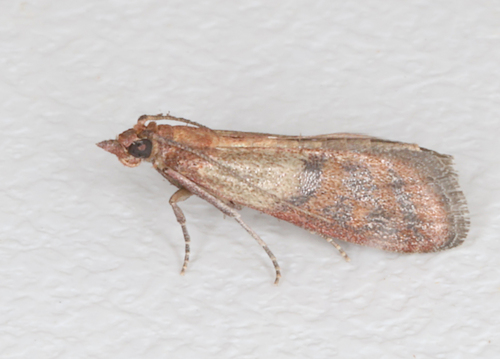
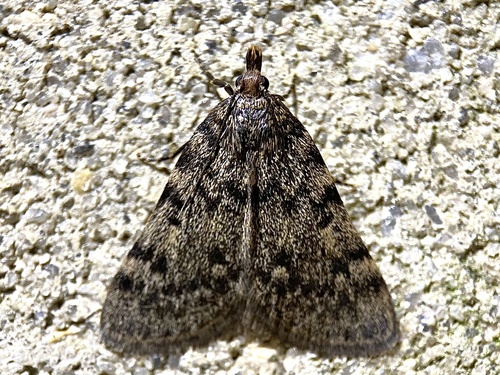
Vitula serratilineella, the beehive honey moth, is a species of snout moth in the genus Vitula. It was described by Émile Louis Ragonot in 1887 without specific original locality but in a work on various North American taxa. Subsequently, the species has records from the Pacific Northwest (i.e. British Columbia, Oregon, Washington) and throughout California. However, it is also known from Europe, being found in Germany, Denmark and Fennoscandia, plus occasionally from nearby countries such as Great Britain.

In the past, the beehive honey moth has either been treated as a full species or as a subspecies Vitula edmandsii serratilineella, of Vitula edmandsii (Packard, 1865). Older lists may have records [including many for Europe] under those other names. Further possible confusion of identities can involve use of the common names dried-fruit moth or dried fruit moth, which share usage with Cadra calidella, another "dried fruit moth".

The wingspan is 20–25 mm. It is a pest of stored raisins, prunes, dried apple and other dried fruit product. It is distinguished from several other similar pest moths of the area by lighter colored forewings and nearly white (not brownish) hindwings. Like with Vitula edmandsii it may invade beehives and is known to feed on wax inside bumble bee nests. Wikipedia →

Global Distribution

Parks Where Found

# Park Country Daily sighting probability

More parks will be added in future updates.

Cities Where Found

# City Country Daily sighting probability
1 Seattle 🇺🇸 United States
<5%
2 Portland 🇺🇸 United States
<5%

Before you go

What are the chances of seeing a Beehive Honey Moth in Seattle?

Rare

Under 5% of wildlife watchers report a Beehive Honey Moth sighting in Seattle on a given day, based on 20 verified sightings from GBIF citizen-science data. It is the 199th most-seen of the 428 insects we can rate there. Over three days the chance rises to about 10%, and over a week to about 20%, if each day is a fresh chance.

When is the best time to see a Beehive Honey Moth in Seattle?

July

In that month about 10% of wildlife watchers report a Beehive Honey Moth in Seattle on a given day, against under 5% in August to June, the lowest months. That is one of Seattle's driest months, with about 20 mm of rain against 190 mm in November.

Is Seattle the best place to see a Beehive Honey Moth?

Yes

Of the 2 cities where we can rate Beehive Honey Moth sightings, Seattle has the highest daily chance: under 5%. Next come Portland (United States, under 5%).

Where does the Beehive Honey Moth sighting chance come from?

GBIF citizen-science records

It is estimated from how often the Beehive Honey Moth is recorded against all the insects logged in Seattle (20 verified sightings), calibrated against known sighting rates. Figures are rounded to the nearest 10% because citizen-science data supports honest approximations, not decimals, and months with records from fewer than five people show "—". How it works.

← Back to Seattle