Western Leafcutter Bee
Daily sighting probability <5% · Rare
at Seattle

In 3 days ~10% in a week ~30%

41 Verified sightings at Seattle
August Best month
☀️ Diurnal When it's spotted

About the Western Leafcutter Bee

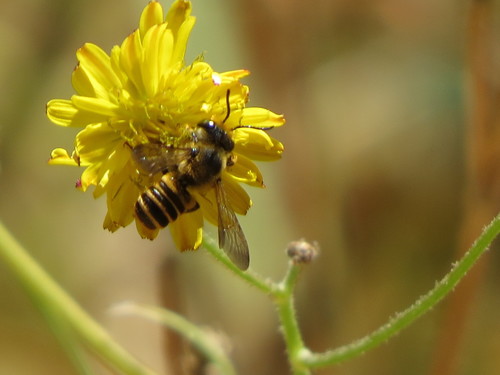
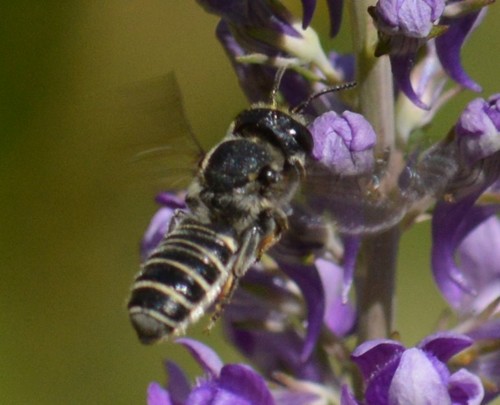
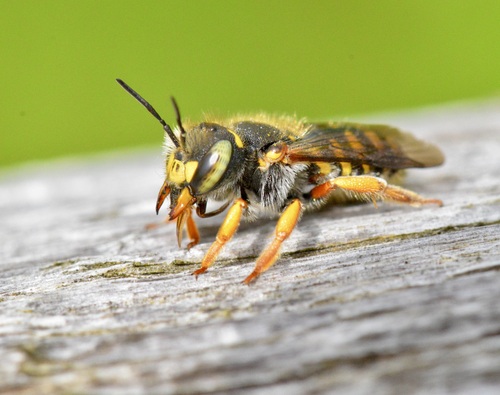
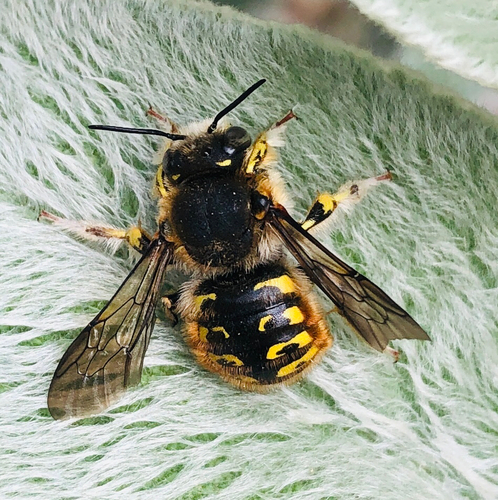
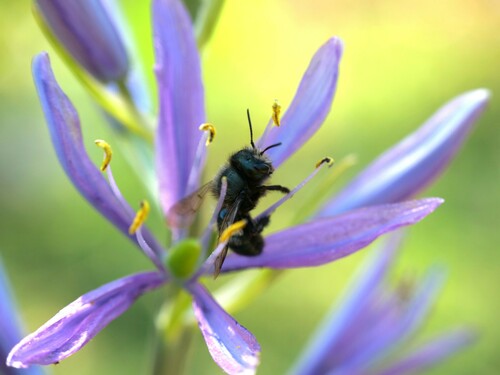
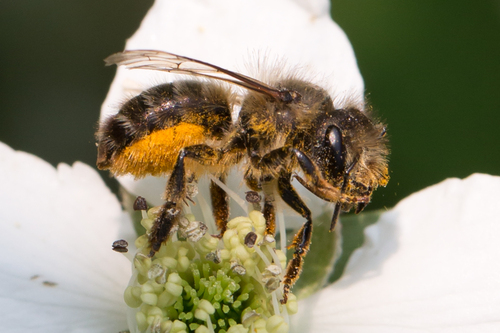
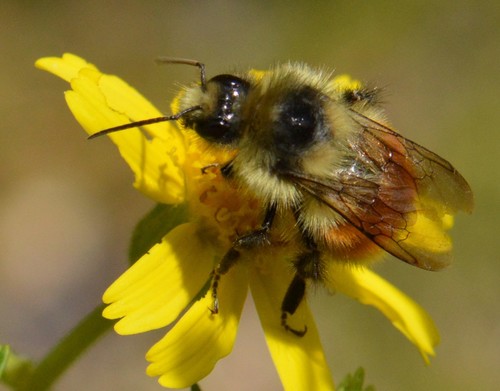
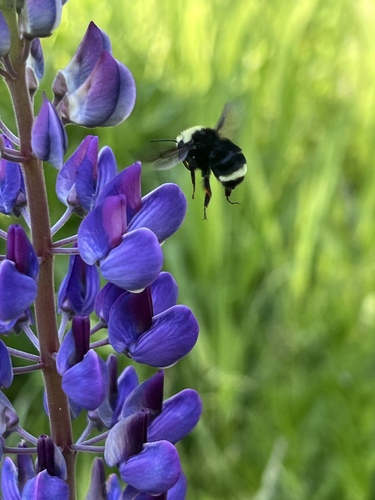
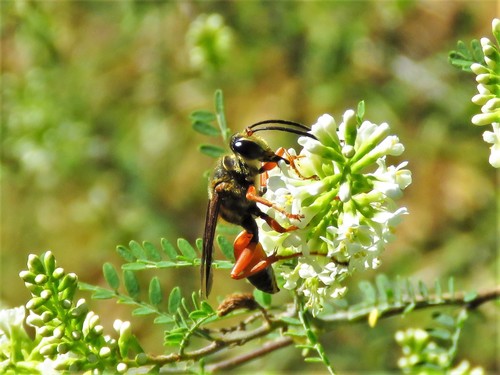
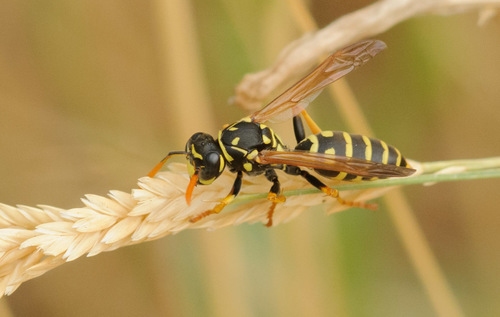
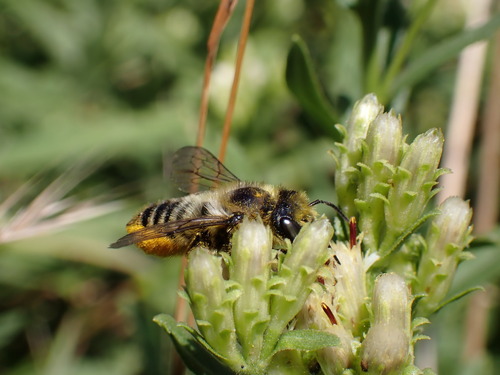
Megachile perihirta, commonly known as the Western leafcutting bee, is a bee in the genus Megachile. The bee is native to western North America, ranging from Nebraska to Texas and Mexico, west to California, and north to British Columbia and Alberta, and often inhabits meadows and orchards. The bee is black with long whitish-yellow hair, more so below the thorax and abdomen. The abdomen, however, is mostly bare, although each segment has scattered whitish hair. The wings of the Western leafcutting bee are clear, while their veins are black. The pollen basket below the abdomen is bright red.

Like most bees, adult western leafcutting bees drink nectar, whilst Western leafcutting bee larva feed both on nectar and pollen. Western Leafcutting Bee nests are created when a small group of bees work together to dig small burrows in sand, gravel, soil, or in rotting plants or wood. Inside this burrow it is found that the bees construct a series of cells lined with leaf fragments. Each cell contains pollen and nectar, then one egg is laid inside a cell. Adult Western leafcutting bees are seen normally from July to August, and live around one year. Wikipedia →
Global Distribution

Parks Where Found

# Park Country Daily sighting probability

More parks will be added in future updates.

Cities Where Found

# City Country Daily sighting probability
1 Sacramento 🇺🇸 United States
~10%
2 Seattle 🇺🇸 United States
<5%
3 San Francisco 🇺🇸 United States
<5%
4 Salt Lake City 🇺🇸 United States
<5%
5 Portland 🇺🇸 United States
<5%
6 Vancouver 🇨🇦 Canada
<5%
7 Denver 🇺🇸 United States
<5%
8 Los Angeles 🇺🇸 United States
<5%

Before you go

What are the chances of seeing a Western Leafcutter Bee in Seattle?

Rare

Under 5% of wildlife watchers report a Western Leafcutter Bee sighting in Seattle on a given day, based on 41 verified sightings from GBIF citizen-science data. It is the 126th most-seen of the 428 insects we can rate there. Over three days the chance rises to about 10%, and over a week to about 30%, if each day is a fresh chance.

When is the best time to see a Western Leafcutter Bee in Seattle?

August and September

In those months about 10% of wildlife watchers report a Western Leafcutter Bee in Seattle on a given day, against under 5% in October to July, the lowest months. Those are among Seattle's driest months, with about 45 mm of rain a month against 190 mm in November.

What time of day is best to see a Western Leafcutter Bee?

Between 11 am and 2 pm

Across all the parks we cover, that three-hour window holds the most Western Leafcutter Bee sightings with a recorded time, and nearly all of them come between 6 am and 6 pm: it is a daytime animal.

Is Seattle the best place to see a Western Leafcutter Bee?

2nd of 8

Of the 8 cities where we can rate Western Leafcutter Bee sightings, Seattle ranks 2nd at under 5%. The best odds are in Sacramento (United States, about 10%).

Where does the Western Leafcutter Bee sighting chance come from?

GBIF citizen-science records

It is estimated from how often the Western Leafcutter Bee is recorded against all the insects logged in Seattle (41 verified sightings), calibrated against known sighting rates. Figures are rounded to the nearest 10% because citizen-science data supports honest approximations, not decimals, and months with records from fewer than five people show "—". How it works.

← Back to Seattle