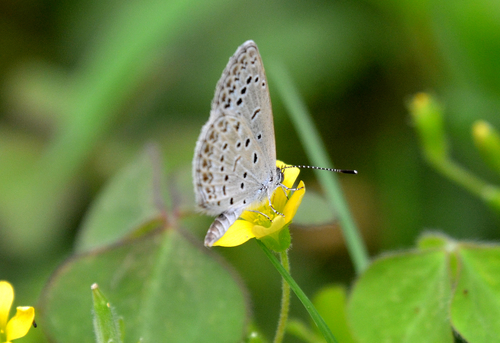
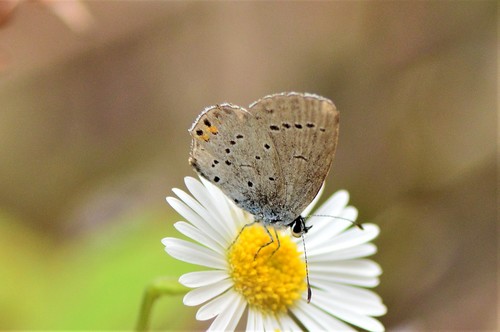
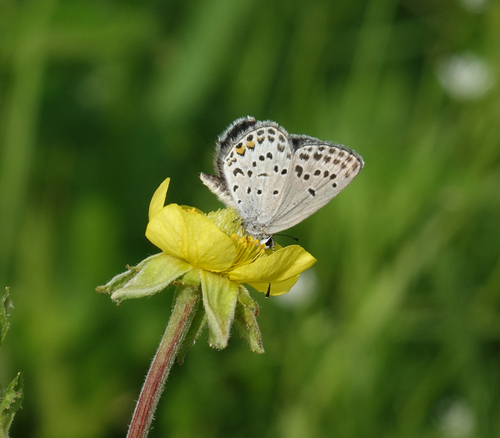
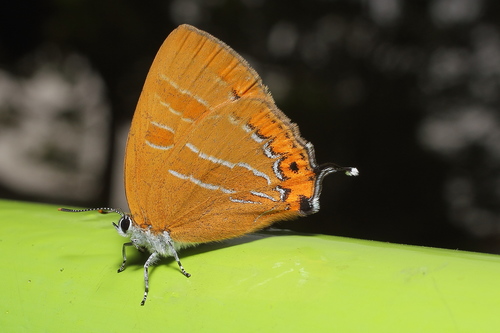
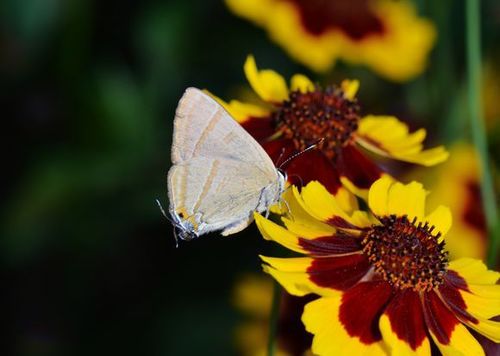
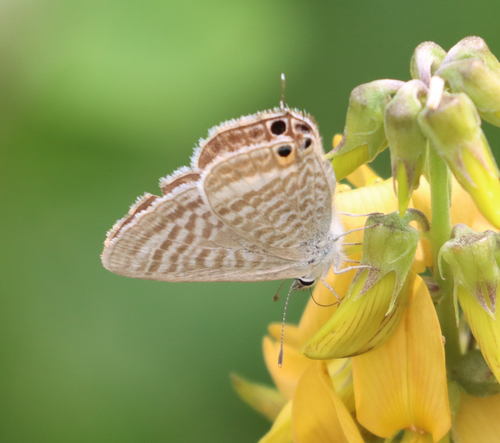
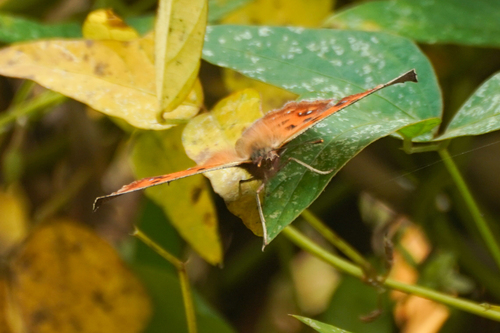
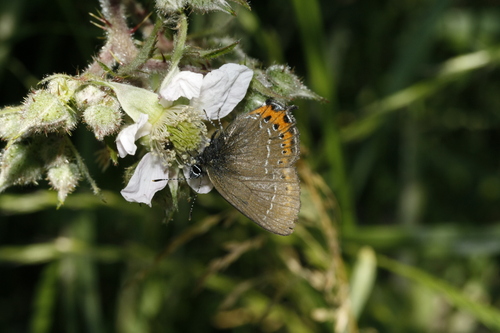
Black Hairstreak

Black Hairstreak

Fixsenia pruni

Daily sighting probability <5% · Rare
at Seoul

In 3 days ~10% in a week ~30%

12 Verified sightings at Seoul
May Best month

About the Black Hairstreak

The black hairstreak (Satyrium pruni) is a butterfly in the family Lycaenidae. The butterfly is native to Europe, from Scandinavia to Ukraine, and is found as far east as Mongolia, Korea and Japan. It is considered by IUCN to be stable and of least concern.

T. pruni L. (73 d). Above in the male with a few anal spots, in the female an anal halfband and sometimes a discal spot brick-red. Beneath the line of white bars is very thin, and the brick-red submarginal band of the hindwing is placed between two rows of black spots, which are thinly edged with bluish white, and is sometimes continued on to the forewing. Throughout Central and South Europe, from the Atlantic coast and Great Britain throughout Europe and Asia to Amurland and Corea; but absent from North Africa and probably also from Japan, the specimens recorded from the latter country presumably belonging to mera or prunoides In ab. fulvior Tutt (particularly females) the forewing bears an orange-yellow discal patch, the rest of the wing being dusted with golden brown. In ab. ptorsas Hfngl. both wings have a reddish yellow submarginal band above; transitional specimens have an incomplete... Wikipedia →
Global Distribution

Parks Where Found

# Park Country Daily sighting probability

More parks will be added in future updates.

Cities Where Found

# City Country Daily sighting probability
1 Kharkiv 🇺🇦 Ukraine
~10%
2 Prague 🇨🇿 Czechia
<5%
3 Seoul 🇰🇷 South Korea
<5%
4 Vienna 🇦🇹 Austria
<5%
5 Warsaw 🇵🇱 Poland
<5%
6 Kyiv 🇺🇦 Ukraine
<5%
7 Yekaterinburg 🇷🇺 Russia
<5%
8 Moscow 🇷🇺 Russia
<5%

Before you go

What are the chances of seeing a Black Hairstreak in Seoul?

Rare

Under 5% of wildlife watchers report a Black Hairstreak sighting in Seoul on a given day, based on 12 verified sightings from GBIF citizen-science data. It is the 268th most-seen of the 525 insects we can rate there. Over three days the chance rises to about 10%, and over a week to about 30%, if each day is a fresh chance.

When is the best time to see a Black Hairstreak in Seoul?

April and May

In those months about 10% of wildlife watchers report a Black Hairstreak in Seoul on a given day, against under 5% in June to March, the lowest months.

Is Seoul the best place to see a Black Hairstreak?

3rd of 8

Of the 8 cities where we can rate Black Hairstreak sightings, Seoul ranks 3rd at under 5%. The best odds are in Kharkiv (Ukraine, about 10%) and Prague (Czechia, under 5%).

Which relatives of the Black Hairstreak live in Seoul?

Same family: Lycaenidae

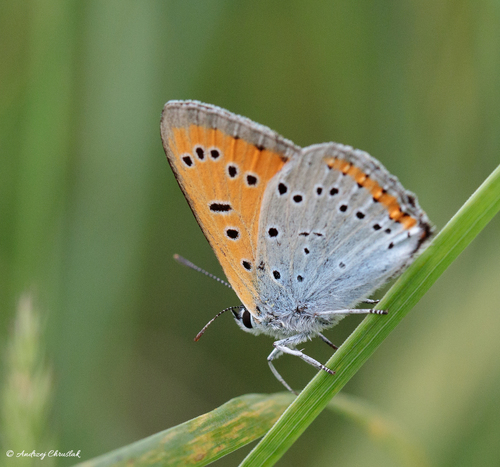
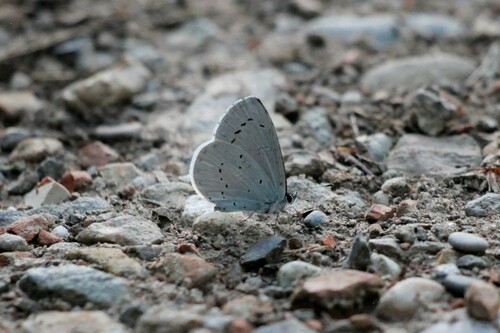
The closest relatives of the Black Hairstreak that you can see in Seoul (family Lycaenidae, Gossamer-winged Butterflies) are Pale Grass Blue (about 20%), Short-Tailed Blue (about 10%) and Large Copper (about 10%), with each one's daily chance of a sighting.

Where does the Black Hairstreak sighting chance come from?

GBIF citizen-science records

It is estimated from how often the Black Hairstreak is recorded against all the insects logged in Seoul (12 verified sightings), calibrated against known sighting rates. Figures are rounded to the nearest 10% because citizen-science data supports honest approximations, not decimals, and months with records from fewer than five people show "—". How it works.

← Back to Seoul