Eastern Lilysquatter

Eastern Lilysquatter

Paracercion melanotum

Daily sighting probability <5% · Rare
at Seoul

In 3 days ~10% in a week ~20%

10 Verified sightings at Seoul
10 In 1 park From 2019 to 2026
June Best month
☀️ Diurnal When it's spotted

About the Eastern Lilysquatter

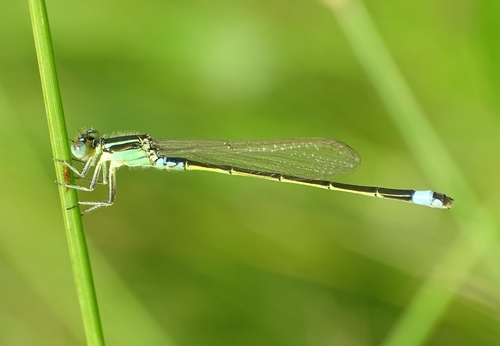
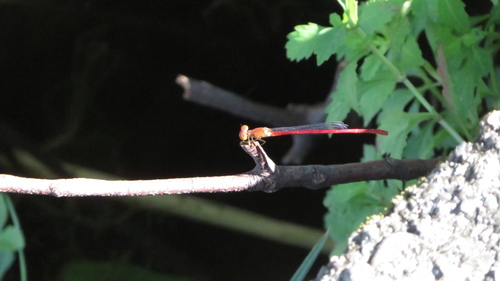
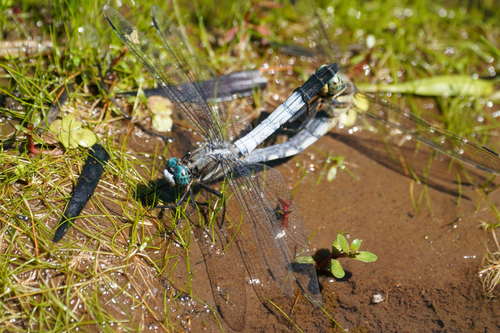
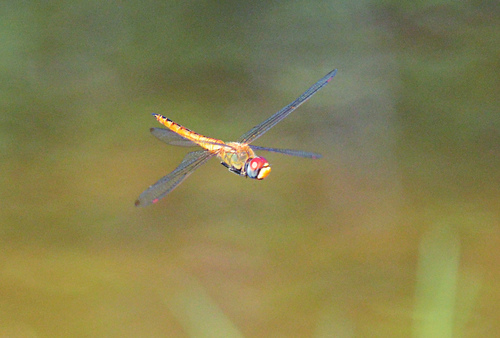
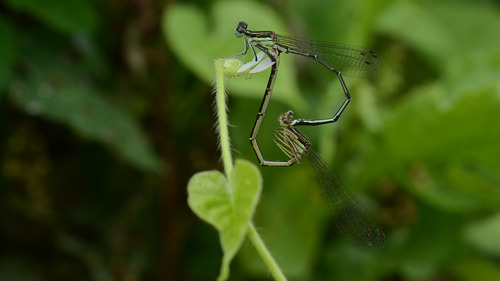
Paracercion melanotum, also known as the eastern lilysquatter, is a species of damselfly in the family Coenagrionidae. It is known to occur in China, Taiwan, South Korea, Japan, Vietnam, India, Sri Lanka, Nepal, Java, Philippines and Thailand.

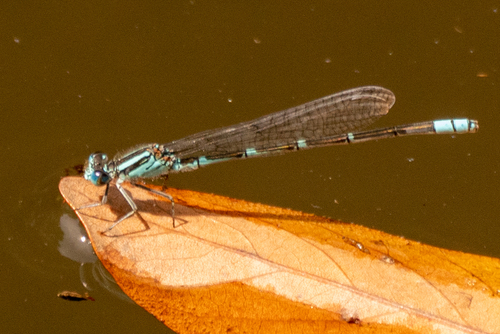
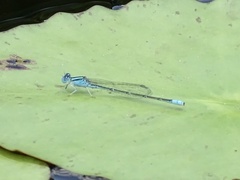
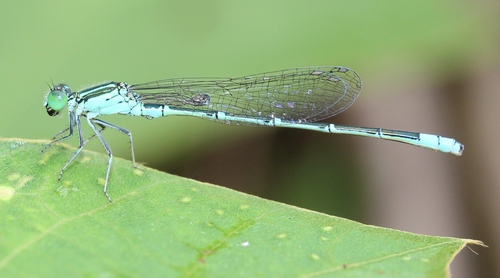
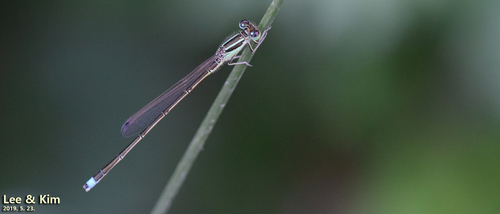
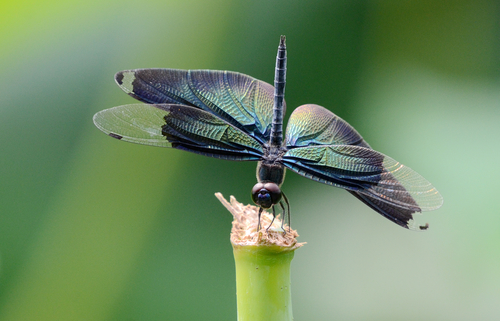
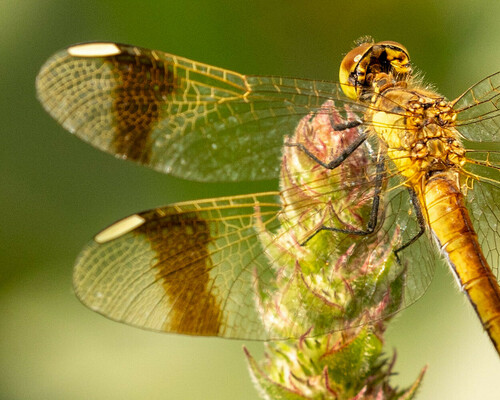
Species delimitation study based on COI, ITS, and morphological evidence concluded that P. pendulum and P. malayanum were synonymized as junior synonyms of P. melanotum. It is a medium sized damselfly with deep blue eyes. Its thorax is black on dorsum with very broad azure blue antehumeral stripes, which are very narrow or missing in Paracercion calamorum. Lateral sides of thorax are blue with a fine black line on the upper part of each lateral suture. No pruinescence compared to P. calamorum. Its wings are transparent and pterostigma is yellow, framed with heavy black nervures. Its abdomen is azure blue with broad black dorsal marks up to segment 7. Segment 2 has a distinct broad dorsal spot shaped like a thistle-head connected narrowly to a fine apical ring. This mark will help to distinguish it from Pseudagrion species. Segment 10 has a narrow mid-dorsal black streak. Female is dull green in colors... Wikipedia →

Global Distribution

Parks Where Found

# Park Country Daily sighting probability
1 Kaeng Krachan National Park 🇹🇭 Thailand
~10%

More parks will be added in future updates.

Cities Where Found

# City Country Daily sighting probability
1 Nanjing 🇨🇳 China
~10%
2 Shanghai 🇨🇳 China
~10%
3 Colombo [Sri Jayawardenepura Kotte] 🇱🇰 Sri Lanka
~10%
4 Kaohsiung 🇹🇼 Taiwan
~10%
5 Beijing 🇨🇳 China
<5%
6 Seoul 🇰🇷 South Korea
<5%
7 Tokyo 🇯🇵 Japan
<5%

Before you go

What are the chances of seeing an Eastern Lilysquatter in Seoul?

Rare

Under 5% of wildlife watchers report an Eastern Lilysquatter sighting in Seoul on a given day, based on 10 verified sightings from GBIF citizen-science data. It is the 394th most-seen of the 525 insects we can rate there. Over three days the chance rises to about 10%, and over a week to about 20%, if each day is a fresh chance.

When is the best time to see an Eastern Lilysquatter in Seoul?

June and August

In those months about 10% of wildlife watchers report an Eastern Lilysquatter in Seoul on a given day, against under 5% in July and September–May, the lowest months. Those are among Seoul's wettest months, with about 190 mm of rain a month against 20 mm in January.

What time of day is best to see an Eastern Lilysquatter?

Between 9 am and noon

Across all the parks we cover, that three-hour window holds the most Eastern Lilysquatter sightings with a recorded time, and about 8 in 10 of them come between 6 am and 6 pm: it is a daytime animal.

Is Seoul the best place to see an Eastern Lilysquatter?

6th of 7

Of the 7 cities where we can rate Eastern Lilysquatter sightings, Seoul ranks 6th at under 5%. The best odds are in Nanjing (China, about 10%), Shanghai (China, about 10%) and Colombo [Sri Jayawardenepura Kotte] (Sri Lanka, about 10%).

Where does the Eastern Lilysquatter sighting chance come from?

GBIF citizen-science records

It is estimated from how often the Eastern Lilysquatter is recorded against all the insects logged in Seoul (10 verified sightings), calibrated against known sighting rates. Figures are rounded to the nearest 10% because citizen-science data supports honest approximations, not decimals, and months with records from fewer than five people show "—". How it works.

← Back to Seoul