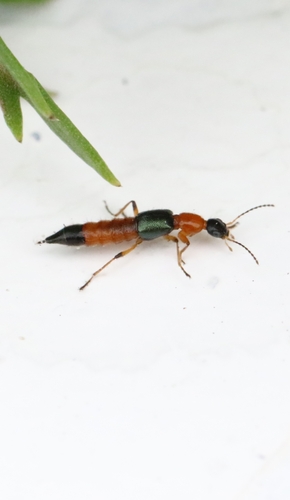


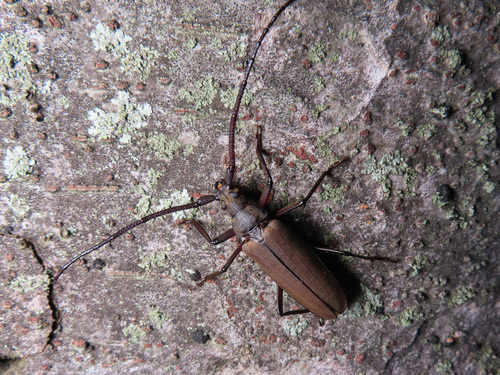
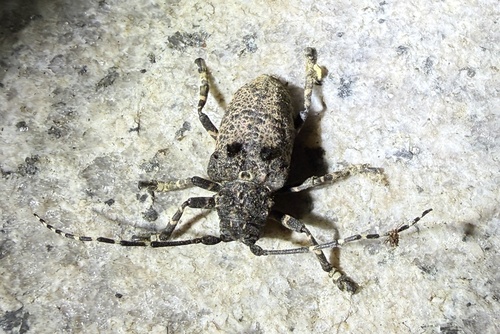
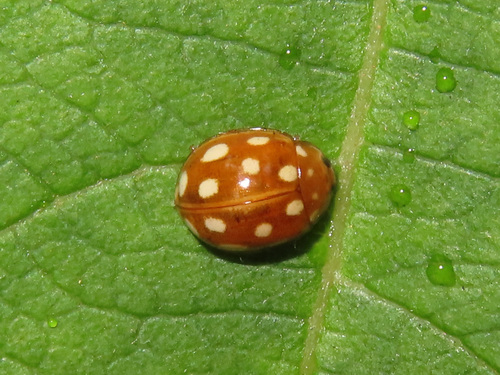
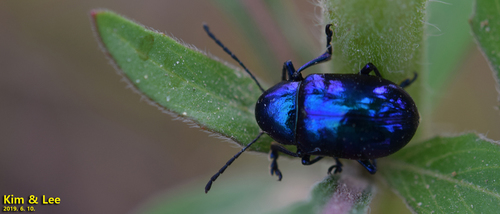
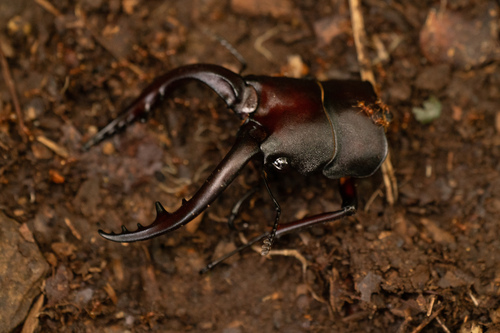
Paederus fuscipes

Paederus fuscipes

Paederus fuscipes

Daily sighting probability <5% · Rare
at Seoul

In 3 days ~10% in a week ~20%

8 Verified sightings at Seoul
August Best month

About the Paederus fuscipes

Paederus is a genus of small beetles of the family Staphylinidae ("rove beetles"). With 622 valid species assigned by 1987 to the subtribe Paederina (Paederus and its close allies), and with all but 148 within Paederus itself, this is a large genus.

Due to toxins in the hemolymph of some species within this genus, it has given its name to paederus dermatitis, a characteristic skin irritation that occurs if one of the insects is crushed against skin. A scholarly paper in 2002 suggested that a Paederus species could have been responsible for some of the ten Plagues of Egypt described in the Bible's Book of Exodus.

Paederus species are widely distributed around the world. Paederus species are much more brightly colored than most other rove beetles, with metallic blue- or green-colored elytra and many with bright orange or red on the pronotum and the basal segments of the abdomen. These bright colors may be an example of aposematism, a warning signal to potential predators.

Although most adult rove beetles avoid daylight, Paederus species are active during the day and attracted to bright lights after nightfall. Paederus eggs are laid singly, in moist habitats... Wikipedia →

Global Distribution

Parks Where Found

# Park Country Daily sighting probability

More parks will be added in future updates.

Cities Where Found

# City Country Daily sighting probability
1 Hangzhou 🇨🇳 China
~10%
2 Taichung 🇹🇼 Taiwan
~10%
3 Beijing 🇨🇳 China
~10%
4 Nanjing 🇨🇳 China
~10%
5 Shanghai 🇨🇳 China
~10%
6 Seoul 🇰🇷 South Korea
<5%
7 Osaka 🇯🇵 Japan
<5%
8 Hong Kong 🇨🇳 China
<5%
9 Tokyo 🇯🇵 Japan
<5%

Before you go

What are the chances of seeing a Paederus fuscipes in Seoul?

Rare

Under 5% of wildlife watchers report a Paederus fuscipes sighting in Seoul on a given day, based on 8 verified sightings from GBIF citizen-science data. It is the 319th most-seen of the 525 insects we can rate there. Over three days the chance rises to about 10%, and over a week to about 20%, if each day is a fresh chance.

When is the best time to see a Paederus fuscipes in Seoul?

March and June–August

In those months about 10% of wildlife watchers report a Paederus fuscipes in Seoul on a given day, against under 5% in April–May and September–February, the lowest months. Those are among Seoul's wettest months, with about 190 mm of rain a month against 20 mm in January.

Is Seoul the best place to see a Paederus fuscipes?

6th of 9

Of the 9 cities where we can rate Paederus fuscipes sightings, Seoul ranks 6th at under 5%. The best odds are in Hangzhou (China, about 10%), Taichung (Taiwan, about 10%) and Beijing (China, about 10%).

Where does the Paederus fuscipes sighting chance come from?

GBIF citizen-science records

It is estimated from how often the Paederus fuscipes is recorded against all the insects logged in Seoul (8 verified sightings), calibrated against known sighting rates. Figures are rounded to the nearest 10% because citizen-science data supports honest approximations, not decimals, and months with records from fewer than five people show "—". How it works.

← Back to Seoul