About the Great Brownie
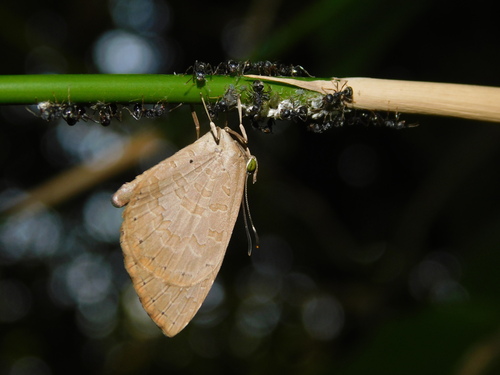
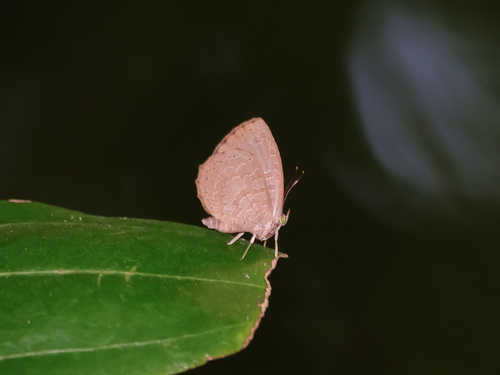
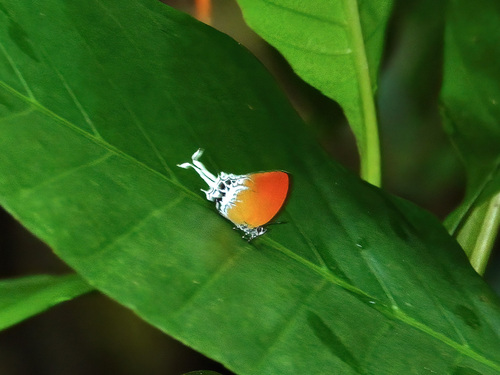
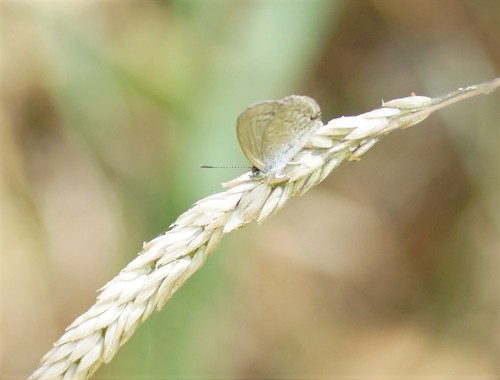
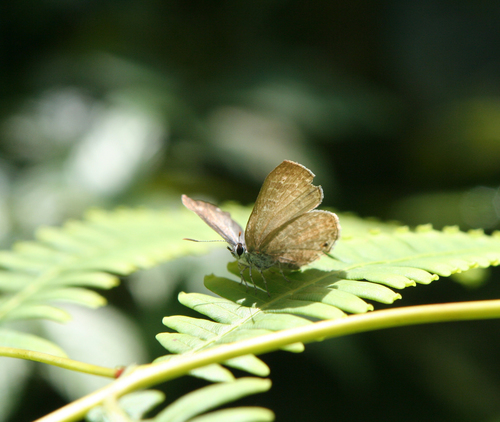
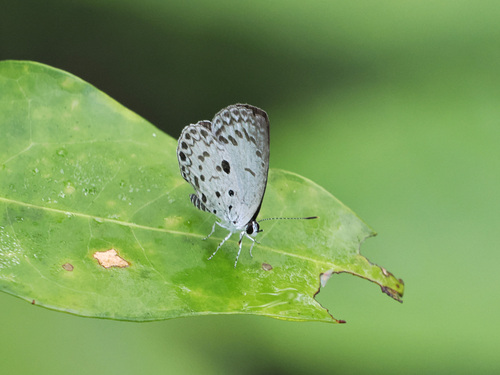
Miletus symethus, the great brownie, is a small butterfly found in India that belongs to the lycaenids or blues family. The species was first described by Pieter Cramer in 1777. It is found in the Naga Hills in India, Myanmar, Malaya, Sumatra and the Philippines.
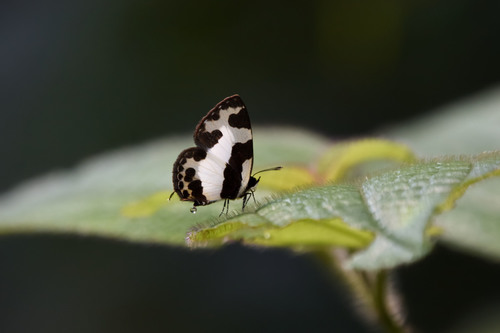
The species is considered very rare. A small butterfly, 40 to 50 mm in wingspan, it is the largest of the genus. The upper forewing in both sexes has a broad white discal band which extends right up to dorsum, the upper edge of which is sharply angled at vein 3. The upper hindwing has a pale discal streak.
The male has the upperside of wings dusky brownish black. The ground colour of the forewings darker, almost pure black in fresh specimens, on the apical third of the wing; a short streak in the middle of interspace 1, a more outwardly produced similar streak in interspace 2, basal halves of interspaces 3 and 4, the lower apex of the discoidal cell and the extreme base of interspace 5, white, all forming a median conspicuous irregular white patch on the wing, narrowly traversed by the veins which are greyish brown. Hindwing: more uniform, slightly darker... Wikipedia →