Pale Mottle

Pale Mottle

Logania marmorata

Daily sighting probability ~10% · With luck
at Singapore

In 3 days ~10% in a week ~30%

70 Verified sightings at Singapore
January Best month

About the Pale Mottle

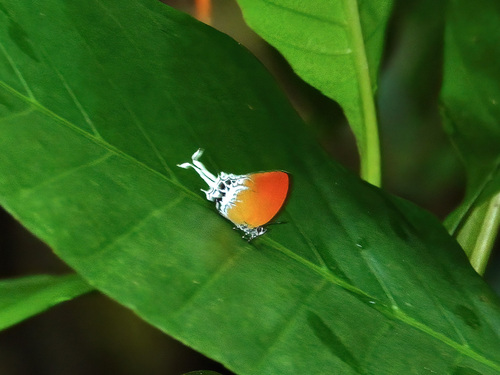
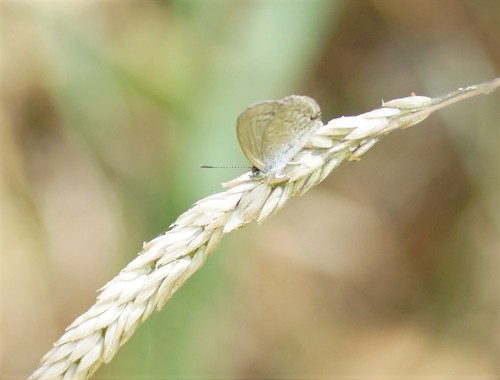
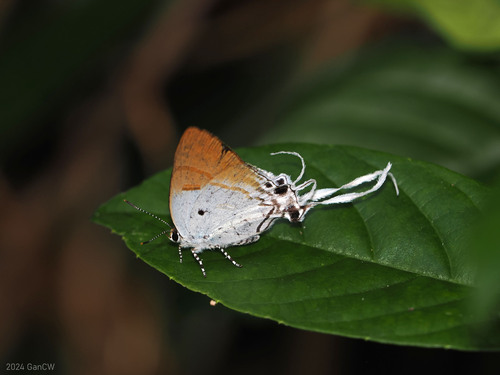
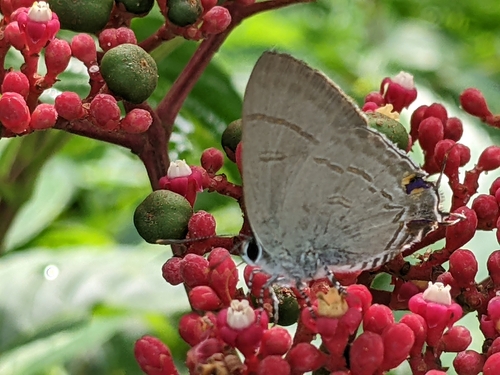
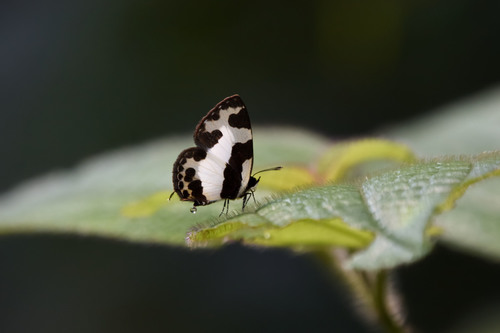
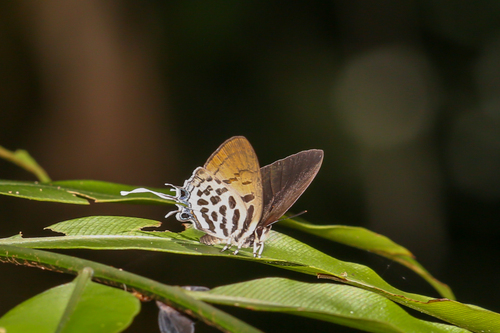
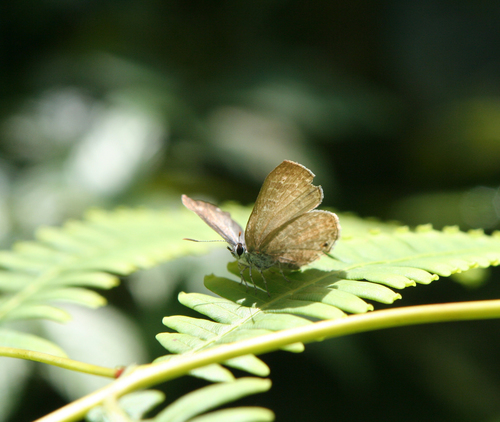
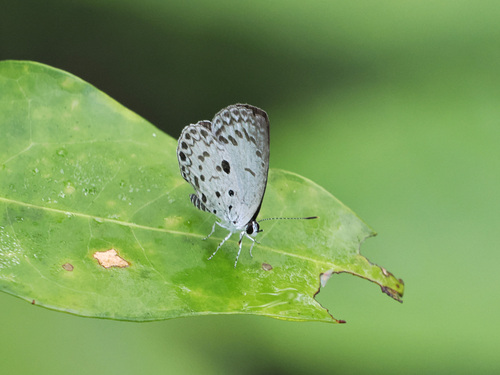
Logania marmorata, the pale mottle, is a butterfly in the family Lycaenidae. It was described by Frederic Moore in 1884. It is found in the Indomalayan realm.An insignificant, though widely distributed species. Its range extends from the

Philippines in the north and from Tenasserim through the whole of Macromalayana.The whole basal part of the forewing is whitish, or bluish-grey, according to the habitat, the apical border being broad black. In the name-type and a race of North Borneo also the hindwing is brightened up by bluish-grey, the other insular marmorata. forms exhibit black hindwings. — marmorata Moore (141 f), the lightest off-branch of the total species. Forewing

of the male almost white, with a delicate violet tint, while in the female lying before me [Fruhstorfer] from Singapore, it is dull chalk-coloured. Hindwing with a pale bluish-grey basal zone comprising yet the middle zone. Under surface grey with whitish diffuse spots, submarginal accumulations of blackish scales and indistinct brown maculae of the hindwings being preponderately speckled with a silvery grey Wikipedia →
Global Distribution

Parks Where Found

# Park Country Daily sighting probability

More parks will be added in future updates.

Cities Where Found

# City Country Daily sighting probability
1 Singapore 🇸🇬 Singapore
~10%

Before you go

What are the chances of seeing a Pale Mottle in Singapore?

With luck

About 10% of wildlife watchers report a Pale Mottle sighting in Singapore on a given day, based on 70 verified sightings from GBIF citizen-science data. It is the 291st most-seen of the 1045 insects we can rate there. Over three days the chance rises to about 10%, and over a week to about 30%, if each day is a fresh chance.

When is the best time to see a Pale Mottle in Singapore?

June, October and December–April

In those months about 10% of wildlife watchers report a Pale Mottle in Singapore on a given day, against under 5% in May, July–September and November, the lowest months.

Where else can you see a Pale Mottle?

Only Singapore, in our data

Singapore is the only city on Wallace's Line with enough records to rate Pale Mottle sightings: about 10% of wildlife watchers there report one on a given day.

Which relatives of the Pale Mottle live in Singapore?

Same family: Lycaenidae

The closest relatives of the Pale Mottle that you can see in Singapore (family Lycaenidae, Gossamer-winged Butterflies) are Branded Imperial (about 20%), Lesser Grass Blue (about 20%) and Tiny Grass Blue (about 20%), with each one's daily chance of a sighting.

Where does the Pale Mottle sighting chance come from?

GBIF citizen-science records

It is estimated from how often the Pale Mottle is recorded against all the insects logged in Singapore (70 verified sightings), calibrated against known sighting rates. Figures are rounded to the nearest 10% because citizen-science data supports honest approximations, not decimals, and months with records from fewer than five people show "—". How it works.

← Back to Singapore