About the Rice Weevil
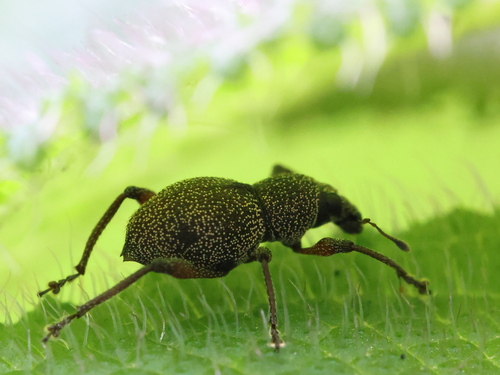
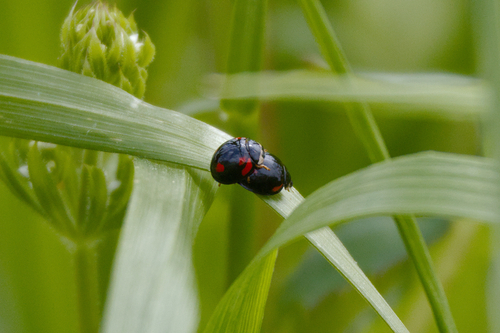
The rice weevil (Sitophilus oryzae) is a stored product pest which attacks seeds of several crops, including wheat, rice, and maize. The adults are usually between 3–4.6 millimetres (0.12–0.18 in) long, with a long snout. The body color appears to be brown/black, but on close examination, four orange/red spots are arranged in a cross on the wing covers. It is easily confused with the similar looking maize weevil. The maize weevil is typically somewhat larger than the rice weevil, but rice weevils as large as the largest maize weevils and maize weevils nearly as small as the smallest rice weevils have been found. Some external features can be used to differentiate the vast majority of adults, but the only reliable features are on the genitalia (see table below). Both species can hybridize. The genitalic structure of hybrids is unknown.
The larvae are humpbacked and legless with a white to creamy white color. The head is small and tan. Adult rice weevils are able to fly, and can live for up to two years. Females lay 2–6 eggs per day and up to 300 over their lifetime. The female uses strong mandibles to chew a hole into a grain kernel after which she deposits... Wikipedia →