Wild Silkmoth

Wild Silkmoth

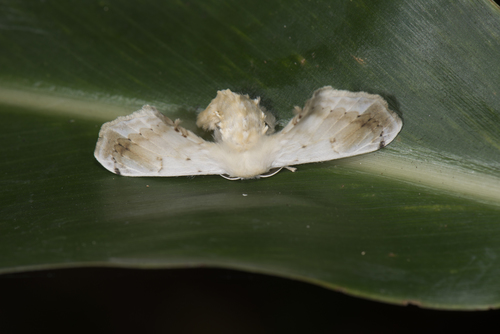
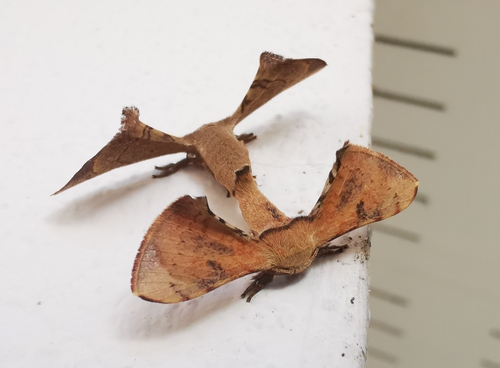
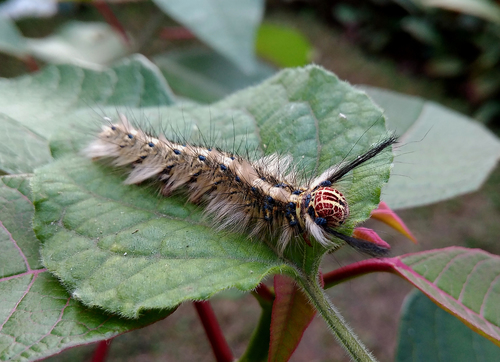
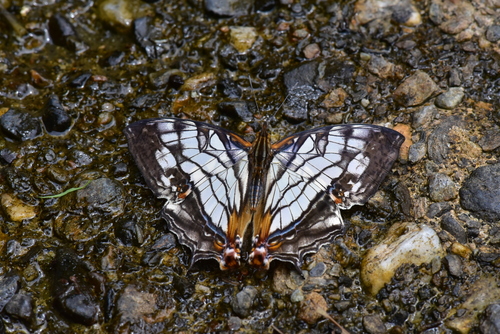
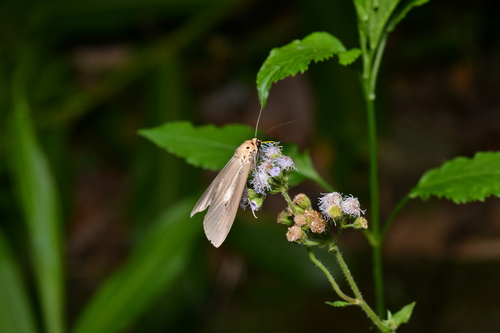
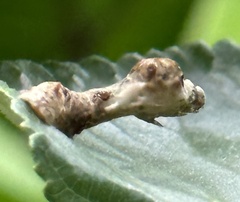
Bombyx mandarina

Daily sighting probability <5% · Rare
at Taipei

In 3 days ~10% in a week ~20%

18 Verified sightings at Taipei
7 In 1 park From 2019 to 2026
January Best month
☀️ Diurnal When it's spotted

About the Wild Silkmoth

Bombyx mandarina, the wild silk moth, is a species of moth in the family Bombycidae. It is the closest relative of Bombyx mori, the domesticated silk moth. The larvae (caterpillars) of both species are called silkworms, famous for producing the fibroinous cocoon that is harvested by humans for silk.

Unlike its domesticated relative, who has lost the ability to fly and is too synanthropic to even survive outside human cultivation, B. mandarina is a fairly ordinary moth. The main difference between the wild B. mandarina and the domesticated B. mori is that the former has a more slender body with well-developed wings in males, and is dull greyish-brown in colour.

Bombyx mandarina and the domesticated Bombyx mori constitute two of the currently identified eight species of the genus Bombyx, the true or mulberry silk moths. The origin of the domestic silk moth is enigmatic. It has been suggested that it is the survivor of an extinct species that diverged from the ancestors of Bombyx mandarina millions of years ago. However, this is based on an untenable molecular clock hypothesis that assumes that wild and domestic silk moths evolved equally fast after their... Wikipedia →
Global Distribution

Parks Where Found

# Park Country Daily sighting probability
1 Taroko National Park 🇹🇼 Taiwan
~10%

More parks will be added in future updates.

Cities Where Found

# City Country Daily sighting probability
1 Tokyo 🇯🇵 Japan
<5%
2 Taipei 🇹🇼 Taiwan
<5%
3 Seoul 🇰🇷 South Korea
<5%

Before you go

What are the chances of seeing a Wild Silkmoth in Taipei?

Rare

Under 5% of wildlife watchers report a Wild Silkmoth sighting in Taipei on a given day, based on 18 verified sightings from GBIF citizen-science data. It is the 396th most-seen of the 765 insects we can rate there. Over three days the chance rises to about 10%, and over a week to about 20%, if each day is a fresh chance.

When is the best time to see a Wild Silkmoth in Taipei?

January and May

In those months about 10% of wildlife watchers report a Wild Silkmoth in Taipei on a given day, against under 5% in February–April and June–December, the lowest months.

What time of day is best to see a Wild Silkmoth?

Between 7 and 10 am

Across all the parks we cover, that three-hour window holds the most Wild Silkmoth sightings with a recorded time, and about 9 in 10 of them come between 6 am and 6 pm: it is a daytime animal.

Is Taipei the best place to see a Wild Silkmoth?

Among the best

Of the 3 cities where we can rate Wild Silkmoth sightings, Taipei ranks 2nd at under 5%, level with the leaders once rounded. The best odds are in Tokyo (Japan, under 5%).

Where does the Wild Silkmoth sighting chance come from?

GBIF citizen-science records

It is estimated from how often the Wild Silkmoth is recorded against all the insects logged in Taipei (18 verified sightings), calibrated against known sighting rates. Figures are rounded to the nearest 10% because citizen-science data supports honest approximations, not decimals, and months with records from fewer than five people show "—". How it works.

← Back to Taipei