About the Marsh Greenbottle Fly
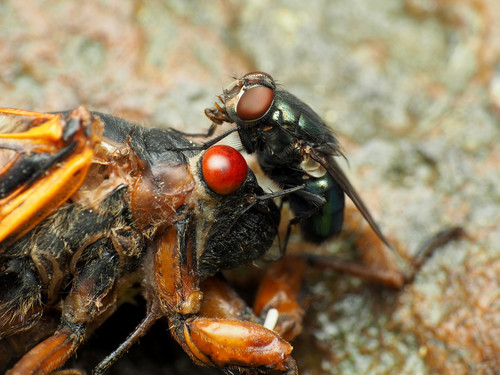
The common toad fly, Lucilia silvarum, is a member of the fly family Calliphoridae. This fly was first discovered by Johann Wilhelm Meigen in 1826 and is found most notably in European and Western Countries. This species of fly is known for the ability of its larvae to cause myiasis. In addition, this fly is common around carrion which it finds by smell, as well as areas of high filth concentration.
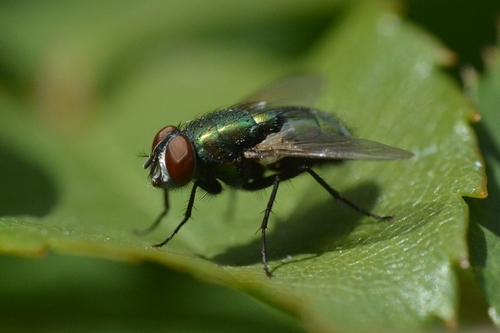
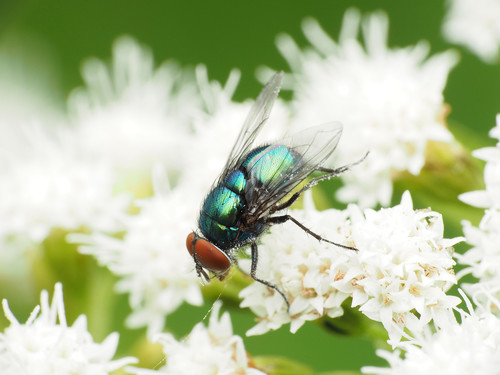
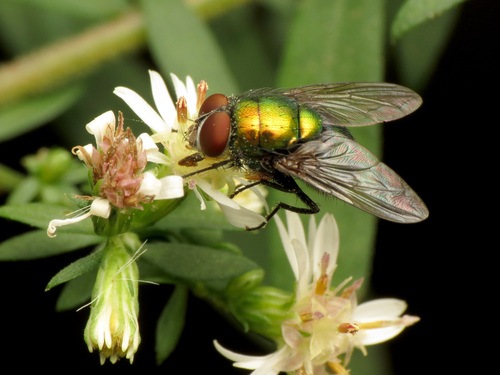
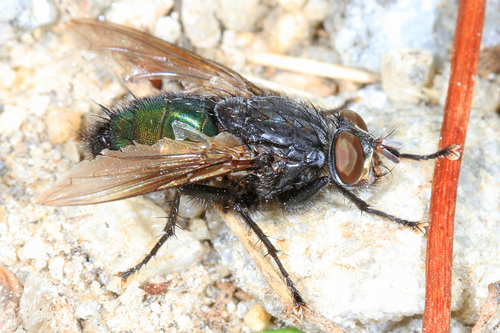
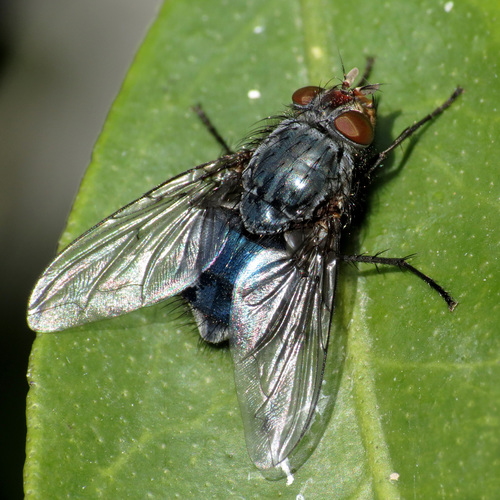
Like all true flies, adults have a single pair of wings, and like most of the Calliphoridae, they have a characteristic metallic color and plumose aristae. The adults (imago) of Lucilia silvarum are generally found to be between 4.5–10 mm (0.18–0.39 in). They are difficult to distinguish from many closely related green flies.
The larvae are typically about 2 mm (0.08 in) long when they first hatch, and grow in size to approximately 17 mm (0.7 in). Since the fly has been found to be a warm-weather fly, it is typically found in areas with temperatures between 75 °F (24 °C) and 85 °F (29 °C). Specifically, Lucilia silvarum is found in the countries: China, Denmark, United States, Finland, southern Norway, North Africa, Russia, and Canada. Wikipedia →