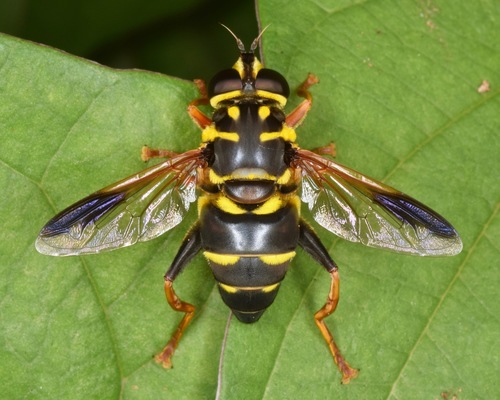
About the Common Wood Fly
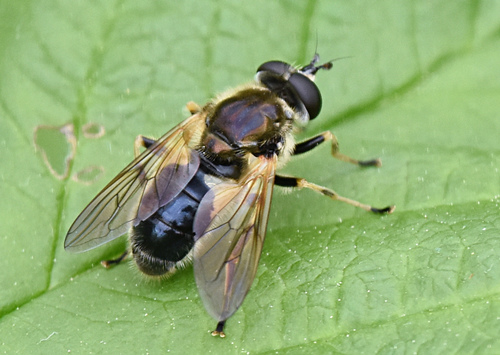
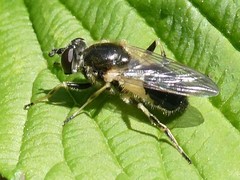
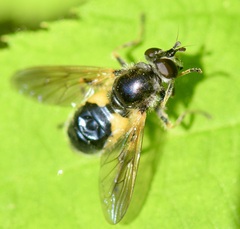
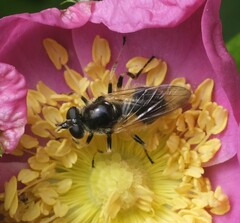
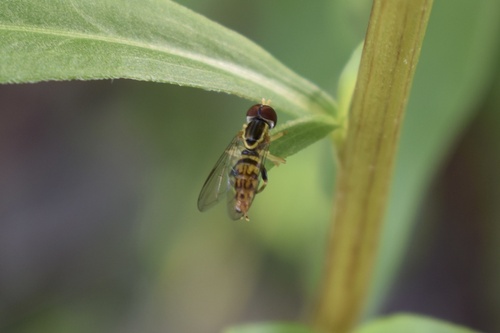
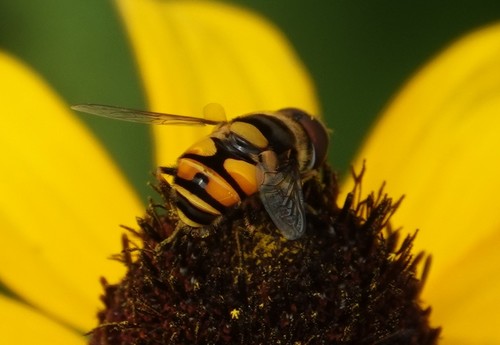
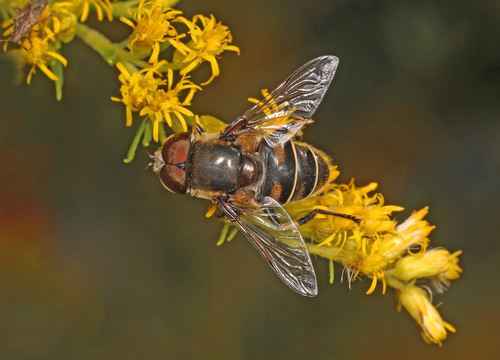
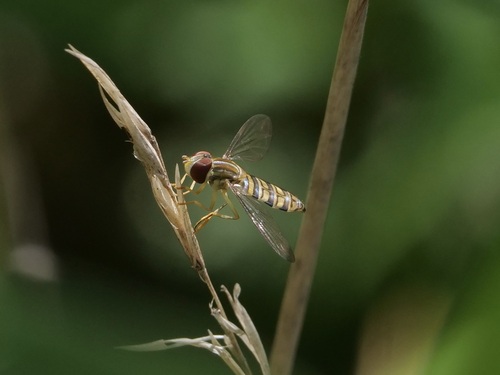
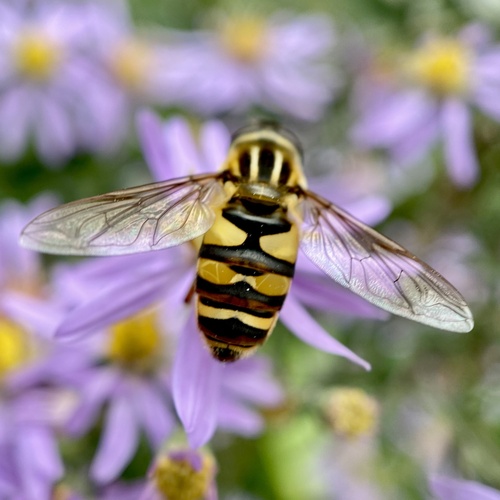
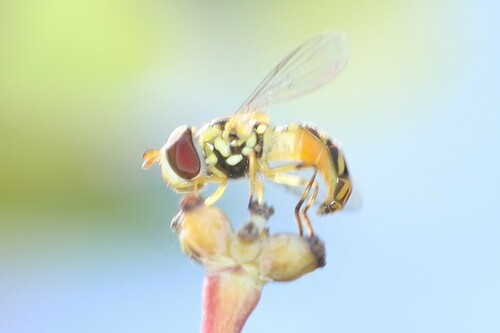
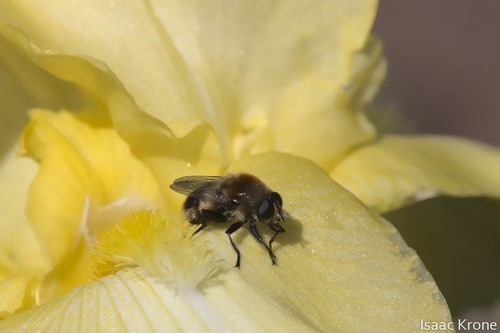
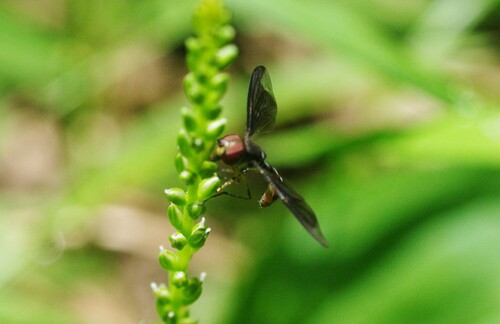
Blera badia, the Common Wood Fly, is a common species of syrphid fly first officially described by Walker in 1849. Hoverflies get their names from the ability to remain nearly motionless while in flight. The adults are also known as flower flies, for they are commonly found around and on flowers, from which they get both energy-giving nectar and protein-rich pollen. The larvae are of the rat-tailed type, feeding on exuding sap or in the rot holes of trees.
External map This is a nearctic species that is widely distributed in Eastern and Central North America. For terms, see Morphology of Diptera. External images Size 10 to 11 mm Head The frontal triangle is black, shining, with dust near the orbits. The face is yellowish white and thickly covered with silvery dust. There is a medial shining black stripe (vitta) from just below the antennae to the oral cavity. The gena is shining black from near the eye to the oral opening. The antennae are black, with the flagellum more brow and a brown arista. The occiput is black, with whitish pile and thickly covered with grayish dust.
Thorax The thorax and postpronotum are greenish-black, shining, with rather... Wikipedia →