
Pine Wood Treefrog

Pine Wood Treefrog

Dryophytes femoralis

Silhouette: Robbi Bishop-Taylor · PhyloPic

LCLeast ConcernNTVUENCR Endemic
Daily sighting probability ~20% · Possible
at Congaree National Park

In 3 days ~40% in a week ~70%

11 Verified sightings at Congaree National Park From 2019 to 2026
11 In 1 park
July Best month
☀️🌙 Day & Night When it's spotted

About the Pine Wood Treefrog

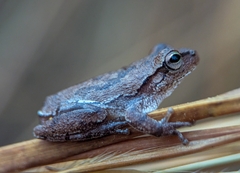
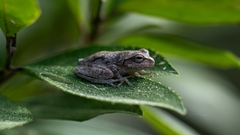
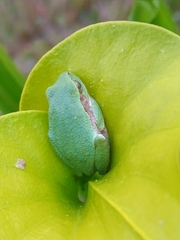
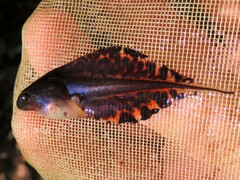
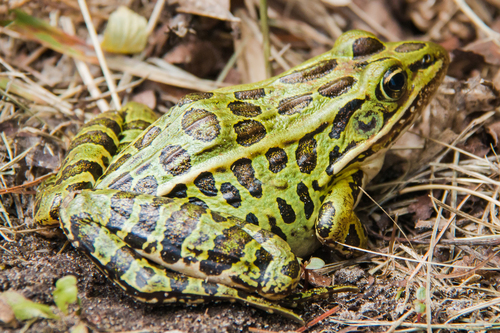
The pine woods tree frog (Dryophytes femoralis) is a species of frog in the family Hylidae, endemic to the southeastern United States. Pine woods tree frogs lay eggs in ephemeral water bodies. Eggs generally hatch within 24 hours, and tadpoles metamorphose into baby froglets after 50–75 days at 11–15 mm in length. Tadpoles are remarkably variable; similar to the squirrel tree frog (Dryophytes squirellus), the presence or absence of dragonfly larvae (a predator) induces a dramatic, red-colored tail. Research has shown that chemical cues released by predators and injured tadpoles are enough to trigger these color and body-shape changes, even if there is no direct contact with a predator.

Like many amphibian species' tadpoles, those of the pinewoods tree frog are susceptible to parasitic infection by trematode flatworms. However, tadpoles swim in a manner that does not necessarily reduce the intensity of infection, but reduces the likelihood of these parasites infecting in the head and body region; instead, their swimming behavior shunts parasites to the tail area, where infection by parasites causes fewer harmful effects.

The pine woods tree... Wikipedia →

Sounds

Advertisement call0:11

United States · 2018

© Chris Harrison · XC890992 · CC BY-NC-SA 4.0

Recording0:24

United States · 2022

© Alex Kittle · iNaturalist · CC BY-NC 4.0

Recording0:25

United States · 2024

© harrier · iNaturalist · CC BY 4.0

Global Distribution

Parks Where Found

# Park Country Daily sighting probability
1 Congaree National Park 🇺🇸 United States
~20%

More parks will be added in future updates.

Closest Relatives at Congaree National Park

Before you go

What are the chances of seeing a Pine Wood Treefrog in Congaree National Park?

Possible

About 20% of wildlife watchers report a Pine Wood Treefrog sighting in Congaree National Park on a given day, based on 11 verified sightings from GBIF citizen-science data from 2019 to 2026. It is the 10th most-seen of the 13 amphibians we can rate there. Over three days the chance rises to about 40%, and over a week to about 70%, if each day is a fresh chance.

When is the best time to see a Pine Wood Treefrog in Congaree National Park?

March–April and June–August

In those months about 20% of wildlife watchers report a Pine Wood Treefrog in Congaree National Park on a given day, against under 5% in September to February, the lowest months.

What time of day is best to see a Pine Wood Treefrog?

Between 8 and 11 pm

Across all the parks we cover, that three-hour window holds the most Pine Wood Treefrog sightings with a recorded time, and about 6 in 10 of them come between 6 am and 6 pm: it is seen both by day and at night.

Where else can you see a Pine Wood Treefrog?

Only Congaree National Park, in our data

Congaree National Park is the only park on Wallace's Line with enough records to rate Pine Wood Treefrog sightings: about 20% of wildlife watchers there report one on a given day.

Which relatives of the Pine Wood Treefrog live in Congaree National Park?

Same genus: Dryophytes

The closest relatives of the Pine Wood Treefrog that you can see in Congaree National Park (genus Dryophytes) are Green Treefrog (about 30%), Cope's Gray Tree Frog (about 30%) and Squirrel Tree Frog (about 20%), with each one's daily chance of a sighting.

Where does the Pine Wood Treefrog sighting chance come from?

GBIF citizen-science records

It is estimated from how often the Pine Wood Treefrog is recorded against all the amphibians logged in Congaree National Park (11 verified sightings from 2019 to 2026), calibrated against known sighting rates. Figures are rounded to the nearest 10% because citizen-science data supports honest approximations, not decimals, and months with records from fewer than five people show "—". How it works.

← Back to Congaree National Park