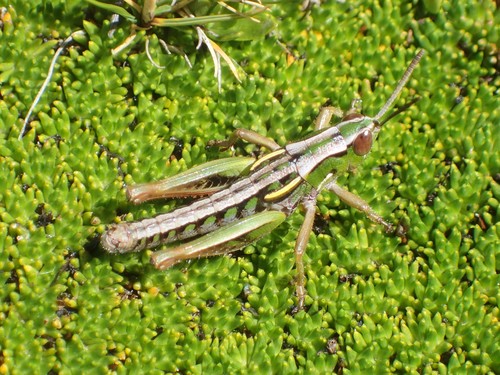
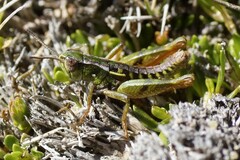
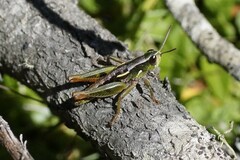
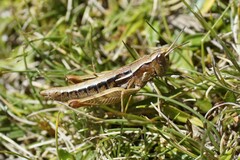

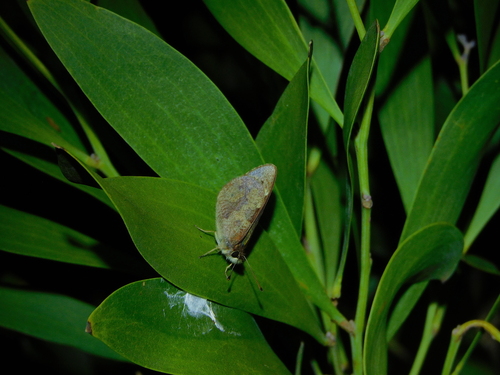
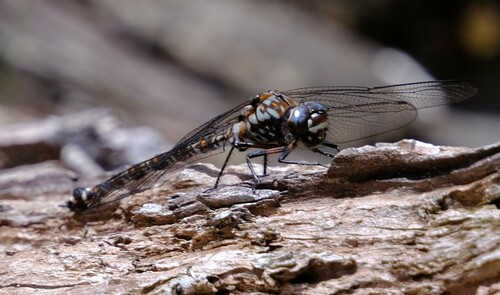
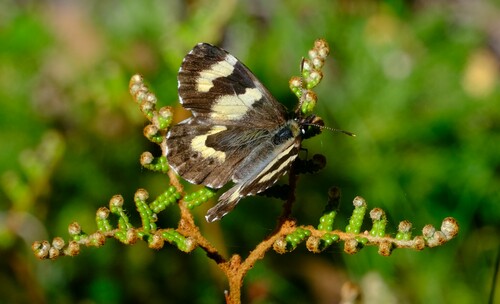
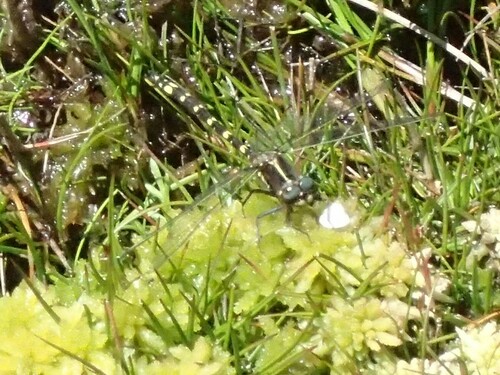
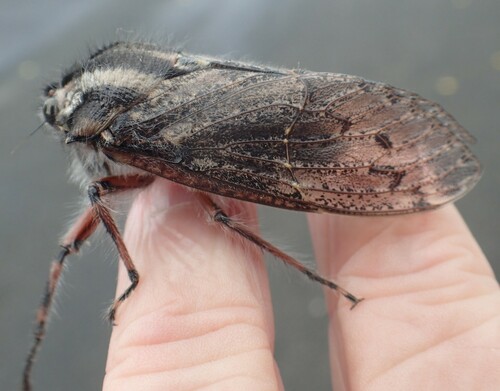
Tassie Hopper

Tassie Hopper

Russalpia albertisi

Daily sighting probability ~10% · With luck
at Cradle Mountain-Lake St Clair National Park

In 3 days ~30% in a week ~60%

5 Verified sightings at Cradle Mountain-Lake St Clair National Park From 2019 to 2026
5 In 1 park
December Best month
☀️ Diurnal When it's spotted

About the Tassie Hopper

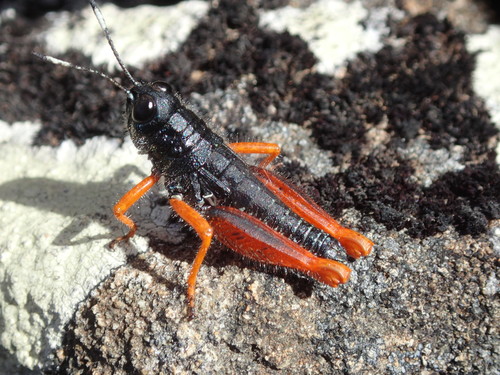
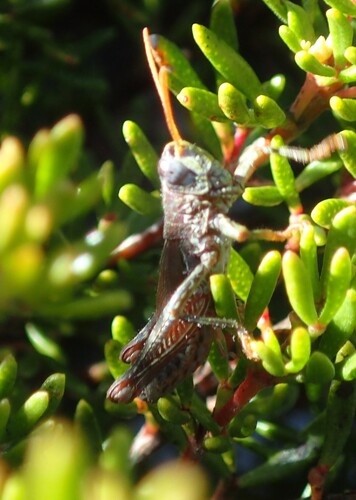
Russalpia albertisi, the Tassie hopper, is a species of short-horned grasshopper in the family Acrididae. It is found in Tasmania, Australia. Russalpia albertisi is distinguished from other species by its micropterous wings, with small, non-functional forewings and vestigial hind wings. Its pronotum features a smooth median carina and a well-defined caudal margin. Males typically have more inflated hind femora, while females tend to have slender femora and a slightly larger, more robust abdomen, as is common in many grasshopper species. The colouration of R. albertisi varies widely, with individuals appearing in shades of green, brown, or black, providing effective camouflage in Tasmanian grasslands.

Originally described as Trigoniza albertisi by Bolívar in 1898, the species was later reclassified into the genus Russalpia by Sjöstedt in 1921. Phylogenetic studies confirmed a close relationship between Russalpia and the New Zealand Sigaus genus, suggesting a shared evolutionary history between Tasmanian and New Zealand alpine grasshoppers. Molecular analyses, including mitochondrial and nuclear DNA sequencing, have placed R. albertisi within the subtribe... Wikipedia →

Global Distribution

Parks Where Found

# Park Country Daily sighting probability
1 Cradle Mountain-Lake St Clair National Park 🇦🇺 Australia
~10%

More parks will be added in future updates.

Before you go

What are the chances of seeing a Tassie Hopper in Cradle Mountain-Lake St Clair National Park?

With luck

About 10% of wildlife watchers report a Tassie Hopper sighting in Cradle Mountain-Lake St Clair National Park on a given day, based on 5 verified sightings from GBIF citizen-science data from 2019 to 2026. It is the 17th most-seen of the 20 insects we can rate there. Over three days the chance rises to about 30%, and over a week to about 60%, if each day is a fresh chance.

When is the best time to see a Tassie Hopper in Cradle Mountain-Lake St Clair National Park?

December to February

In those months about 20% of wildlife watchers report a Tassie Hopper in Cradle Mountain-Lake St Clair National Park on a given day, against under 5% in March to November, the lowest months.

What time of day is best to see a Tassie Hopper?

Between 10 am and 1 pm

Across all the parks we cover, that three-hour window holds the most Tassie Hopper sightings with a recorded time, and about 8 in 10 of them come between 6 am and 6 pm: it is a daytime animal.

Where else can you see a Tassie Hopper?

Only Cradle Mountain-Lake St Clair National Park, in our data

Cradle Mountain-Lake St Clair National Park is the only park on Wallace's Line with enough records to rate Tassie Hopper sightings: about 10% of wildlife watchers there report one on a given day.

Which relatives of the Tassie Hopper live in Cradle Mountain-Lake St Clair National Park?

Same family: Acrididae

The closest relatives of the Tassie Hopper that you can see in Cradle Mountain-Lake St Clair National Park (family Acrididae, Short-horned Grasshoppers) are Tasmanian Grasshopper (about 50%), Tasmanian Velvet Grasshopper (about 20%) and Truganinia bauerae (about 20%), with each one's daily chance of a sighting.

Where does the Tassie Hopper sighting chance come from?

GBIF citizen-science records

It is estimated from how often the Tassie Hopper is recorded against all the insects logged in Cradle Mountain-Lake St Clair National Park (5 verified sightings from 2019 to 2026), calibrated against known sighting rates. Figures are rounded to the nearest 10% because citizen-science data supports honest approximations, not decimals, and months with records from fewer than five people show "—". How it works.

← Back to Cradle Mountain-Lake St Clair National Park