Popokatea

Popokatea

Mohoua albicilla

Silhouette: Amy Whitehead · PhyloPic

LCLeast ConcernNTVUENCR Endemic
Daily sighting probability <5% · Rare
at Egmont National Park

In 3 days ~10% in a week ~30%

37 Verified sightings at Egmont National Park From 2019 to 2026
37 In 1 park
September Best month
☀️ Diurnal When it's spotted

About the Popokatea

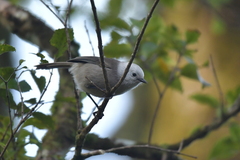
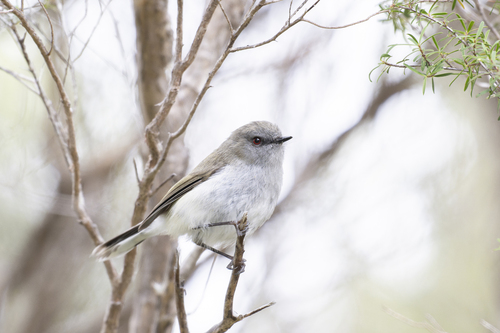
The whitehead (Mohoua albicilla; Māori: pōpokotea) is a species of small (15 cm in length, 18.5/14.5 g.) passerine bird endemic to New Zealand. It is classified in the family Mohouidae. The male whitehead's upperparts, wings and tail are a pale brown in colour, while the head and underparts are white – in the case of the male an almost pure white in colour. Females and juveniles have similar colouration except that the nape and crown (top of the head) are shaded brown. The black beak and eyes contrast with the white head and the feet are bluish black in colouration.

Formerly quite common and widespread in native forests in the North Island, the whitehead has suffered a marked decline in the past two centuries since European colonisation and today it is restricted to a fraction of its former range. Historically, deforestation has destroyed large areas of habitat for this species but today the greatest threat is from predation by invasive mammalian species such as rats and stoats. It has been the subject of an active conservation campaign and has been successfully reintroduced into reserves near Auckland and Wellington respectively. In the past whiteheads held a special place in Māori culture. As well as the species appearing in many legends, whiteheads were viewed by Māori to have roles as messengers of the gods and as fortune tellers or seers – and because of these beliefs, live birds were caught and used in several different kinds of ceremonial rites. Wikipedia →

Sounds

Song0:53

New Zealand · 2020

© Ken George · XC843909 · CC BY-NC-SA 4.0

Call0:13

New Zealand · 2022

© Barry Edmonston · XC794904 · CC BY-NC-SA 4.0

Alarm call0:27

New Zealand · 2015

© Johannes Fischer · XC214595 · CC BY-NC-SA 4.0

Global Distribution

Parks Where Found

# Park Country Daily sighting probability
1 Egmont National Park 🇳🇿 New Zealand
<5%

More parks will be added in future updates.

Before you go

What are the chances of seeing a Popokatea in Egmont National Park?

Rare

Under 5% of wildlife watchers report a Popokatea sighting in Egmont National Park on a given day, based on 37 verified sightings from GBIF citizen-science data from 2019 to 2026. It is the 41st most-seen of the 46 birds we can rate there. Over three days the chance rises to about 10%, and over a week to about 30%, if each day is a fresh chance.

When is the best time to see a Popokatea in Egmont National Park?

February, July and September–November

In those months about 10% of wildlife watchers report a Popokatea in Egmont National Park on a given day, against under 5% in March–June, August and December–January, the lowest months.

What time of day is best to see a Popokatea?

Between 11 am and 2 pm

Across all the parks we cover, that three-hour window holds the most Popokatea sightings with a recorded time, and about 9 in 10 of them come between 6 am and 6 pm: it is a daytime animal.

Where else can you see a Popokatea?

Only Egmont National Park, in our data

Egmont National Park is the only park on Wallace's Line with enough records to rate Popokatea sightings: under 5% of wildlife watchers there report one on a given day.

Where does the Popokatea sighting chance come from?

GBIF citizen-science records

It is estimated from how often the Popokatea is recorded against all the birds logged in Egmont National Park (37 verified sightings from 2019 to 2026), calibrated against known sighting rates. Figures are rounded to the nearest 10% because citizen-science data supports honest approximations, not decimals, and months with records from fewer than five people show "—". How it works.

← Back to Egmont National Park