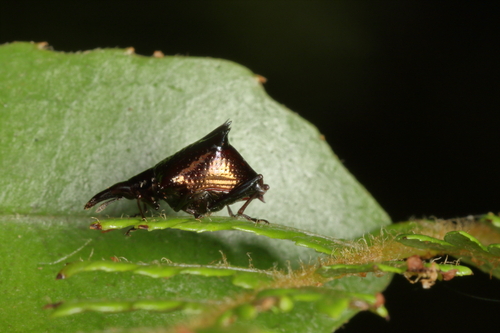
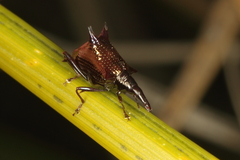
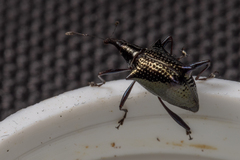
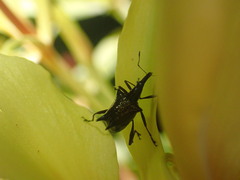
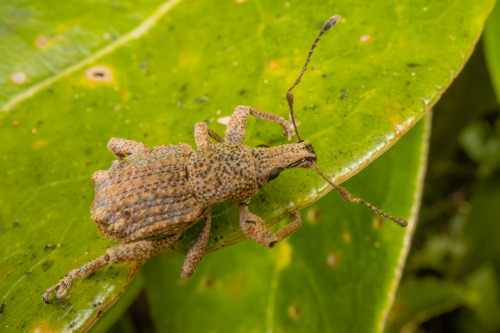
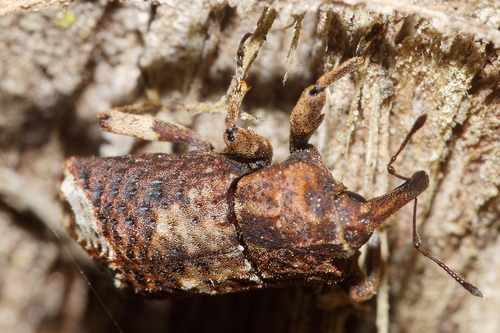
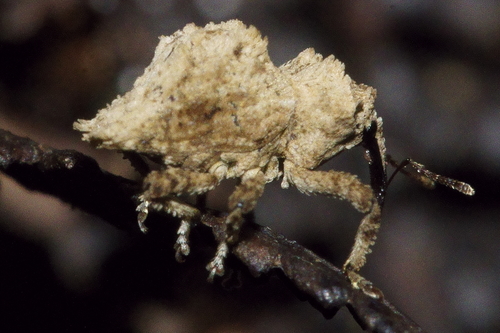
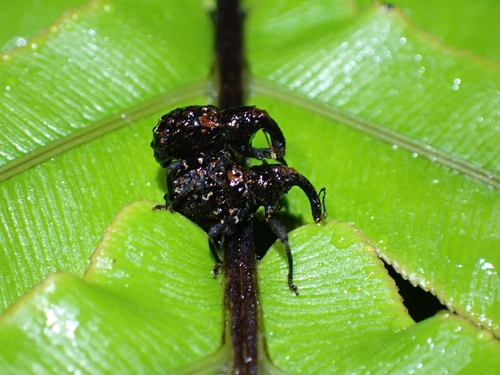
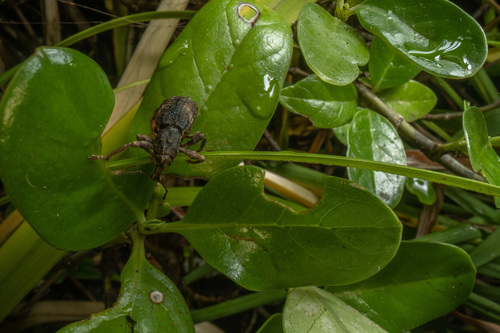
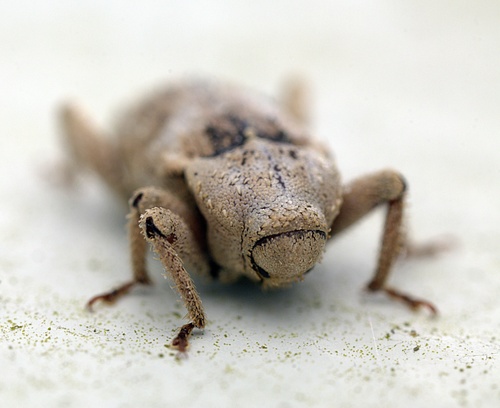
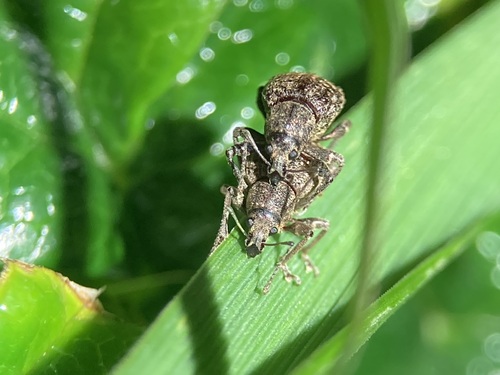
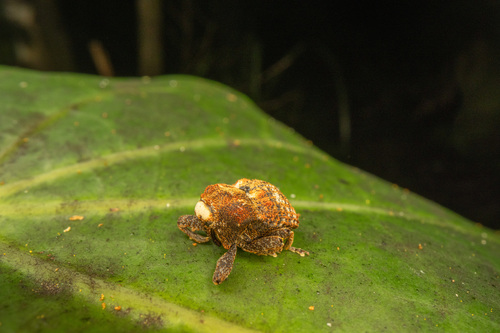
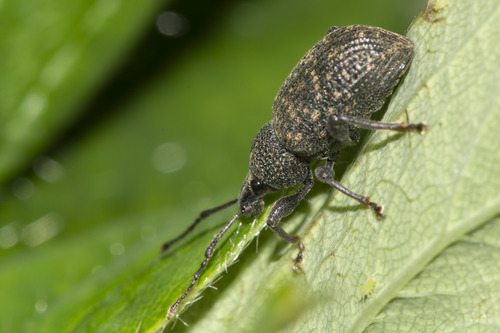
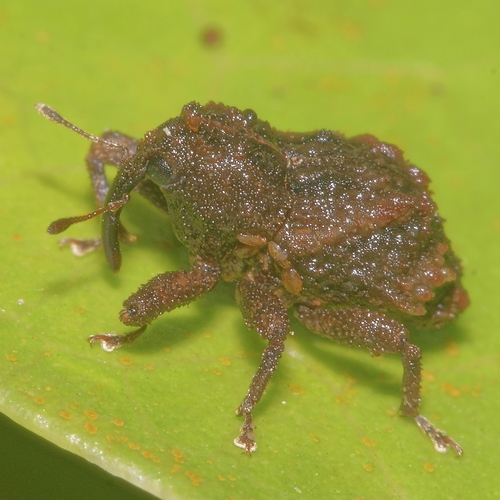
Scolopterus aequus

Scolopterus aequus

Scolopterus aequus

Endemic
Daily sighting probability ~10% · With luck
at Egmont National Park

In 3 days ~30% in a week ~50%

6 Verified sightings at Egmont National Park From 2019 to 2026
6 In 1 park
October Best month
☀️ Diurnal When it's spotted

About the Scolopterus aequus

Scolopterus aequus is a species of flower weevil found only in New Zealand. The beetles are relatively common and live on bushes and trees; they eat flower pollen from most plant species and are often observed on flowers. First described in 1880 from a specimen on the Coromandel Peninsula, the beetles are most abundant on New Zealand's North Island, though they have also been recorded from the West Coast Region. The weevil larvae develop for several months in the rachis ("stems") of fern fronds, particularly those of silver ferns, before pupating for a short time. Two other weevil species described in the genus Scolopterus are now considered synonymous with S. aequus.

Scolopterus aequus was first scientifically described in an 1880 book by Thomas Broun, Manual of the New Zealand Coleoptera. Broun placed the new species, which retains his original name, in the genus Scolopterus. In Latin, aequus means 'equal', 'similar', or 'fair'; Broun's reason for naming the species such is not recorded. The genus Scolopterus had been described with three species a few decades earlier by Adam White, in a report on entomological discoveries made in New Zealand on the Ross expedition... Wikipedia →

Global Distribution

Parks Where Found

# Park Country Daily sighting probability
1 Egmont National Park 🇳🇿 New Zealand
~10%

More parks will be added in future updates.

Cities Where Found

# City Country Daily sighting probability
1 Auckland 🇳🇿 New Zealand
<5%

Before you go

What are the chances of seeing a Scolopterus aequus in Egmont National Park?

With luck

About 10% of wildlife watchers report a Scolopterus aequus sighting in Egmont National Park on a given day, based on 6 verified sightings from GBIF citizen-science data from 2019 to 2026. It is the 123rd most-seen of the 191 insects we can rate there. Over three days the chance rises to about 30%, and over a week to about 50%, if each day is a fresh chance.

When is the best time to see a Scolopterus aequus in Egmont National Park?

October

In that month about 30% of wildlife watchers report a Scolopterus aequus in Egmont National Park on a given day, against under 5% in March, May–September and November, the lowest months.

What time of day is best to see a Scolopterus aequus?

Between 8 and 11 am

Across all the parks we cover, that three-hour window holds the most Scolopterus aequus sightings with a recorded time, and about 8 in 10 of them come between 6 am and 6 pm: it is a daytime animal.

Where else can you see a Scolopterus aequus?

Only Egmont National Park, in our data

Egmont National Park is the only park on Wallace's Line with enough records to rate Scolopterus aequus sightings: about 10% of wildlife watchers there report one on a given day.

Which relatives of the Scolopterus aequus live in Egmont National Park?

Same family: Curculionidae

The closest relatives of the Scolopterus aequus that you can see in Egmont National Park (family Curculionidae, True Weevils) are Catoptes binodis (about 20%), Ectopsis ferrugalis (about 20%) and Indecentia nubila (about 10%), with each one's daily chance of a sighting.

Where does the Scolopterus aequus sighting chance come from?

GBIF citizen-science records

It is estimated from how often the Scolopterus aequus is recorded against all the insects logged in Egmont National Park (6 verified sightings from 2019 to 2026), calibrated against known sighting rates. Figures are rounded to the nearest 10% because citizen-science data supports honest approximations, not decimals, and months with records from fewer than five people show "—". How it works.

← Back to Egmont National Park