Knight Anole

Knight Anole

Anolis equestris

Silhouette: Sarah Werning · PhyloPic

LCLeast ConcernNTVUENCR
Daily sighting probability ~10% · With luck
at Everglades National Park

In 3 days ~30% in a week ~60%

46 Verified sightings at Everglades National Park From 2019 to 2026
56 In all 2 parks
September Best month
☀️ Diurnal When it's spotted

About the Knight Anole

The knight anole (Anolis equestris) is the largest species of anole (US: ) in the Dactyloidae family. Other common names include Cuban knight anole or Cuban giant anole, highlighting its native country, but it has also been introduced to Florida. In its native Cuba, this large anole is called chipojo or chupacocote.

The knight anole is part of a group of overall similar (in both appearance and behavior, all are crown-giant ecomorphs) anoles from Cuba known as the equestris species complex, including A. baracoae, A. luteogularis, A. noblei, A. pigmaequestris and A. smallwoodi.

These and a few other anole species from Cuba, Hispaniola and Puerto Rico are sometimes placed in their own genus, Deiroptyx. Knight anoles are native to Cuba, but have been widely introduced into South Florida, where they reproduce and spread readily as an invasive species. They cannot withstand cold temperatures; in winter freezes in Florida, they have been known to fall to the ground from tree canopies, similarly to the green iguana. In highland parts of its native Cuba, a few individuals may rest adjacent to each other during the relatively cold winters (otherwise... Wikipedia →

Global Distribution

Parks Where Found

# Park Country Daily sighting probability
1 Ciénaga de Zapata 🇨🇺 Cuba
~30%
2 Everglades National Park 🇺🇸 United States
~10%

Cities Where Found

# City Country Daily sighting probability
1 Miami 🇺🇸 United States
~30%
2 Orlando 🇺🇸 United States
<5%

Zoos & Centres Where Found

# Zoo / Centre Country
1 California Academy of Sciences 🇺🇸 United States In captivity
2 Selwo Aventura 🇪🇸 Spain In captivity
3 Yaroslavl Zoo 🇷🇺 Russia In captivity
4 Woodland Park Zoo 🇺🇸 United States In captivity
5 Wrocław Zoological Garden 🇵🇱 Poland In captivity
6 Wilhelma 🇩🇪 Germany In captivity
7 ABQ BioPark Zoo 🇺🇸 United States In captivity
8 Budapest Zoo & Botanical Garden 🇭🇺 Hungary In captivity
9 Kharkiv Zoo 🇺🇦 Ukraine In captivity
10 Minsk Zoo 🇧🇾 Belarus In captivity
11 Ménagerie du Jardin des Plantes 🇫🇷 France In captivity
12 Manila Ocean Park 🇵🇭 Philippines In captivity
13 Staten Island Zoo 🇺🇸 United States In captivity
14 Central Park Zoo 🇺🇸 United States In captivity
15 Zoologico Huanchaco 🇵🇪 Peru In captivity
16 The Underwater Observatory Marine Park 🇮🇱 Israel In captivity
17 Africarium 🇵🇱 Poland In captivity
18 Exotarium Sosnowiec 🇵🇱 Poland In captivity
19 Acuario de Sevilla 🇪🇸 Spain In captivity
20 Albuquerque Aquarium 🇺🇸 United States In captivity
21 Kharkiv Dolphinarium 🇺🇦 Ukraine In captivity
22 Reptiland 🇫🇷 France In captivity
23 The Green Planet 🇦🇪 United Arab Emirates In captivity
24 Grandview Mall Aquarium 🇨🇳 China In captivity
25 Pana'ewa Rainforest Zoo 🇺🇸 United States In captivity
26 Rio Grande Botanic Garden 🇺🇸 United States In captivity
27 terrarium ogrodu zoologicznego we Wrocławiu 🇵🇱 Poland In captivity
28 Дэльфінарый 🇧🇾 Belarus In captivity

Before you go

What are the chances of seeing a Knight Anole in Everglades National Park?

With luck

About 10% of wildlife watchers report a Knight Anole sighting in Everglades National Park on a given day, based on 46 verified sightings from GBIF citizen-science data from 2019 to 2026. It is the 35th most-seen of the 54 reptiles we can rate there. Over three days the chance rises to about 30%, and over a week to about 60%, if each day is a fresh chance.

When is the best time to see a Knight Anole in Everglades National Park?

August and September

In those months about 20% of wildlife watchers report a Knight Anole in Everglades National Park on a given day, against under 5% in October, the lowest month. Those are among Everglades National Park's wettest months, with about 200 mm of rain a month against 40 mm in March.

What time of day is best to see a Knight Anole?

Between noon and 3 pm

Across all the parks we cover, that three-hour window holds the most Knight Anole sightings with a recorded time, and about 9 in 10 of them come between 6 am and 6 pm: it is a daytime animal.

Is Everglades National Park the best place to see a Knight Anole?

2nd of 2

Of the 2 parks where we can rate Knight Anole sightings, Everglades National Park ranks 2nd at about 10%. The best odds are in Ciénaga de Zapata (Cuba, about 30%).

Which relatives of the Knight Anole live in Everglades National Park?

Same genus: Anolis

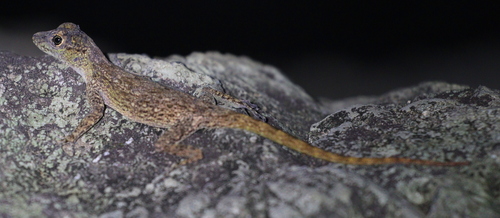
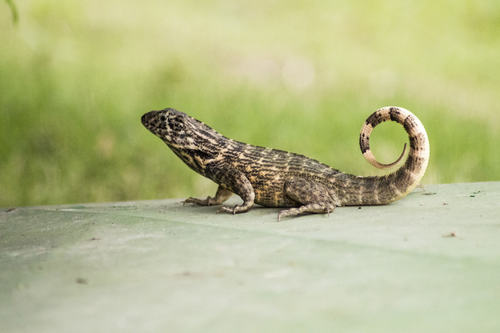
The closest relatives of the Knight Anole that you can see in Everglades National Park (genus Anolis, Anoles) are Brown Anole (about 70%), Green Anole (about 40%) and Bark Anole (about 10%), with each one's daily chance of a sighting.

Where does the Knight Anole sighting chance come from?

GBIF citizen-science records

It is estimated from how often the Knight Anole is recorded against all the reptiles logged in Everglades National Park (46 verified sightings from 2019 to 2026), calibrated against known sighting rates. Figures are rounded to the nearest 10% because citizen-science data supports honest approximations, not decimals, and months with records from fewer than five people show "—". How it works.

← Back to Everglades National Park