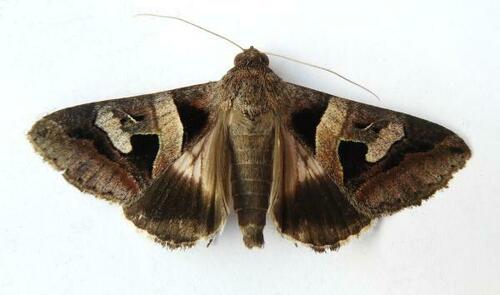
Polka-Dot Wasp Moth

Polka-Dot Wasp Moth

Syntomeida epilais

Daily sighting probability ~10% · With luck
at Everglades National Park

In 3 days ~40% in a week ~70%

81 Verified sightings at Everglades National Park From 2019 to 2026
93 In all 2 parks
August Best month
☀️ Diurnal When it's spotted

About the Polka-Dot Wasp Moth

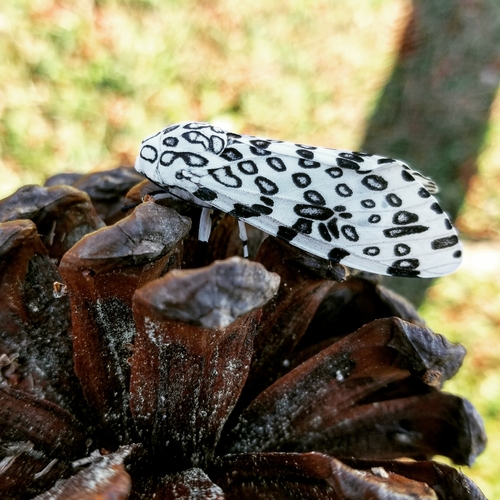
Syntomeida epilais, the polka-dot wasp moth or oleander moth, is a species of moth thought to be native to the Caribbean. Its larvae feed on the oleander plant. Like most wasp moths, these are day fliers. They prefer Neotropic areas, to which they are native. The North American subspecies is S. epilais jucundissima, which is locally common in all areas of Florida, and has been seen as far north as South Carolina, and west to Mississippi and Texas.

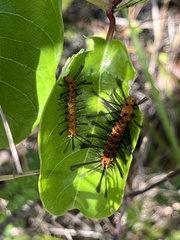
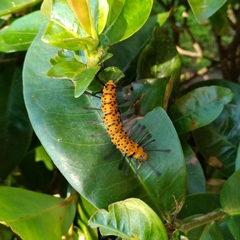
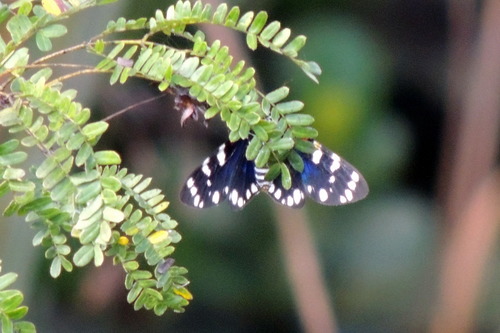
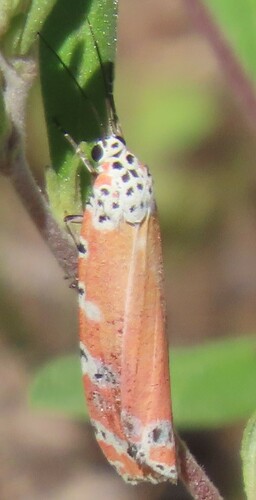
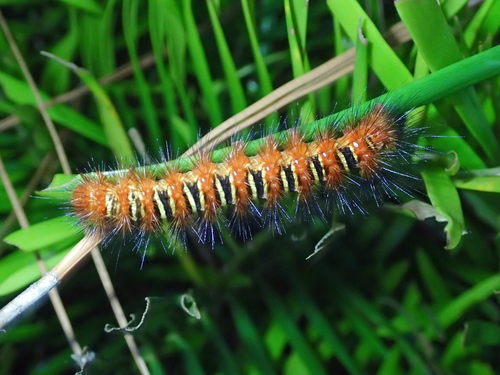
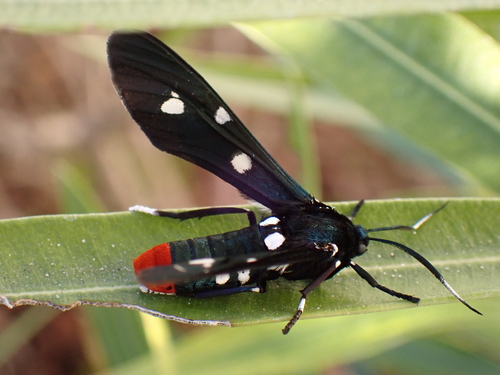
They are dark metallic blue with white polka-dots on the wings and upper abdomen, and the tip of the abdomen is bright red. This mimicry makes it look like a dangerous wasp, while in fact being a harmless moth. The caterpillars are orange or dark orange with long black hairs making the caterpillars look dangerous, but the setae do not inflict any harm.

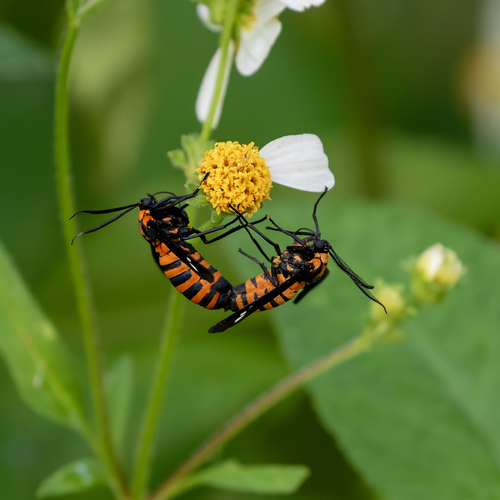
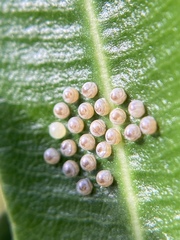
Females contact male polka-dot wasp moths by means of ultrasonic signals. On the branch, the sound travels, and then the male follows the sound to his new mate. When he reaches her, he emits an answering signal. After mating, the females find a plant on which to lay their eggs. Groups of from 12 to 75 eggs are laid on the undersides of the oleander... Wikipedia →
Global Distribution

Parks Where Found

# Park Country Daily sighting probability
1 Arrecifes de Cozumel National Park 🇲🇽 Mexico
~20%
2 Everglades National Park 🇺🇸 United States
~10%

Cities Where Found

# City Country Daily sighting probability
1 Miami 🇺🇸 United States
~10%
2 Orlando 🇺🇸 United States
<5%

Before you go

What are the chances of seeing a Polka-Dot Wasp Moth in Everglades National Park?

With luck

About 10% of wildlife watchers report a Polka-Dot Wasp Moth sighting in Everglades National Park on a given day, based on 81 verified sightings from GBIF citizen-science data from 2019 to 2026. It is the 52nd most-seen of the 496 insects we can rate there. Over three days the chance rises to about 40%, and over a week to about 70%, if each day is a fresh chance.

When is the best time to see a Polka-Dot Wasp Moth in Everglades National Park?

January–February and August–September

In those months about 20% of wildlife watchers report a Polka-Dot Wasp Moth in Everglades National Park on a given day, against about 10% in March–July and October–December, the lowest months.

What time of day is best to see a Polka-Dot Wasp Moth?

Between 11 am and 2 pm

Across all the parks we cover, that three-hour window holds the most Polka-Dot Wasp Moth sightings with a recorded time, and about 9 in 10 of them come between 6 am and 6 pm: it is a daytime animal.

Is Everglades National Park the best place to see a Polka-Dot Wasp Moth?

2nd of 2

Of the 2 parks where we can rate Polka-Dot Wasp Moth sightings, Everglades National Park ranks 2nd at about 10%. The best odds are in Arrecifes de Cozumel National Park (Mexico, about 20%).

Where does the Polka-Dot Wasp Moth sighting chance come from?

GBIF citizen-science records

It is estimated from how often the Polka-Dot Wasp Moth is recorded against all the insects logged in Everglades National Park (81 verified sightings from 2019 to 2026), calibrated against known sighting rates. Figures are rounded to the nearest 10% because citizen-science data supports honest approximations, not decimals, and months with records from fewer than five people show "—". How it works.

← Back to Everglades National Park