Flesh-footed Shearwater

Flesh-footed Shearwater

Puffinus carneipes

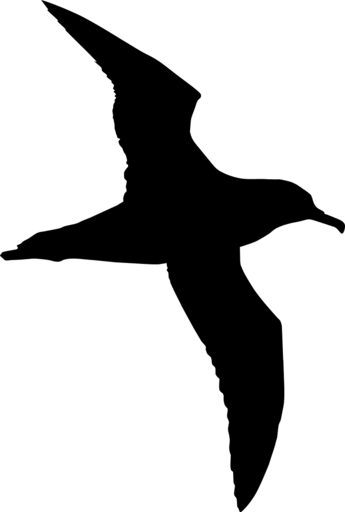
Silhouette: Juan Carlos Jerí · PhyloPic

LCNTNear ThreatenedVUENCR
Daily sighting probability <5% · Rare
at Great Bear Rainforest

In 3 days <5%

6 Verified sightings at Great Bear Rainforest From 2019 to 2026
15 In all 2 parks
October Best month
☀️ Diurnal When it's spotted

About the Flesh-footed Shearwater

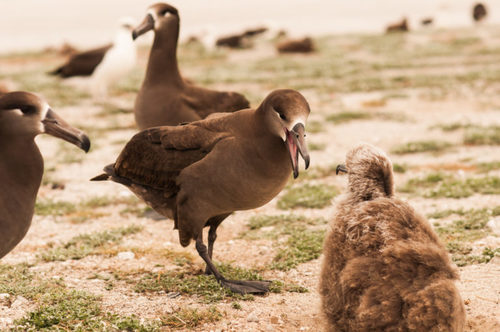
The flesh-footed shearwater (Ardenna carneipes), also called sable shearwater, is a medium-large shearwater that mainly inhabits the Indo-Pacific. Its plumage is black with pale pinkish feet, and a pale bill with a distinct black tip. Together with the equally light-billed pink-footed shearwater, it forms the Hemipuffinus group, a superspecies which may or may not have an Atlantic relative in the great shearwater. These large shearwaters are among those that have been separated into the genus Ardenna. Recent genetic analysis indicates evidence of strong divergence between Pacific colonies relative to those in South and Western Australia, thought to be explained by philopatry and differences in foraging strategies during the breeding season.

A molecular phylogenetic study published in 2021 found very little genetic difference between the flesh-footed shearwater and the pink-footed shearwater (Ardenna creatopus). The authors of the study suggested that these two taxa might be better considered as conspecific.

The flesh-footed shearwater breeds in colonies, and has two main breeding areas; one in the southwest Pacific Ocean includes Lord Howe Island (22,654 pairs ), South Australia (about 1,800 pairs breeding on two islands) and northern New Zealand (13,000 pairs); the other population comprises no more than 36,000 pairs breeding on 42 islands along the coast of Western Australia from Cape Leeuwin to the Recherche Archipelago. Another 500 pairs breed on St Paul Island in the Indian Ocean. A record of birds on Astola Island of Pakistan in the Arabian Sea is unconfirmed. Recent evidence suggests populations are declining across much of the species' range. The species was recently listed as near threatened in Australia and nationally vulnerable in New Zealand, and has been recommended for listing under the Agreement on the Conservation of Albatrosses and Petrels. At the state level, the species is listed as vulnerable in Western Australia and New South Wales and rare in South Australia.

The species occurs as a (boreal) summer visitor in the North Pacific Ocean, where potentially large numbers are taken as bycatch in fisheries. The species also suffers from climate related impacts and significant heavy metal contamination, the cause of which is not fully understood, but is likely due to the ingestion of significant quantities of plastic, which the birds mistake for food floating on the ocean surface. Wikipedia →

Sounds

Recording0:14

New Zealand · 2018

© Spencer McIntyre · iNaturalist · CC BY 4.0

Global Distribution

Parks Where Found

# Park Country Daily sighting probability
1 Ningaloo Marine Park 🇦🇺 Australia
<5%
2 Great Bear Rainforest 🇨🇦 Canada
<5%

Cities Where Found

# City Country Daily sighting probability
1 Auckland 🇳🇿 New Zealand
<5%
2 Sydney 🇦🇺 Australia
<5%

Before you go

What are the chances of seeing a Flesh-footed Shearwater in Great Bear Rainforest?

Rare

Under 5% of wildlife watchers report a Flesh-footed Shearwater sighting in Great Bear Rainforest on a given day, based on 6 verified sightings from GBIF citizen-science data from 2019 to 2026. It is the 233rd most-seen of the 239 birds we can rate there. Over three days the chance rises to under 5%, if each day is a fresh chance.

When is the best time to see a Flesh-footed Shearwater in Great Bear Rainforest?

Any time of year

In every month with enough records, under 5% of wildlife watchers report a Flesh-footed Shearwater in Great Bear Rainforest on a given day, so our monthly data shows no clear season.

What time of day is best to see a Flesh-footed Shearwater?

Between 7 and 10 am

Across all the parks we cover, that three-hour window holds the most Flesh-footed Shearwater sightings with a recorded time, and about 9 in 10 of them come between 6 am and 6 pm: it is a daytime animal.

Is Great Bear Rainforest the best place to see a Flesh-footed Shearwater?

Among the best

Of the 2 parks where we can rate Flesh-footed Shearwater sightings, Great Bear Rainforest ranks 2nd at under 5%, level with the leaders once rounded. The best odds are in Ningaloo Marine Park (Australia, under 5%).

Where does the Flesh-footed Shearwater sighting chance come from?

GBIF citizen-science records

It is estimated from how often the Flesh-footed Shearwater is recorded against all the birds logged in Great Bear Rainforest (6 verified sightings from 2019 to 2026), calibrated against known sighting rates. Figures are rounded to the nearest 10% because citizen-science data supports honest approximations, not decimals, and months with records from fewer than five people show "—". How it works.

← Back to Great Bear Rainforest