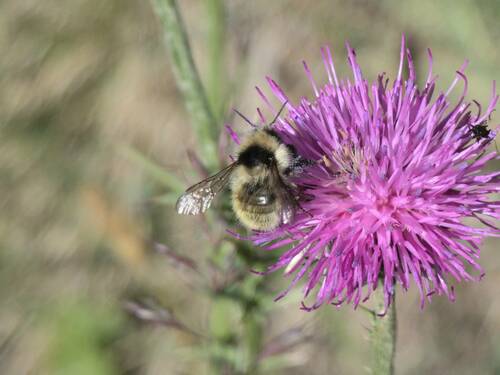
Bombus wurflenii
Daily sighting probability ~20% · Possible
at Hohe Tauern National Park

In 3 days ~50% in a week ~80%

13 Verified sightings at Hohe Tauern National Park From 2019 to 2026
34 In all 3 parks
August Best month
☀️ Diurnal When it's spotted

About the Bombus wurflenii

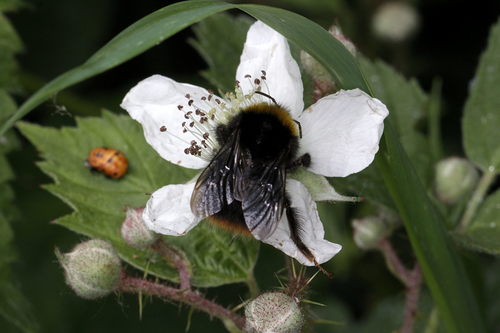
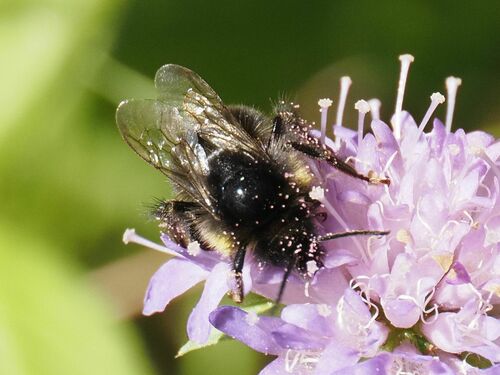
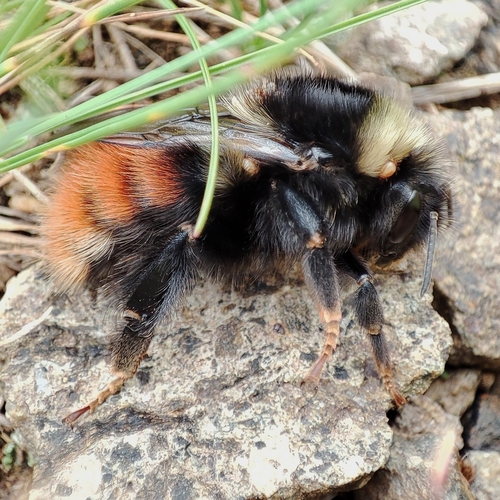
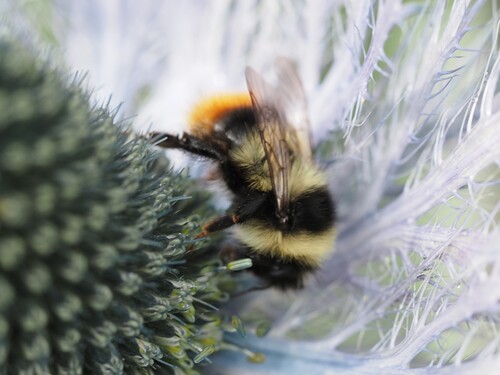
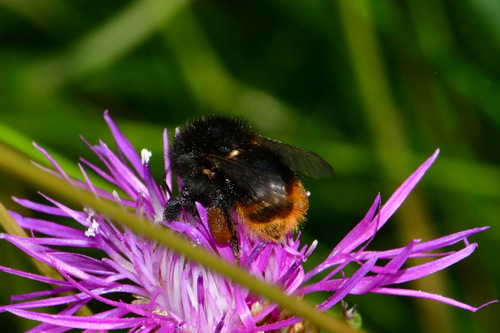
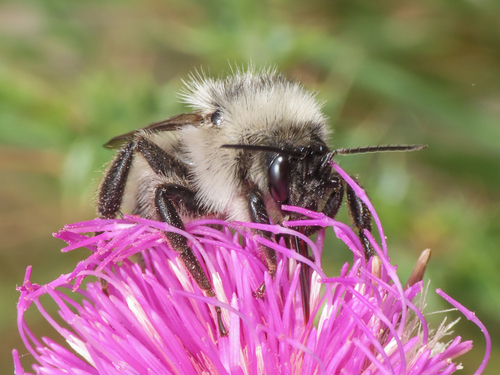
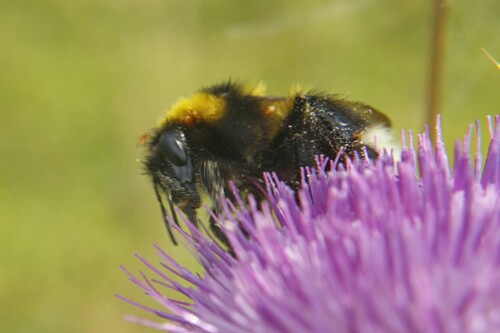
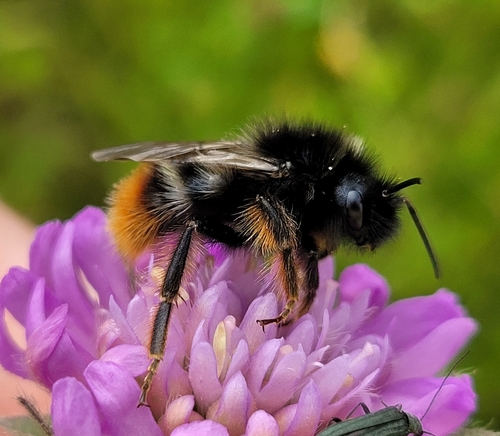
Bombus wurflenii, also known as Shaggy Bumblebee, is a species of bumblebee found in West Asia. This bumblebee has a very short proboscis (tongue), powerful, toothed mandibles, and a short head. The queen has a body length of 19 to 22 mm (0.75 to 0.87 in), a wing span of 36 to 41 mm (1.4 to 1.6 in) and a black, shaggy fur with the three last terga (abdominal segments). The workers, which have body lengths ranging from 13 to 16 mm (0.51 to 0.63 in) and wing spans from 25 to 32 mm (0.98 to 1.26 in), look like the queen, except for the lesser length. The males are 14 to 16 mm (0.55 to 0.63 in) in length, have a wing span from 28 to 32 mm (1.1 to 1.3 in) and are otherwise similar to the females.

Females have wings that are nearly clear with dark brown veins. Their body hair is long. The oculo-malar area (the space between the eye and the mandible) is shorter than it is broad. The clypeus (the front part of the face) is flat and not raised in the center, with a shallow transverse groove that is not interrupted. The central area of the clypeus has many small, uniform punctures and is not shiny. The hair on the top of the thorax is black, with bands of grey-white hair at... Wikipedia →
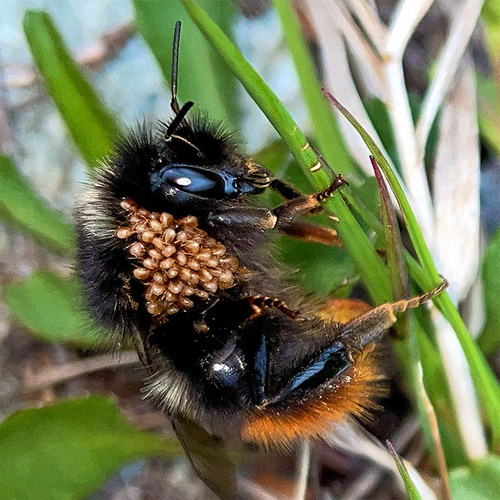
Global Distribution

Parks Where Found

# Park Country Daily sighting probability
1 Hohe Tauern National Park 🇦🇹 Austria
~20%
2 Tatra National Park 🇸🇰 Slovakia
~20%
3 Bavarian Forest National Park 🇩🇪 Germany
<5%

Before you go

What are the chances of seeing a Bombus wurflenii in Hohe Tauern National Park?

Possible

About 20% of wildlife watchers report a Bombus wurflenii sighting in Hohe Tauern National Park on a given day, based on 13 verified sightings from GBIF citizen-science data from 2019 to 2026. It is the 48th most-seen of the 165 insects we can rate there. Over three days the chance rises to about 50%, and over a week to about 80%, if each day is a fresh chance.

When is the best time to see a Bombus wurflenii in Hohe Tauern National Park?

August

In that month about 30% of wildlife watchers report a Bombus wurflenii in Hohe Tauern National Park on a given day, against under 5% in February–May and October, the lowest months. December has too few records to rate.

What time of day is best to see a Bombus wurflenii?

Between 10 am and 1 pm

Across all the parks we cover, that three-hour window holds the most Bombus wurflenii sightings with a recorded time, and nearly all of them come between 6 am and 6 pm: it is a daytime animal.

Is Hohe Tauern National Park the best place to see a Bombus wurflenii?

Yes

Of the 3 parks where we can rate Bombus wurflenii sightings, Hohe Tauern National Park has the highest daily chance: about 20%. Next come Tatra National Park (Slovakia, about 20%) and Bavarian Forest National Park (Germany, under 5%).

Which relatives of the Bombus wurflenii live in Hohe Tauern National Park?

Same genus: Bombus

The closest relatives of the Bombus wurflenii that you can see in Hohe Tauern National Park (genus Bombus, Bumble Bees) are Common Carder Bumble Bee (about 20%), Early Bumble Bee (about 20%) and Broken-Belted Bumble Bee (about 20%), with each one's daily chance of a sighting.

Where does the Bombus wurflenii sighting chance come from?

GBIF citizen-science records

It is estimated from how often the Bombus wurflenii is recorded against all the insects logged in Hohe Tauern National Park (13 verified sightings from 2019 to 2026), calibrated against known sighting rates. Figures are rounded to the nearest 10% because citizen-science data supports honest approximations, not decimals, and months with records from fewer than five people show "—". How it works.

← Back to Hohe Tauern National Park